

Knowledge base · Service-King
RFID myths: range, metal, phones and location
RFID simplifies identification, but misplaced expectations lead to disappointment. It is worth separating the possibilities of a specific solution from slogans that only sound good in a presentation.
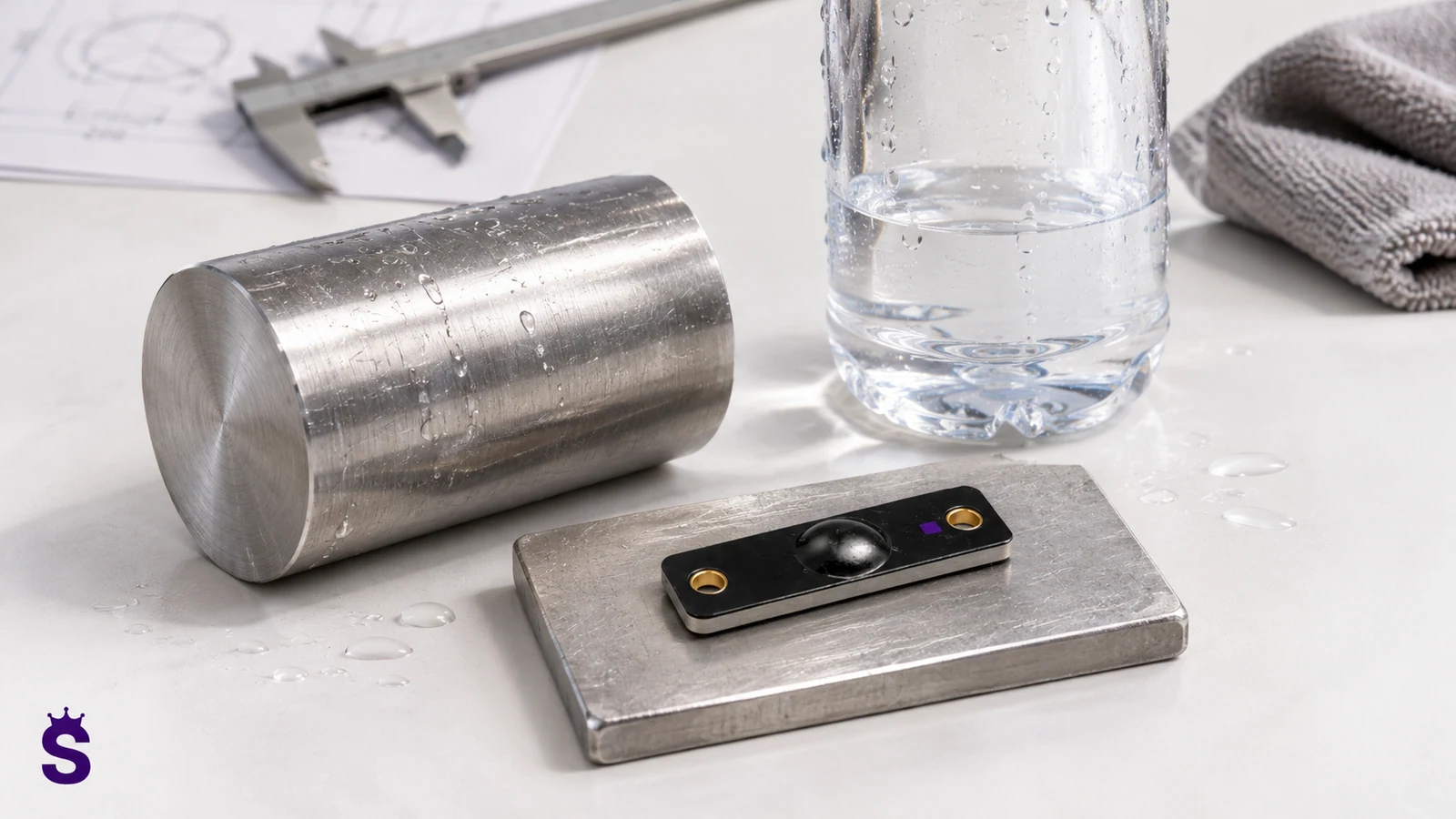
Six assumptions to test
| Myth | How it is in practice |
|---|---|
| "RFID does not work on metal" | There are on-metal structures; you need to choose the model and installation location. |
| "Every tag works from your phone" | Regular NFC on your phone is not a UHF reader. |
| "Will read everything in the room" | Material, positioning, coverage and surroundings may cause omissions. |
| "Tag will show GPS position" | Passive UHF does not transmit satellite position itself. |
| "Read means check-out" | The operation requires proper context and confirmation rules. |
| "The tag itself prevents theft" | Identification does not replace access control and security. |
"It will read everything" overlooks essential conditions
Claimed range usually applies to a specific tag, antenna and conditions. A finished tool or a full container may behave differently. Catalog coverage does not promise a complete inventory of every room. The purpose of the test should be to identify the required batch in a typical job.
Also check things outside the operation. Large scope can make check-out control difficult if neighboring tools are added to the list. In some processes, a good result means a smaller but predictable zone. Matching power and geometry is more important than getting the most distance in the demo.
"It does not work on metal" confuses a tag with the whole technology
Metal can change the conditions of the antenna, which is why there are structures designed for such mounting. It's not enough to take any label and stick it tighter. The tag model and mounting location are selected depending on the finished item. This also applies to plastic housings with metal inside.
In the offer you can compare on-metal markings, e.g. 60 × 25 mm and 30 × 15 mm, with labels for suitable non-metallic surfaces. Dimension helps assess a site, but performance is determined by the specific structure. A test after installation remains necessary.
Maximum read range is not always an advantage
When issuing sets, the reader should see the selected batch, not half the warehouse. An unwanted reading can be as troublesome as missing the right one. Power, antenna and operating method are selected according to the operation.
The test should include adjacent shelves, full suitcases and items arranged as during the shift. One loose tag read from a long distance does not confirm that the entire process is working.
The tag price is only part of the cost
Include record preparation, marking, facilities, training, and exception handling. In some processes, a simple QR will be sufficient. In others, reading multiple UHF pieces will justify additional equipment. The decision is best based on trial and measurement of the complete operation.
We do not promise one percent savings for all companies. The frequency of censuses and check-outs significantly changes the result.
Two questions for the demonstration
Request a trial where one expected item doesn't have a working tag and an out-of-op item is next to it. See how the system will show both exceptions and what the operator will do. This allows you to check the logic of the result, not just the speed of the counter. The second attempt should be to read the same part again. A redo cannot accidentally create another check-out or increment a process counter.
Related topic: RFID test in stock.
The most common promises and the right way to check
| Password | What to ask | What to test |
|---|---|---|
| Many pieces at once | How were game and result defined? | Full typical game and missing position. |
| Without seeing the label | What surfaces and covers are there? | Final arrangement of things. |
| Automatic | Which operation is approved and when? | Repetition, mistake and unknown tag. |
| Location | Is it zone, last save or position? | Data age and indication error. |
| Quick return on investment | What costs and frequency are included? | Own measurement of the complete process. |
"RFID will replace people" overlooks decisions about exceptions
The system can speed up identification and comparison, but you still need to explain the damage, foreign item, missing document or incomplete return. It's a good idea to design a simple path instead of treating an exception as a user error. A good process shows what needs to be decided and who makes the decision.
Assess whether the operator understands the result. A rapidly rising counter alone does not mean that the correct set has been selected. When picking up the solution, ask someone who did not prepare the demonstration to work with you. If he needs verbal guidance for each deviation, the instructions and view of the operation need to be refined.
How to conduct a fair trial
- Prepare items from the target group, including more difficult items.
- Install tags in planned locations.
- Check the correct batch and the items placed next to it.
- Remove or damage the test mark according to a safe scenario.
- Repeat the read and see if a second operation is created.
- Measure the time to prepare, check and clarify the result.
Such a test provides the basis for the decision of... mobile reading or RFID fixed point.
Scenario: a demonstration that tests the actual process
Prepare the correct set, one expected item without a working tag and a few tags next to it. Ask the operator to operate normally. A good attempt shows both a lack of proper reading and an undesirable reading. If the demonstration only includes a prepared list of ideal pieces, it does not show the limits of the solution or how to explain the result.
Then repeat the session and change the pose order. See what is happening with the counter and the document. Reading the same batch should not accidentally create another operation. Also check for unknown ID and replacement of one unit with a similar model. The operator should understand what has been detected, what is included in the list and what result he/she is validating. A large number of readings does not replace this control.
After trying, save the configuration, mark types and conditions. The application should cover a specific scope, not all items in the company. If you change the material, packaging or stacking method, another inspection may be necessary. This method of assessment allows you to consciously decide on further implementation and avoid both unrealistic promises and rejection of the technology based on a poorly selected single label.
| Area | Practical arrangement |
|---|---|
| Batch | Expected items and test item missing. |
| Setting | Marks remaining outside the operation. |
| Repetition | No unintentional second charge. |
| Error | Unknown tag and similar invalid item. |
| User | Clear result without verbal prompts. |
| Scope | Documented conditions to which the application relates. |
What to determine before purchasing
- Which process should be faster?
- What objects and surfaces will be marked?
- Which standard and reader do you need?
- How will you confirm the operation and explain exceptions?
- How will you measure time and costs before and after the trial?
Read RFID basics and implementation plan.
Questions worth clarifying before implementation
Do all markings have to be the same?
No. Different surfaces and processes may require different designs. A common register can combine several means of identification if the identifiers are correctly assigned.
Will a more expensive tag always read better?
Price may depend on resistance, housing and purpose. Suitability must be assessed for a specific facility and method of work, not just by price.
Is it possible to start with a small sample?
Yes. A representative sample allows you to check the most important conditions before serial determination. However, it should cover the entire operation scenario and exceptions.
Go to solutions related to this topic
- Choosing labels and tags - Designations for clothing, tools and other working conditions.
- Service-King Mobile - Tasks and readings on the handheld terminal.
- RFID reading points - Zone readings and preparation of operations rules.
- RFID Finder — Search for a specific item marked with the appropriate handheld terminal.
Sources and further verification
Free consultation
Let's check RFID on your items.
Specify the type of surface and planned operation. We will select a sample that will show reading the right things and handling exceptions.
Thank you for your inquiry.
Your message has been sent to the correct department. We will contact you to determine next steps.
Send another inquiry