

The laundry returned less
Compare marked items with the saved check-out. Find items that need clarification.
Industries • Hotel and SPA
Which towels have returned from the laundry, what is left in the SPA and what equipment is waiting for repair? Service-King connects specific items, places and history of transmissions.
Staff work on shared data. Additionally, we can design RFID control of selected passages, adapted to the hotel circulation.
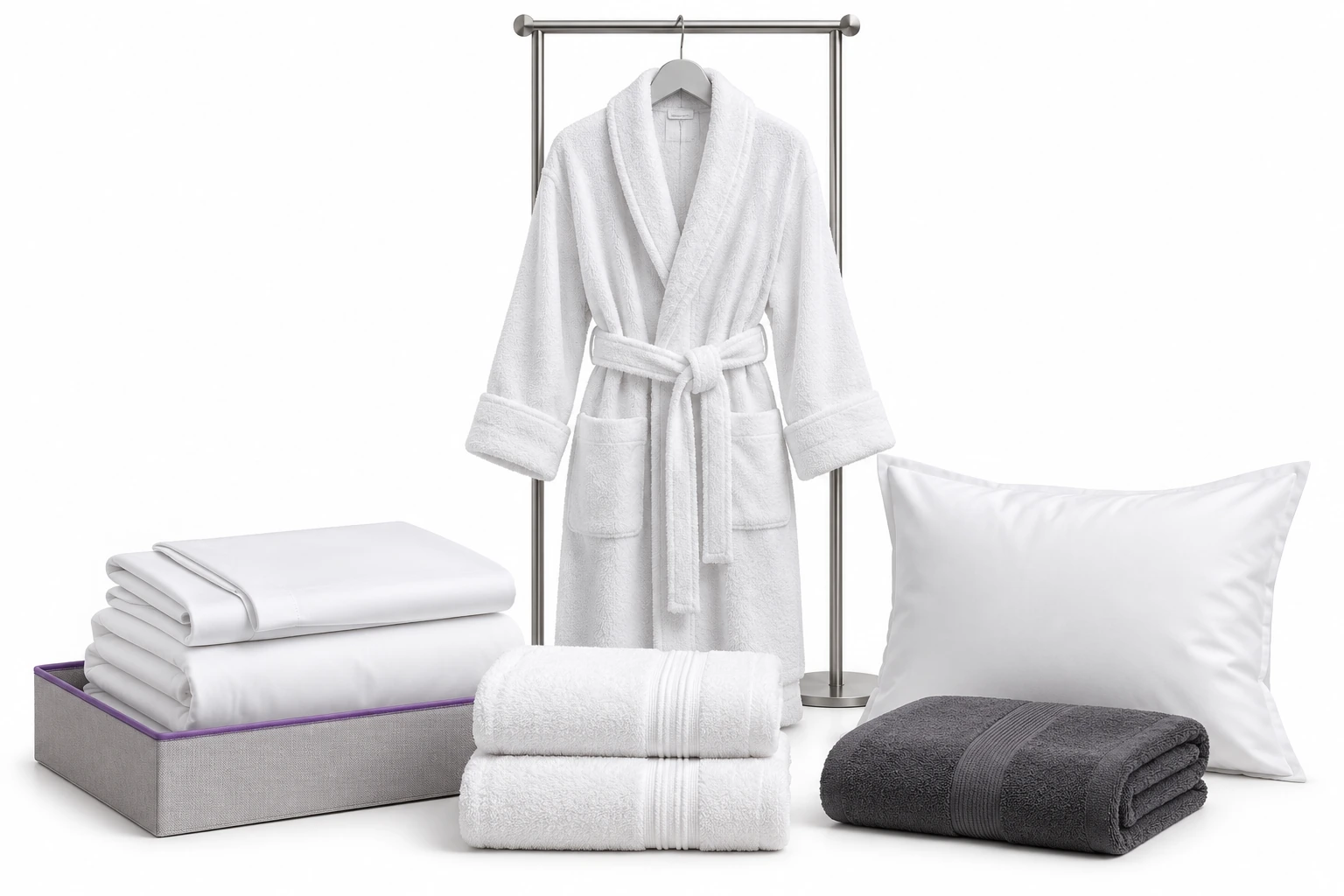
The cumulative status does not explain what happened to a specific towel or robe.
Compare marked items with the saved check-out. Find items that need clarification.
Separate the warehouse, floors, SPA and external services.
Record the damage or need for repair next to the appropriate item.
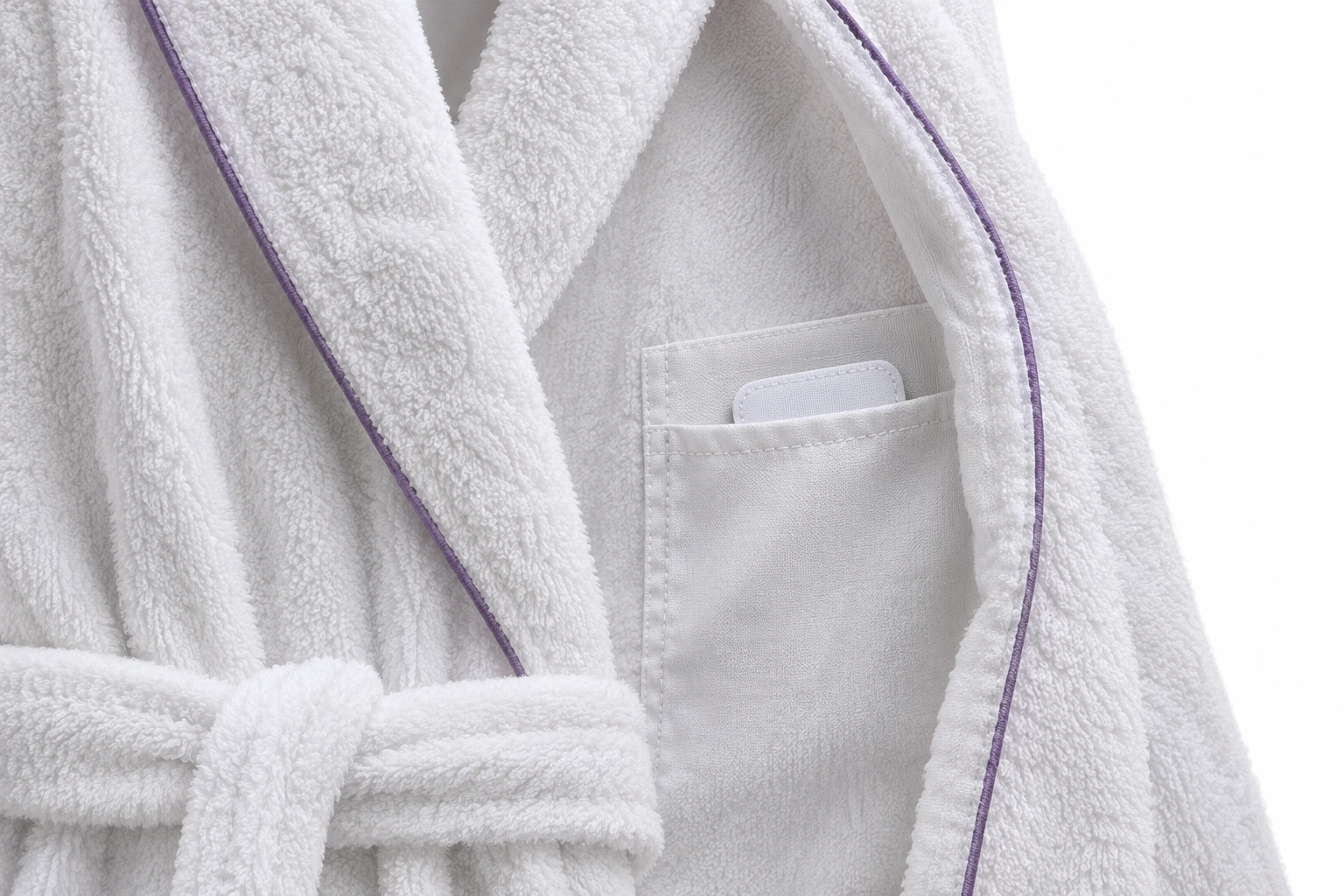
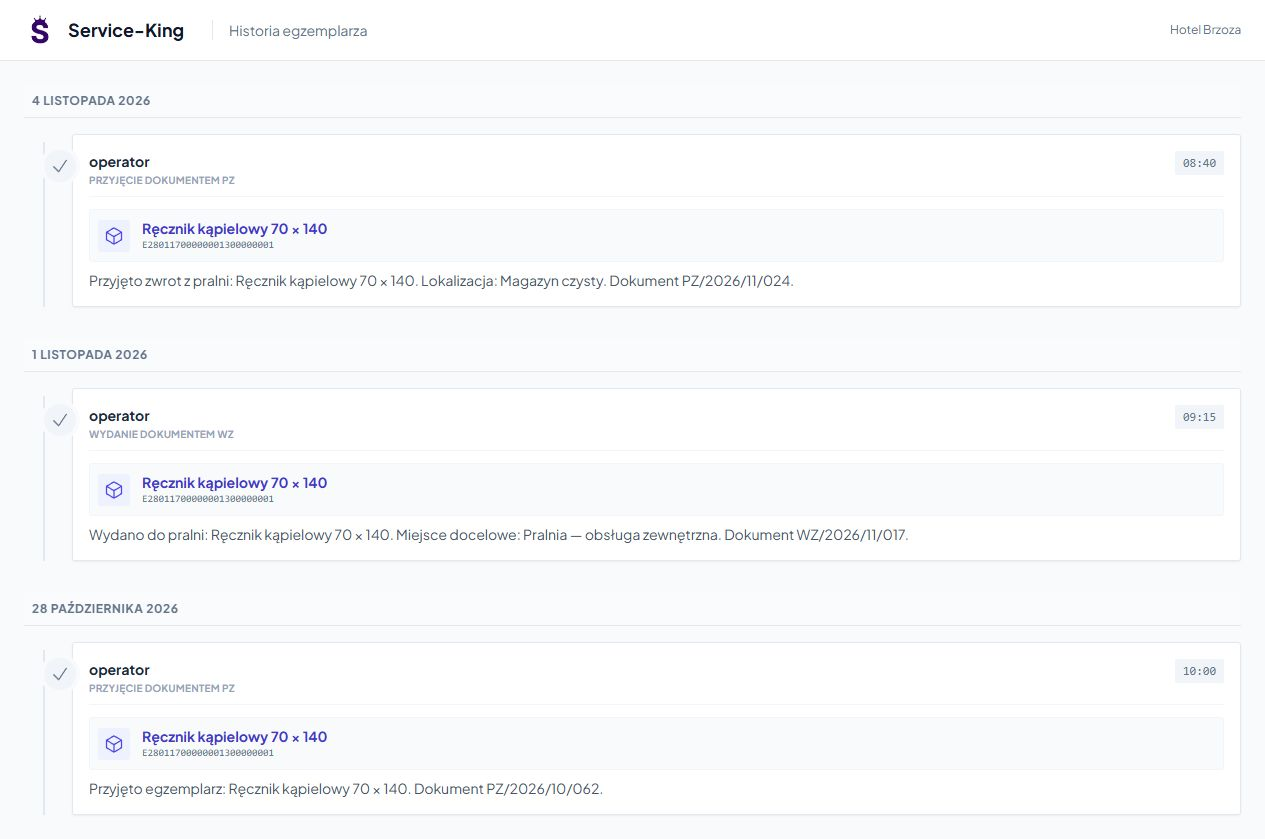
Individual ID helps determine which item was transferred and where it was subsequently registered.
Carry bedding, towels, bathrobes, catering textiles and employee clothing. The choice of marking takes into account material, washing, chemicals and method of use.
Name the places according to the hotel's work: clean warehouse, floors, dirty textiles area, SPA and laundry room.
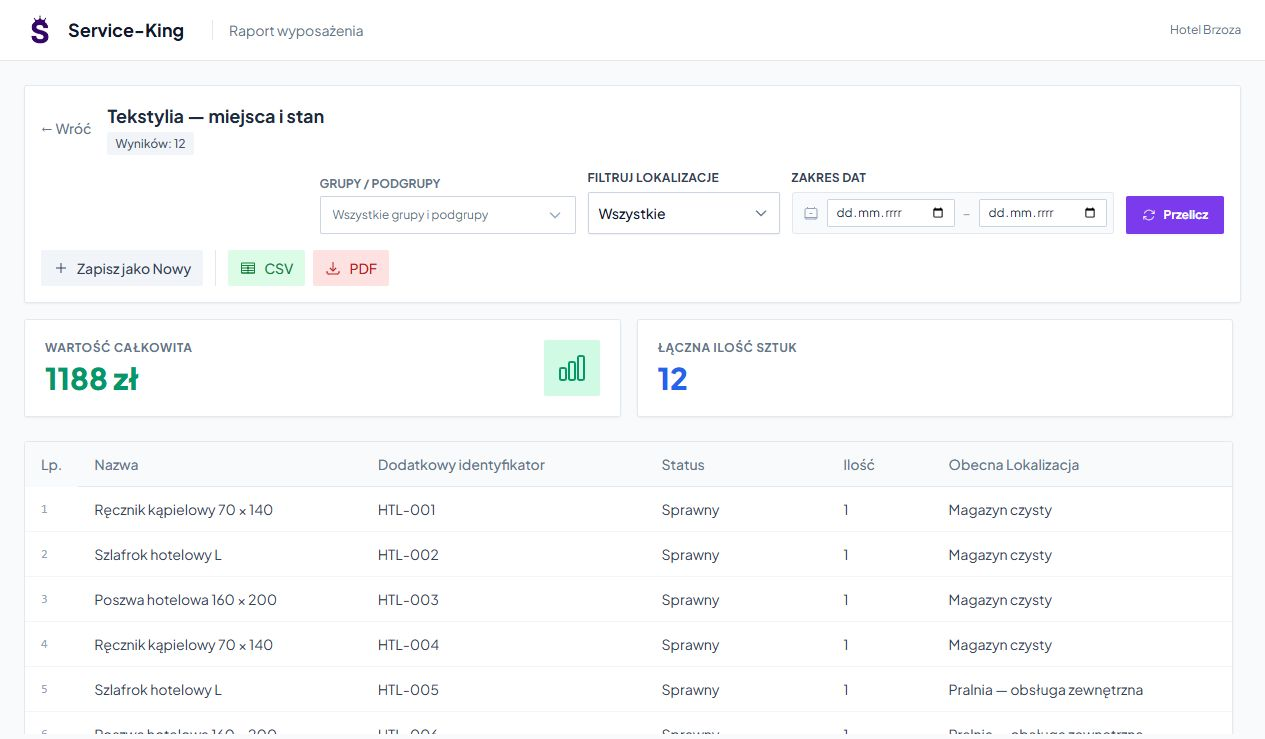
You can see your saved places, status and item IDs. More precise assignment to a room or person requires an established registration method.
Example shows 12 items in various places in circulation. Learn about health check with RFID →
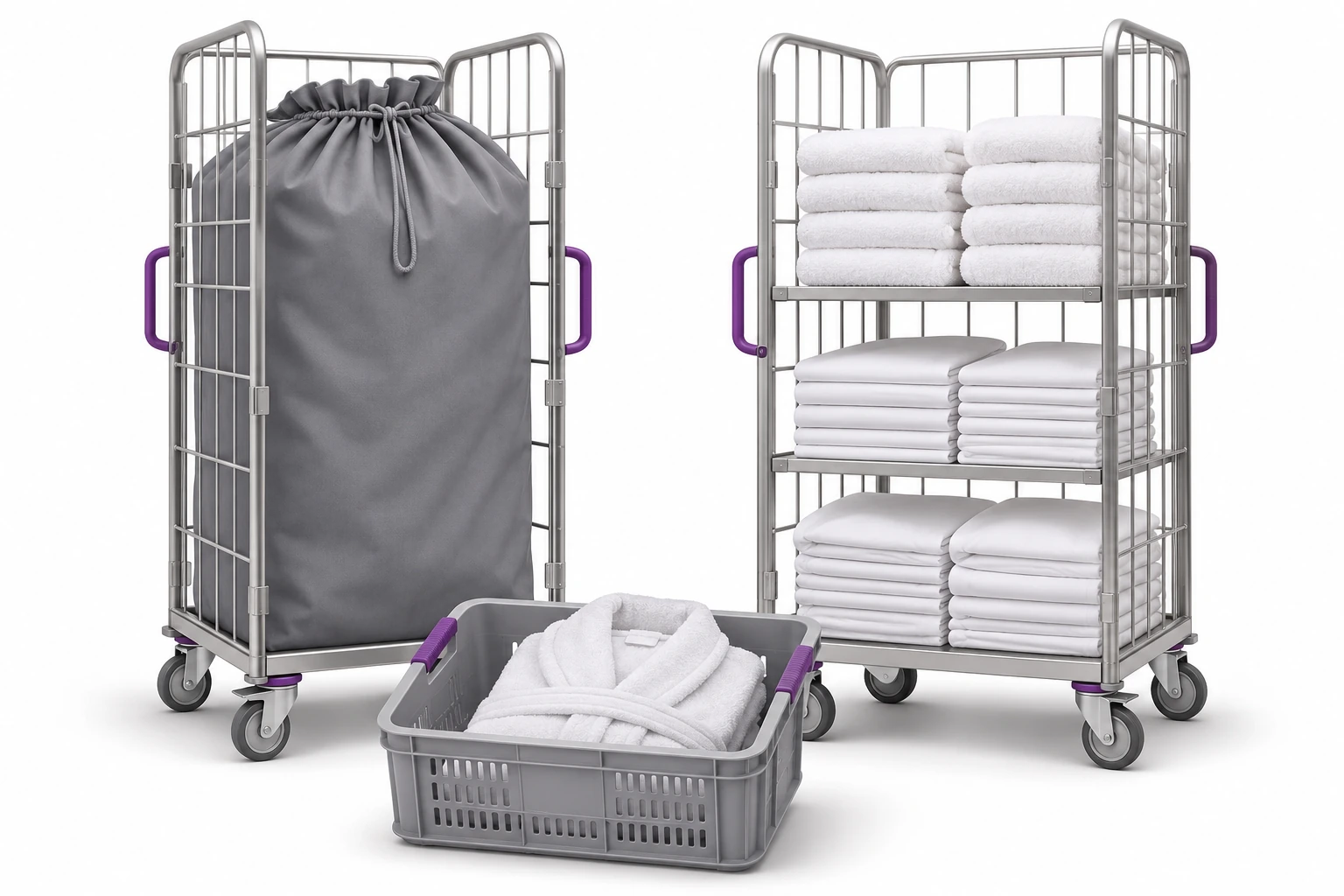
When shipping you recognize the textiles and you save the transfer. Upon receipt, you compare the returned items with the expected range.
Missing items, extraneous items and items requiring inspection remain to be resolved. The history of the towel connects the document issuance of WZ and acceptance of PZ.
Learn how to operate the laundry circuit →
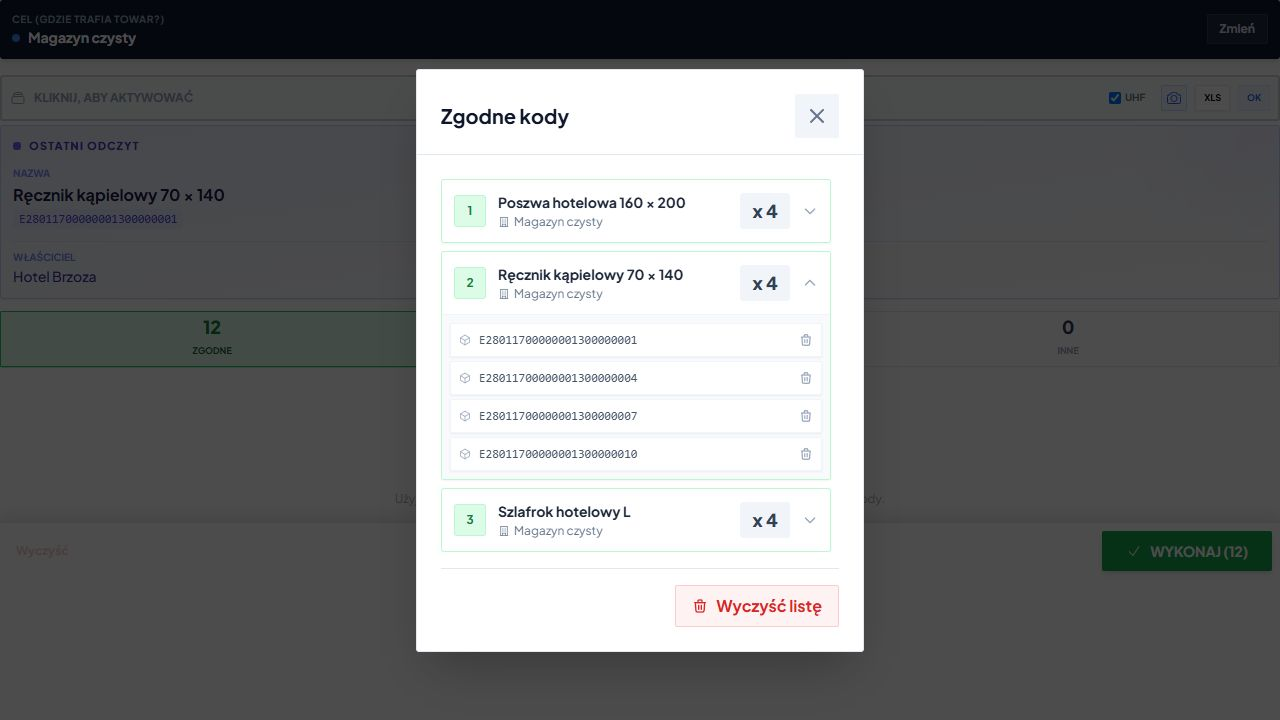
In case of a larger batch, it is convenient to see the names and quantities. Once expanded, you still have it specific instance identifiers.
Example includes 12 readings: three names of four each. The grouped list helps you check the batch before performing the actual operation.
This is the textile handling view. We prepare exit control rules as a separate element of the implementation.
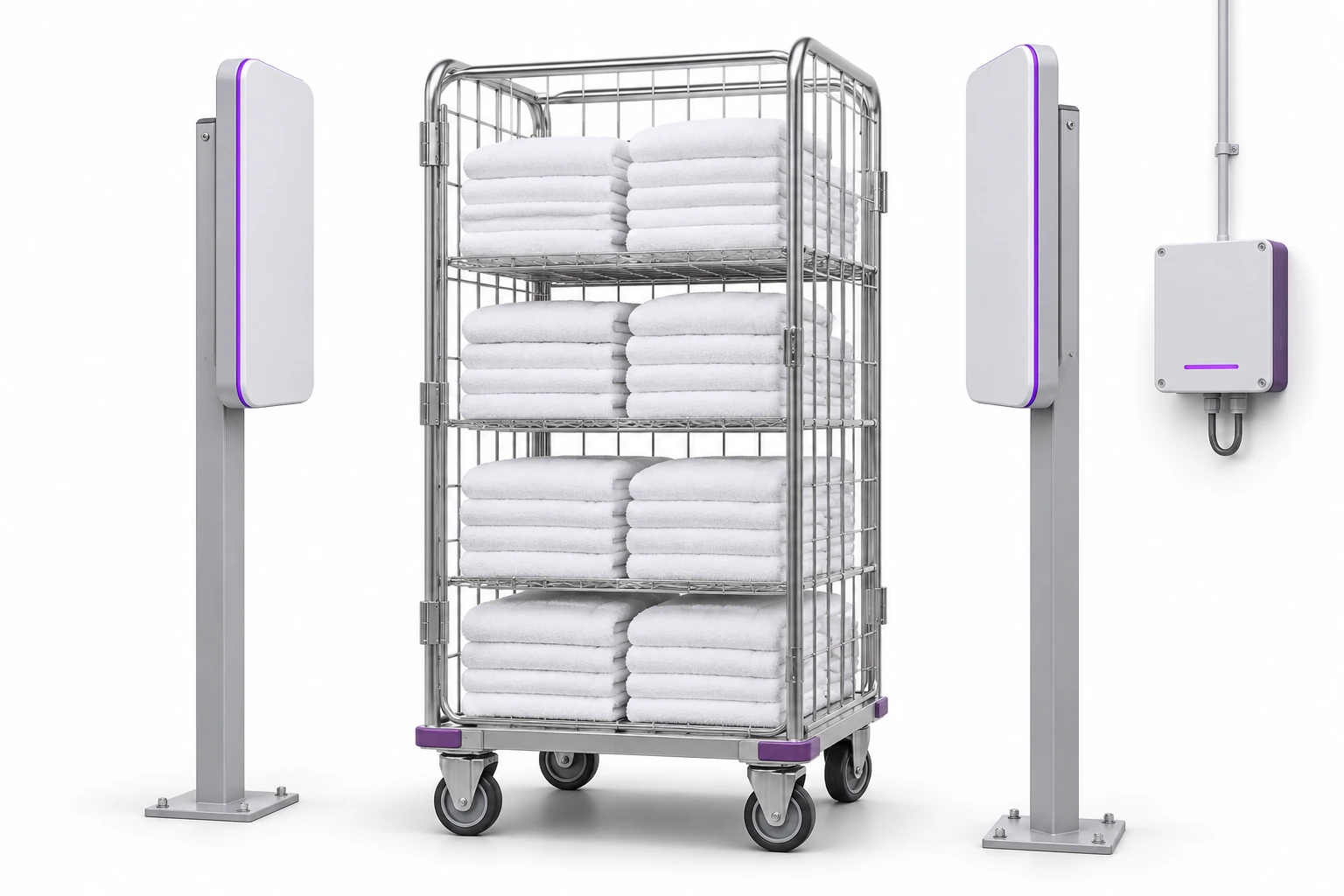
Handheld terminal or permanent position may support shipment to the laundry and collection of clean textiles.
We check tags, carts and typical batch arrangement. You connect the reading result with the appropriate workflow operation.
The back office and exit control have different tasks. Everyone requires tailored rules. Learn about RFID reading points →
Transition control project
The gateway recognizes the tagged item in the selected transition. Integration can match this event with information about permitted transfer.
The staff moves the towels, the laundry picks up the trolleys, and the equipment goes to the service center. We take these situations into account so that the service receives clear issues to check.
Design includes equipment, rules, and team response. We check the location of the antennas in the facility, leaving free passage.
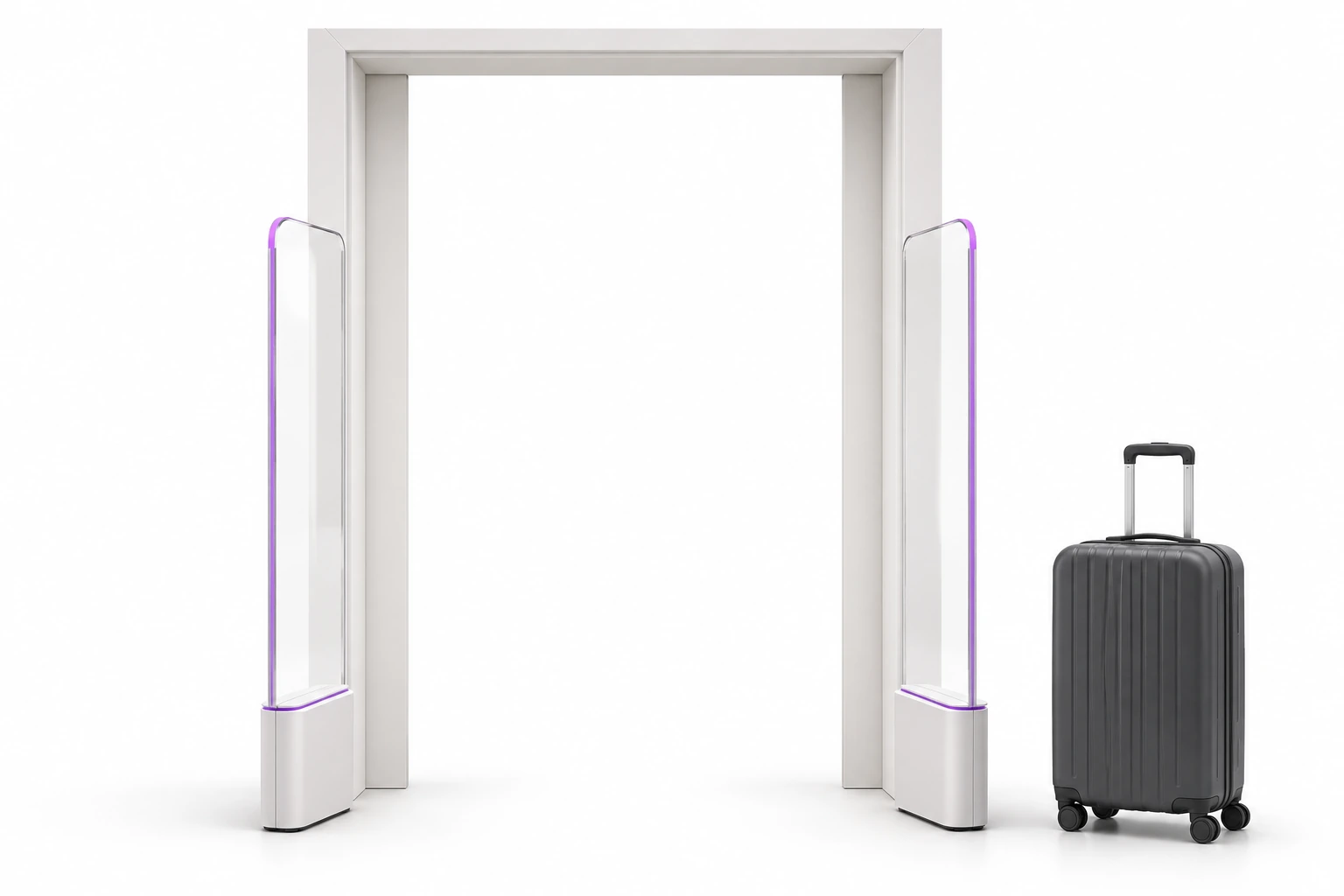
Example of the proposed implementation: we connect the event to the appropriate instance and the transfer context.

We agree on the allowed range of motion for the appropriate pieces, transitions and times.
Confirmation covers items transferred through a specific point.
We include transfers between zones and service transport in the circulation.
The source of approved check-out information must be associated with a specific item.
Connection to PMS or POS we agree if reception or sales details are needed. We also determine the reaction to an unknown code, repeated reading and lack of communication.
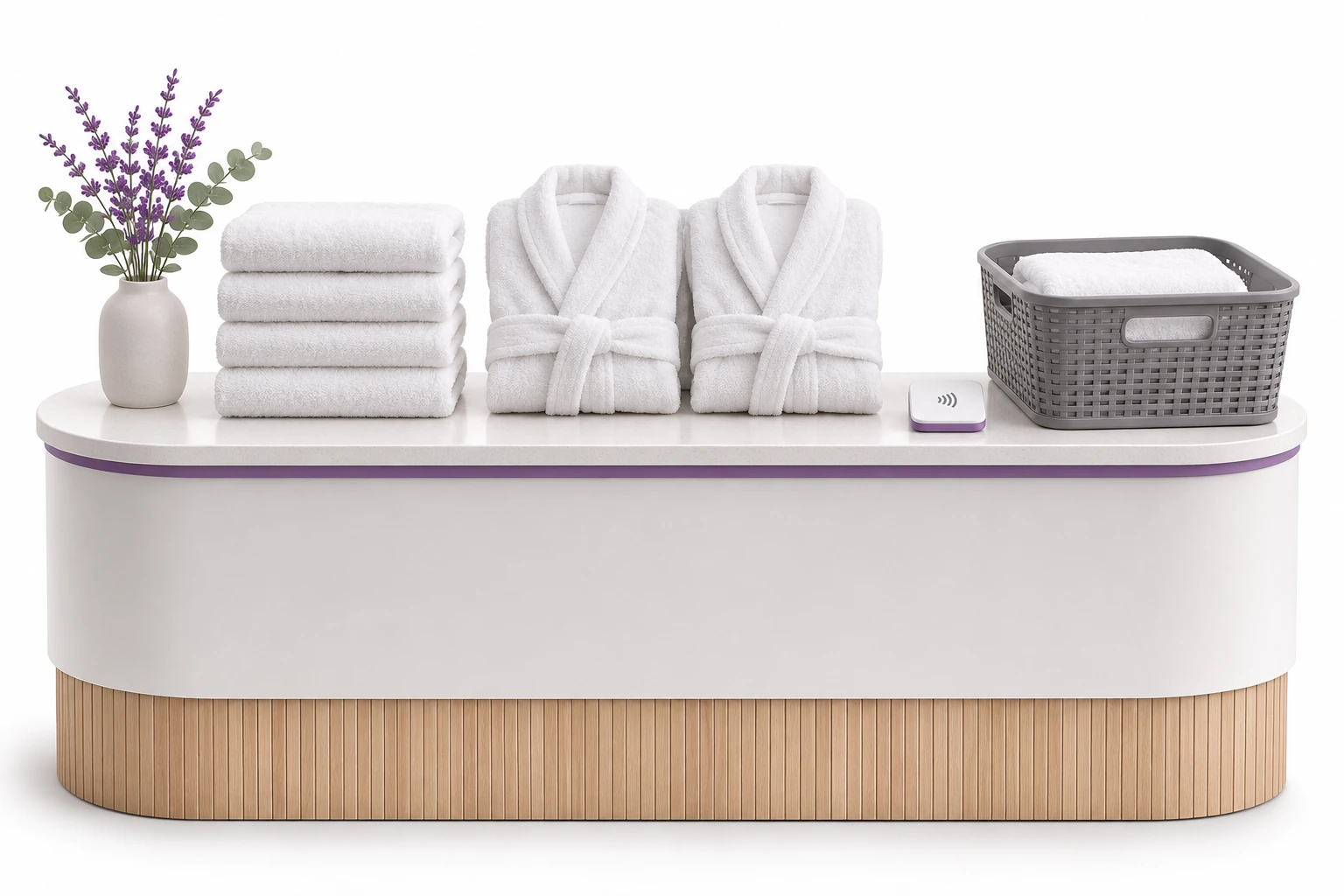
You are registering giving a towel or bathrobe and returning it. You know which pieces have been serviced and which are prepared for the next check-out.
Linking to a guest, room or card requires an established data entry method and appropriate integration.
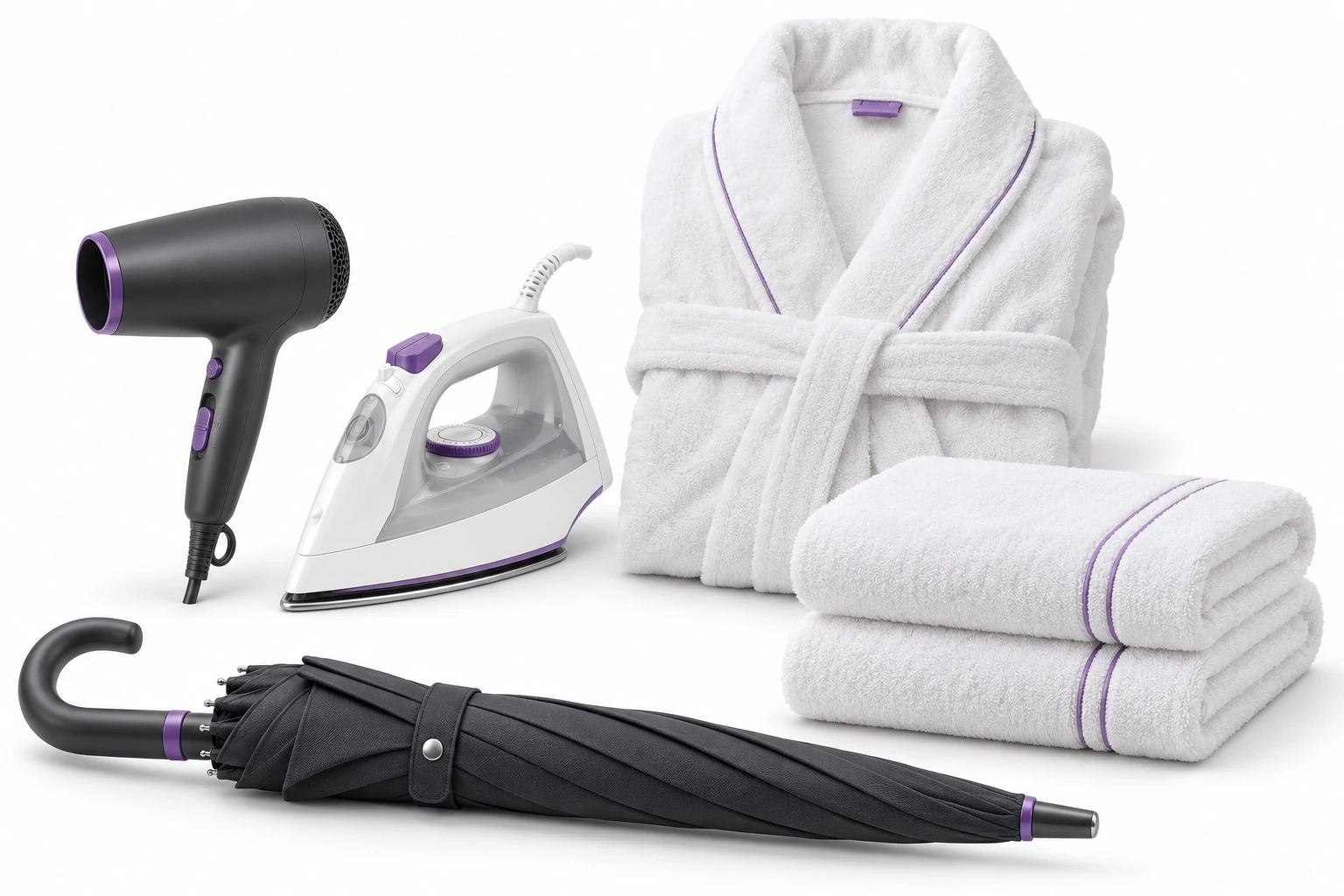
Room equipment may have record, place and history. The employee reports a problem, adds a photo and points to the device.
The manager plans the work and the contractor records the result. In the same way, you can cover the technical facilities of the facility.
Explore Report-King Submissions → · See website organization →
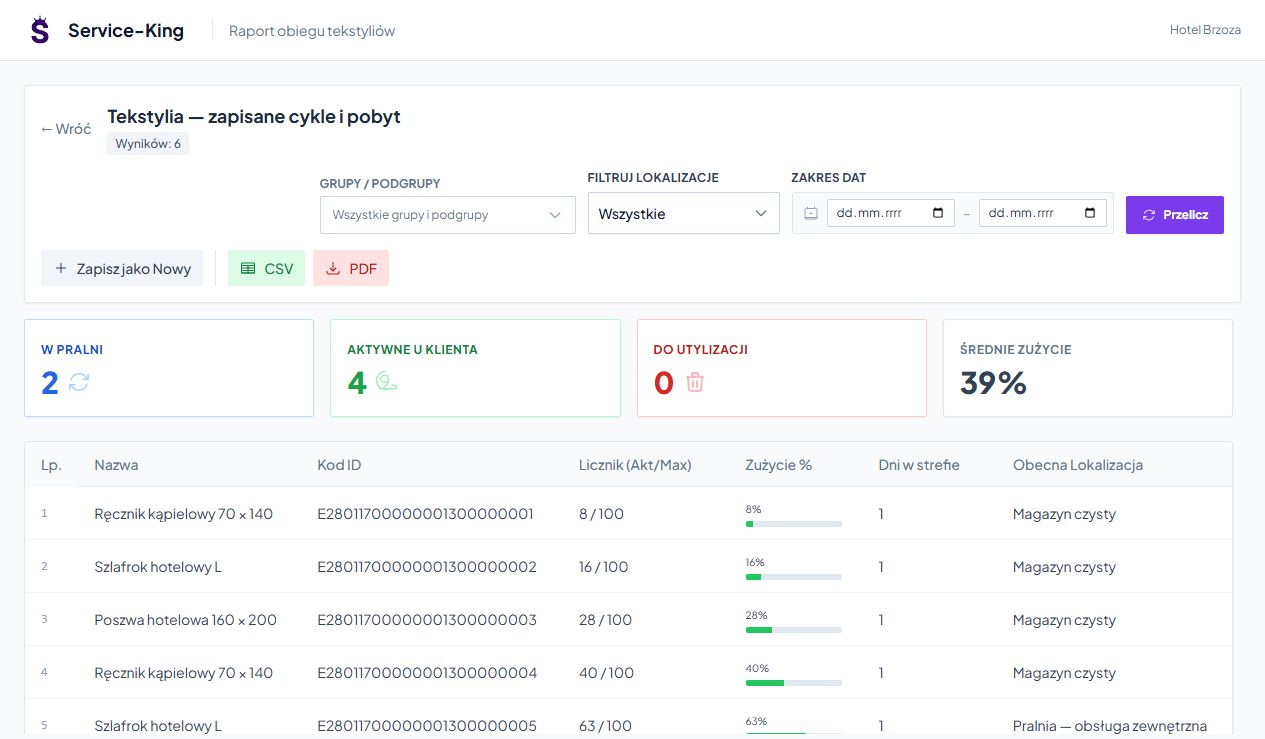
Summary shows saved cycles and time spent in zones. You may find things waiting to be returned or inspected.
The example includes six selected pieces. The percentage refers the numerator to sample limit of 100 cycles and supports fabric check planning.
The report uses recorded events; The condition is assessed by the staff. Explore reports and history →
An example of a daily workflow. Confirmation rules are tailored to the way your team works.
We can start by settling textiles between the hotel and the laundry.
We organize the data and check the readings of things used in the facility.
We take into account staff, carts, luggage and readings from adjacent seats.
The next stage may be a SPA, room equipment or exit control.
Free consultation
Show how textiles arrive from warehouse to use, laundry and back. We will select the first range for your facility.
During a free consultation, we will determine where RFID reading will help staff in their daily work.
Describe the textile circuit and where differences arise.
Practical knowledge