

Skip to content
Service-King

Industries • Events and technical implementations

From the dispatch list to a fully reconciled return.

Boxes, light, microphones and cables are on their way to the project. Service-King helps prepare a list, recognize the equipment and compare its return with the check-out.

The warehouse and crew see what is missing and what needs to be checked before the next event.
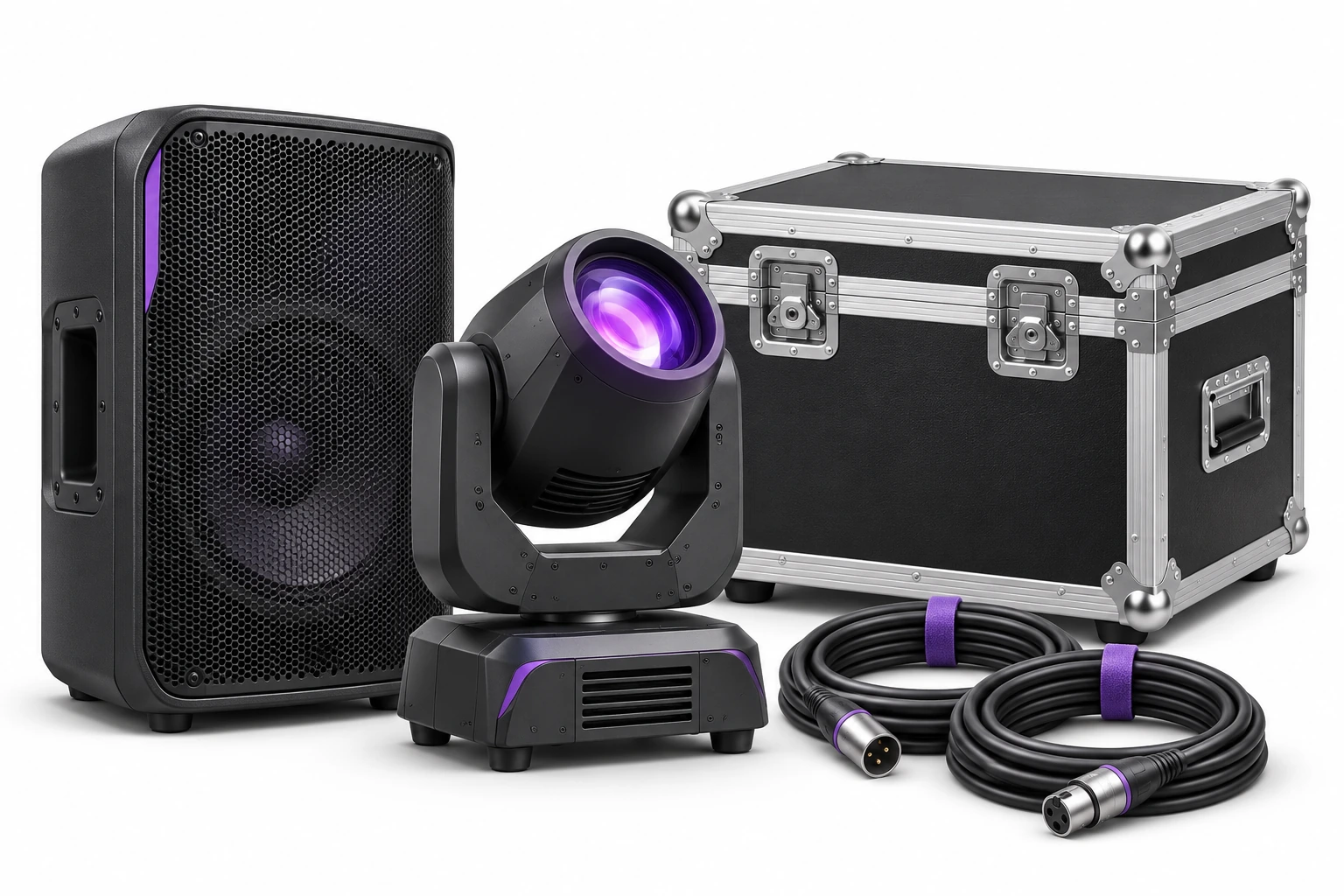
Loudspeaker, reflector, flight case and wires on white background
Technical equipment in orderly circulation. Illustrative image. Enlarge ↗

The lack of a cable is worth noting before leaving.

Your next project should not start with asking the entire team where the lamp was last seen.

01

Preparation

You compare the range needed with what was completed.

02

Handover

You separate similar cases and items going to different objects.

03

Return

You see items received, missing items and equipment requiring repair.
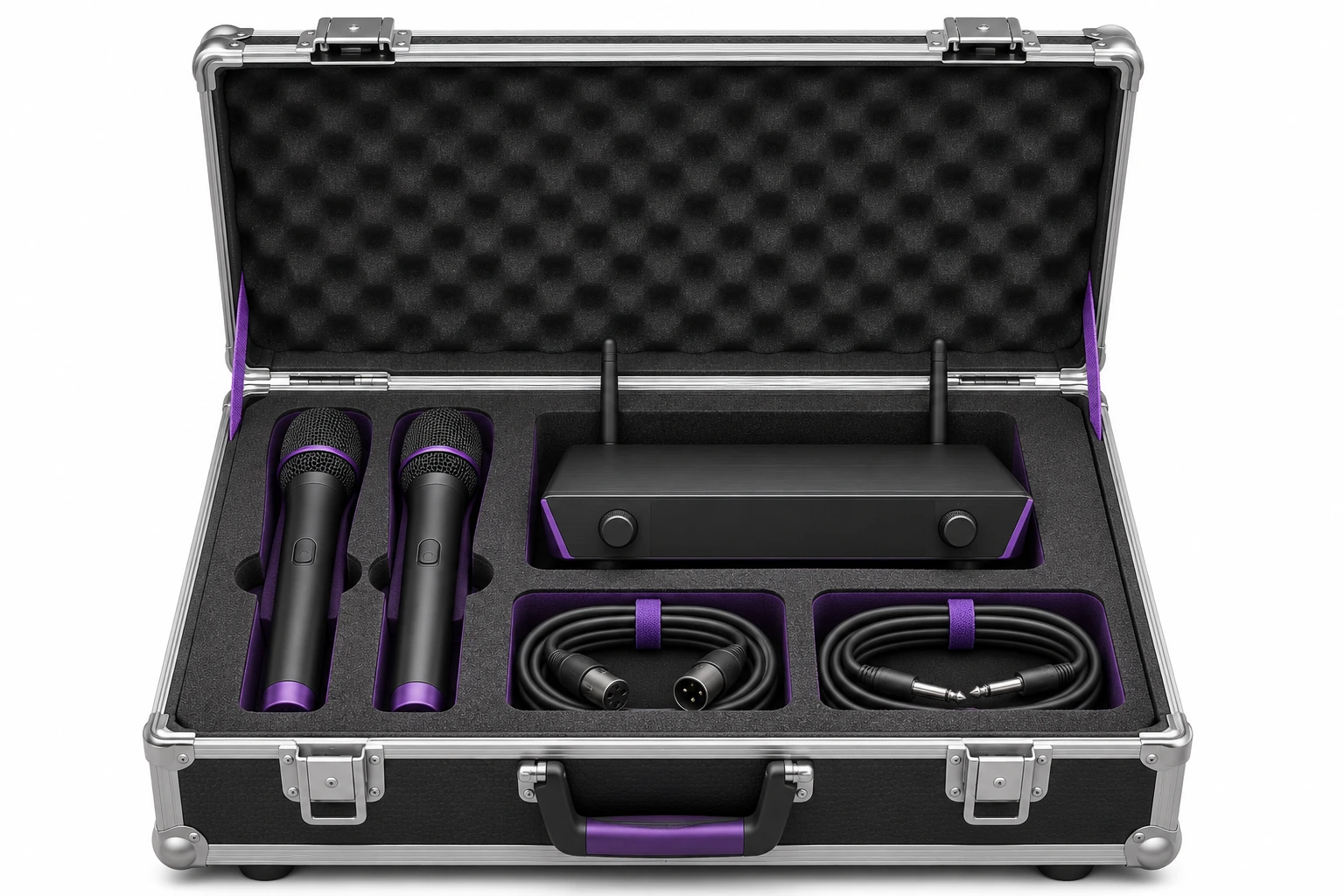
Open flight case with microphones, receiver and cables
You bill the crate and tracked equipment separately. Illustrative image. Enlarge ↗

Chest and valuable equipment have separate IDs.

Lead the way sound system, microphones, lighting, cables, stands and flight cases. You can also include furniture, scenography and technicians' equipment in the records.

Track items individually when each needs its own history. Simpler items can be managed by quantity.

The case designation identifies the case. Microphones and other elements that you want to check individually are included in the records separately.

One list. Clear tasks upon check-out.

You connect the scope of equipment with the order, recipient and place of implementation.

01

Warehouse prepares

Names and photos make it easier to choose, and IDs confirm the right pieces.

02

The team picks up

The transfer record shows what was spent on the project and who was entrusted with the equipment.

03

The manager explains the shortcomings

Moves from summary to specific items that need to be completed.

See assignments and equipment responsibility →

Stage, backstage and warehouse in clear records.

The place of implementation may be divided into stage, backstage and service point. You bind the equipment to the recipient or a responsible employee in the serviced circuit.

The summary shows the saved locations and condition of the items. Helps recreate handovers between warehouse and facility.

Location results from recorded operations. In the example you see nine pieces in stock, on fulfillment and after return.
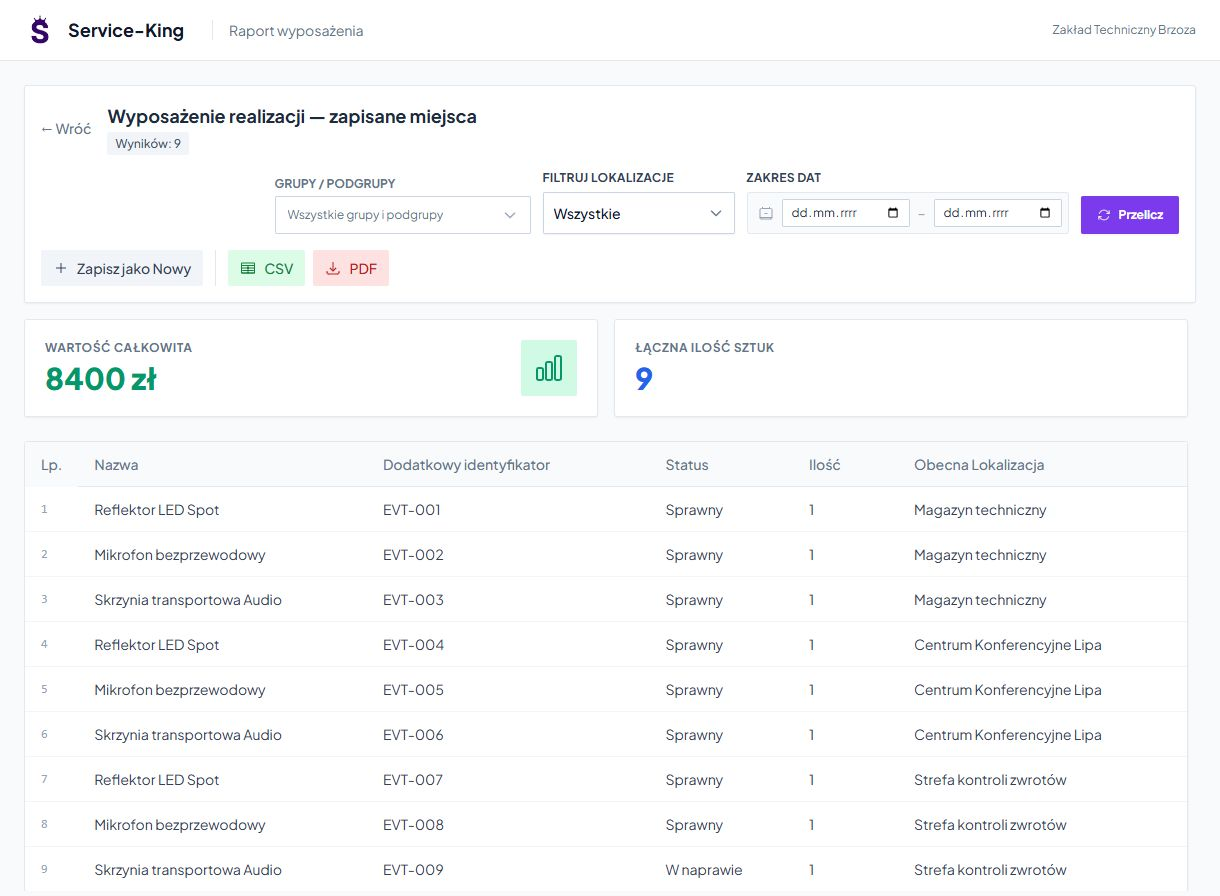
Sample data in the applicationEnlarge preview
Report of searchlights, microphones and boxes with codes and recorded places
Nine examples in various stages of circulation.
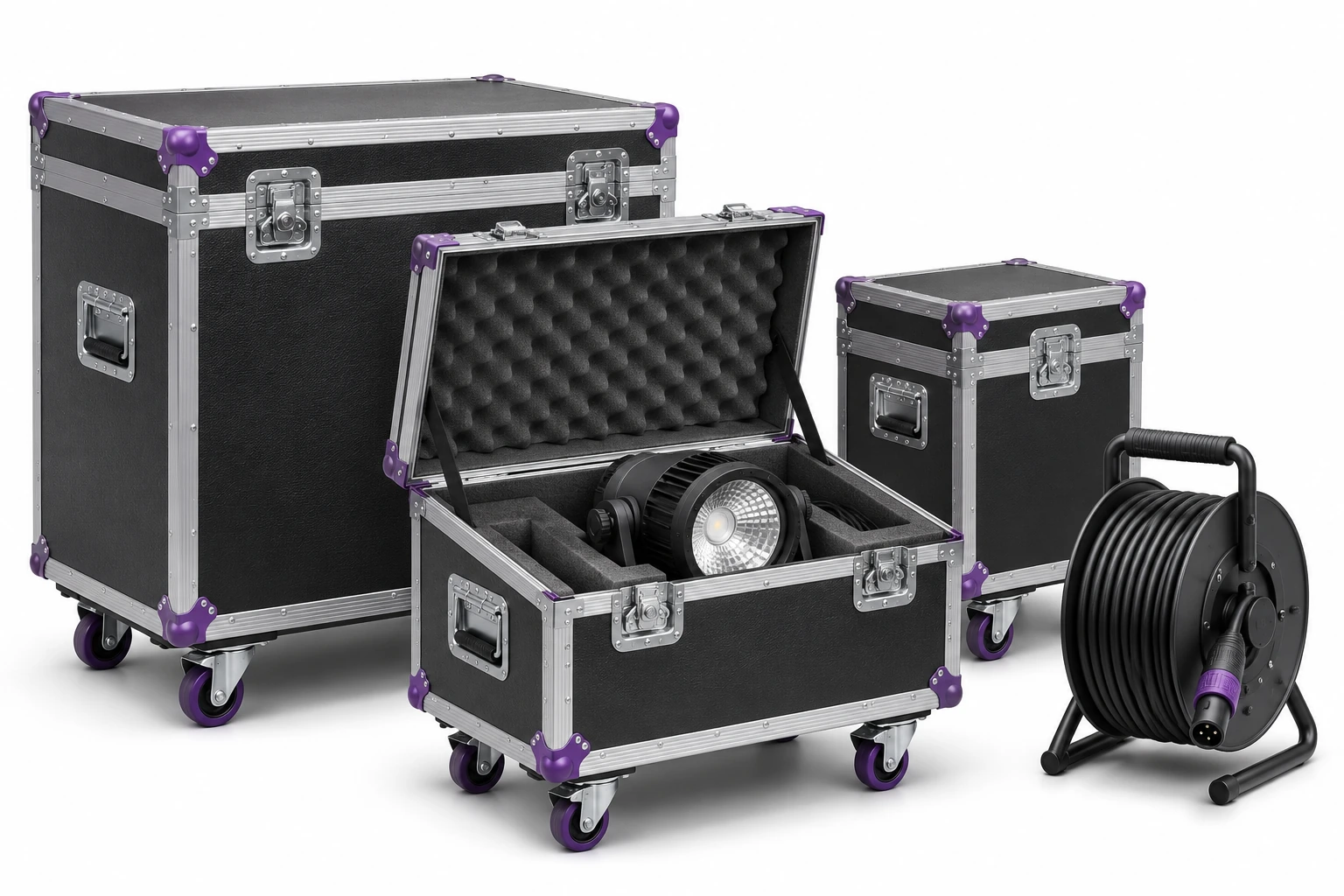
Transport boxes, reflector and cable drum after return
You explain the shortcomings and the work needed before the next trip. Illustrative image. Enlarge ↗

Two cars return at different times. Account for every return.

You accept item actually received. Equipment that is still on site or in transit is awaiting settlement.

The lack of an accessory, damage and the need for inspection are associated with a specific item. Returned and ready for the next departure are two different states.

Learn partial phrases → · See further hardware support →

What happened between the productions?

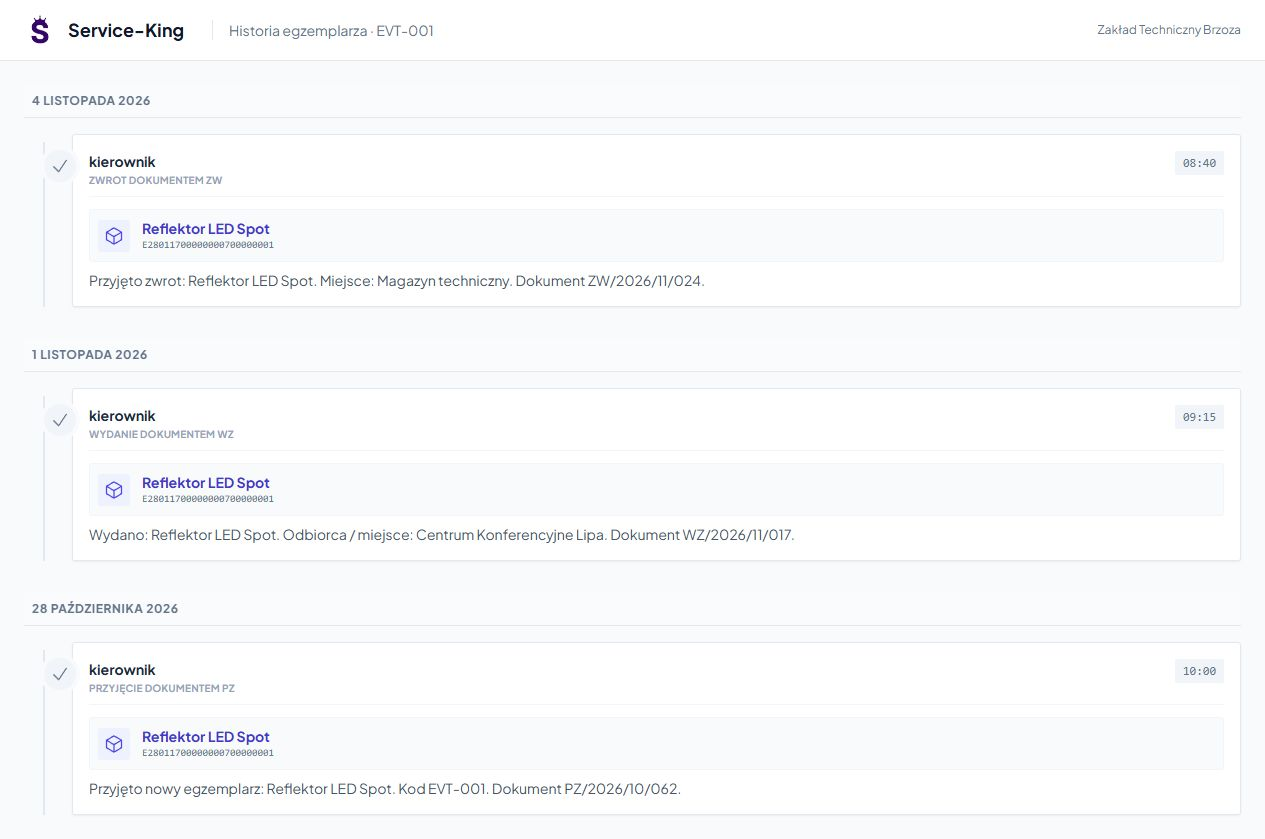
History connects recipient, equipment, dates and documents of the operation. You can go back to the actual check-out and return.

The example concerns the EVT-001 reflector. Its events remain separate from the history of similar lamps.
Get to know the documents and statements →

Sample data in the applicationEnlarge preview
History of the EVT-001 reflector with receipt, check-out and return
A specific reflector has its own history of saved operations.

The workflow in eight steps.

An example of a daily workflow. Confirmation rules are tailored to the way your team works.

  1. Organize your equipment. Separate names, models and examples.
  2. Select markings. Determine the scope of inspection of equipment and crates.
  3. Prepare a list. Specify the equipment for implementation.
  4. Confirm picking. Check things out and save the check-out.
  5. Record handoffs. Update needed object operations.
  6. Accept returns. Settle subsequent parts of the return.
  7. Explain the gaps. Record problems and report repairs.
  8. Check readiness. Prepare your equipment for your next trip.

UHF for batch equipment. QR for a single item.

The reading method is selected according to metal housings, cables, boxes and transport conditions.

  • Larger number of piecesThe handheld terminal helps recognize many properly marked items.
  • Telephone serviceQR may lead to the same record as the UHF designation.
  • Equipment listCompare the reading with the records. Learn about inventory →
  • Point in stockConstant reading requires integration and rehearsal in the actual arrangement. See RFID points →

Questions before implementation

Will RFID help find a lost item?
Searching by signal strength requires an appropriate handheld terminal and software. The result depends on the designation and conditions. We check the selection in practice.
Can I start with the selected type of equipment?
Yes. You can organize one group and list for an example implementation, and then expand the inventory to include additional devices and accessories.

Free consultation

Let's check one implementation from beginning to end.

Prepare your departure list. We'll show you picking, partial returns and handling of shortages.

  • Warehouse: things to prepare and confirm.
  • Team: transfer and place of implementation.
  • Return: settlement and readiness for the next event.

During a free consultation, we will choose the scope that suits the work of your team.

Let's talk about the event circuit

Describe a typical implementation and the equipment used in it.

Website language

Choose a language.