

Knowledge baseWarehouse and logistics
RFID in warehouses: uses, limits and pilot testing
RFID can accelerate the recognition of marked pieces, sets and load carriers. First, however, you need to determine what operation the reading should support and how the result will be compared with the records.
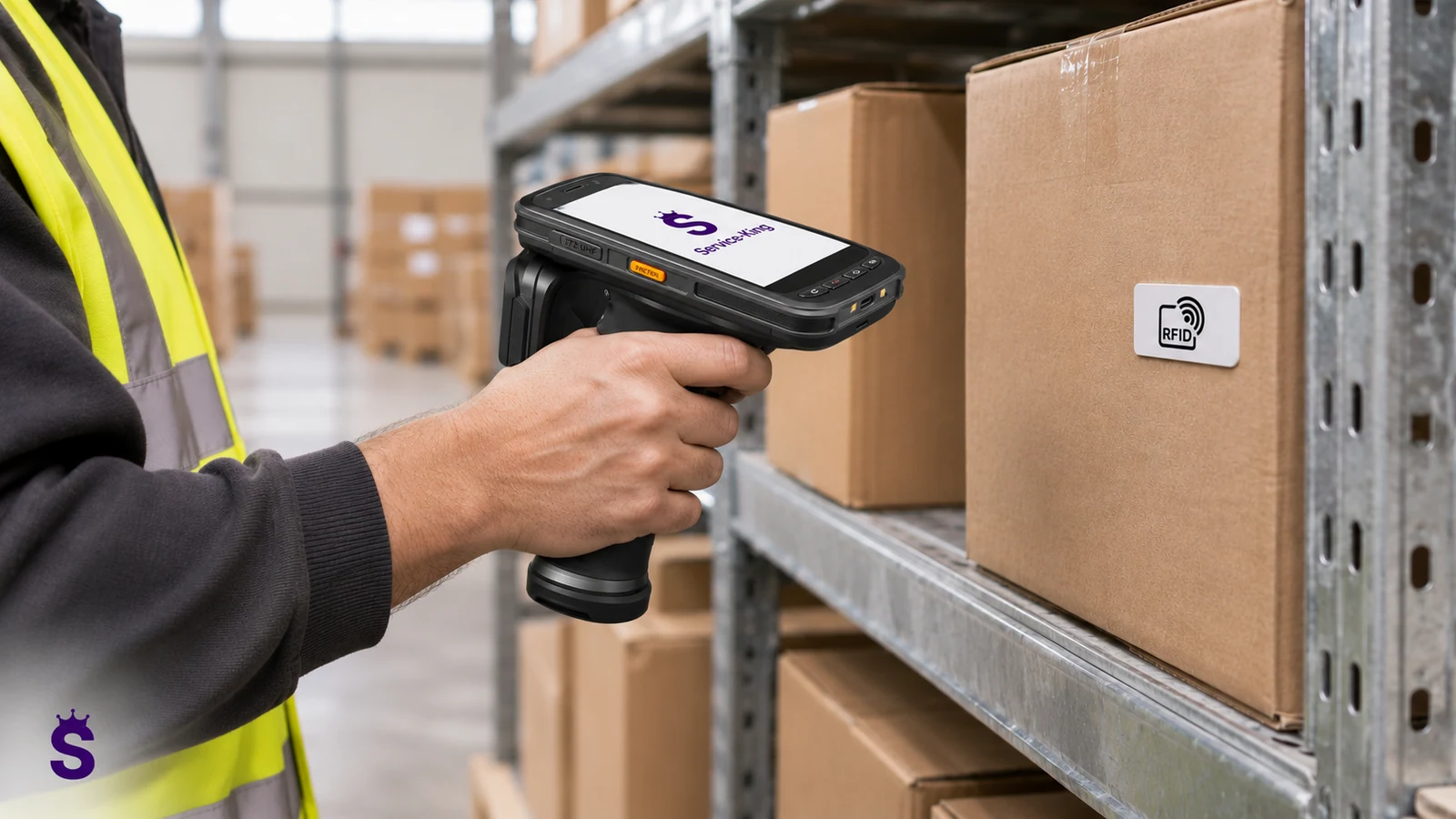
Start with the process, not the number of antennas
Inventory, completeness check and equipment return are different tasks. Each has a different starting time, reading range and confirmation method. A project starts with one measurable operation, e.g. checking the completeness of the service box.
Also determine the level of identification: product as a model, batch, specific item or transport load carrier. Reading the tag on the pallet does not automatically confirm the contents of all cartons unless the products inside are individually identified.
Where UHF RFID can be particularly helpful
| Process | What the reading gives | Condition for a reasonable result |
|---|---|---|
| Equipment list | Quick comparison of marked items with the list. | Good tags, zone scope and explanation of undetected items. |
| Check-out of the set | Recognize multiple tagged items. | Check the list and confirm the correct operation. |
| Return from customer | Comparison of actual returned items. | Partial return and technical condition handling. |
| Container circulation | Identification of load carriers instances. | Record of business partner, documents and location change. |
| Searching for an asset | Help finding a specific tag in range. | Known ID and appropriate radio conditions. |
If your goal is to fully manage warehouse picking, reservations and routes, verify the scope of the WMS you need. Equipment records are not automatically a full WMS system.
A handheld terminal or a fixed read point?
Handheld terminal is useful when the operator needs to walk through a zone, take an inventory or find an item. It doesn't require building a gate for every room, but it still needs the right way to conduct readings.
Fixed point is worth considering where things follow a predictable route. It requires antenna design, session triggering, and event interpretation. It is particularly important to distinguish the actual batch from items placed next to it.
Metal, liquids and packing density affect the result
There is no single tag that works equally well on every item. On-metal structures are selected for metal. When it comes to liquid containers, the place of installation and the actual contents are important. In a tightly packed batch, the reading may require a different setting or way of working.
Perform the test on ready-made, packaged items in the target system. The result from a loose tag on the desk is not a substitute for trying a full shelf. The basics of selection are described Zebra in RFID tag materials.
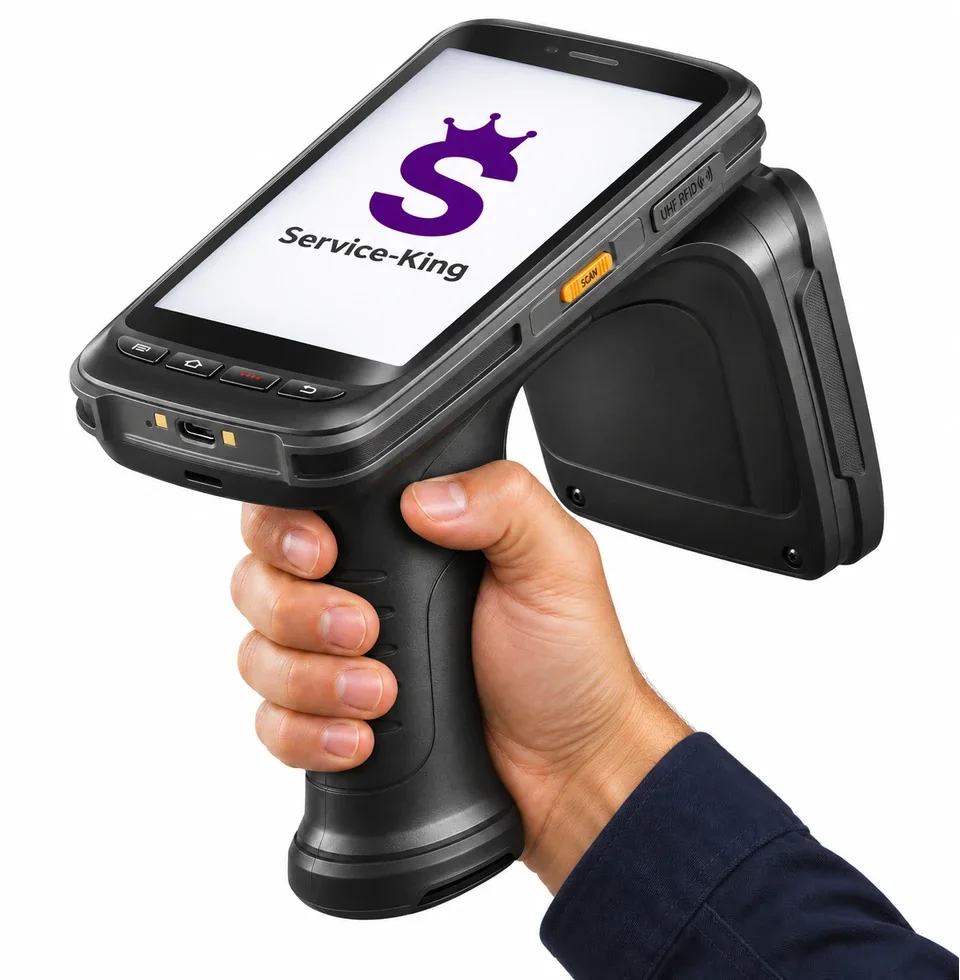
Connecting RFID readings with Service-King data
The tag leads to the file. The operator selects the inventory, issue, return or other appropriate action. The system stores the result in the context of this operation. Thanks to this, you can return to the documents and history of a specific asset.
If data is to be sent to an external ERP or WMS, determine the direction of exchange, identifiers, required fields and error handling. A ready-made export file does not automatically mean real-time two-way integration. Scope must be confirmed for a specific program and process.
What to measure before making a decision
- Full operation time before change and after attempt.
- Share of items requiring additional inspection.
- Unwanted readings from adjacent zone.
- Cost of marking, equipment, data preparation and maintenance.
- Impact of exception handling on operator work.
- Possibility of code identification when the tag or reader is unavailable.
Use to compare assumptions time and ROI calculator. See also description RFID stocktaking in Service-King and returnable container circulation.
Sources and further verification
Continue on this topic