

Knowledge baseRFID Technologies
RFID: what it is and how it works in company asset records
RFID allows you to recognize a marked item using radio waves. In a company, it makes sense when the reading leads to a specific action: inventory, issue, return or history check.
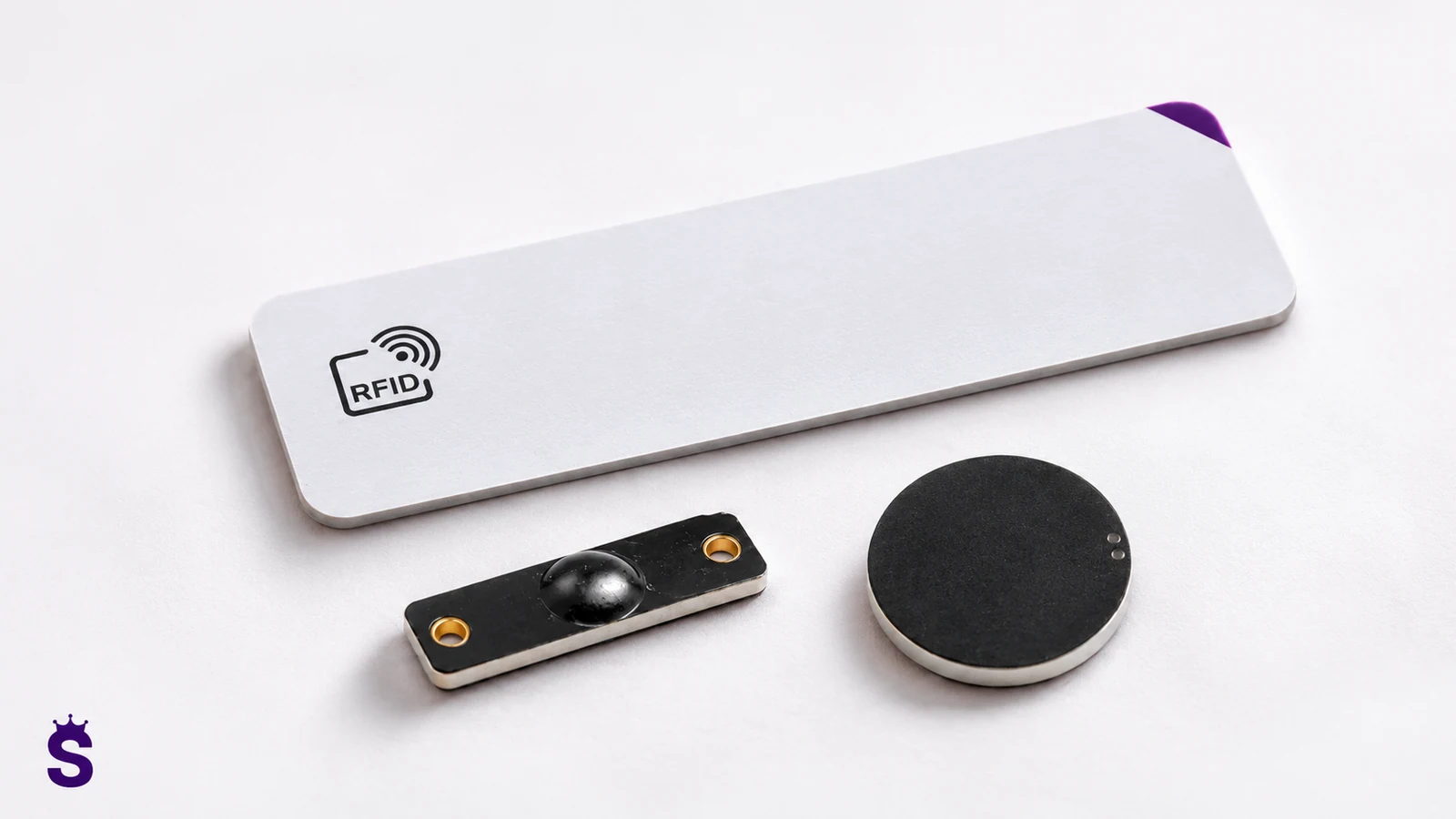
The components of an RFID solution
The tag contains electronics and an antenna. The reader communicates with the tag, and the software connects the read tag with the item list. The name, location, responsible person and documents may be present in the system - they do not have to be written in full on the label.
| Item | Role | What you need to choose |
|---|---|---|
| RFID tag | Provides the ID of the tagged item. | Material, dimensions, assembly method and working conditions. |
| Reader and antenna | Read the markings in the planned zone. | Standard, bandwidth, power, geometry and usage. |
| Software | Associates the identifier with records and operations. | Data, permissions, document circulation and exception handling. |
In passive UHF RFID, the tag uses the energy of the reader field and does not require its own battery. Other types of RFID may have a different design. Therefore, the word "RFID" alone does not yet define the range or compatibility of devices.
UHF, HF and NFC do not mean the same thing
Often used for quick inventory of many items UHF passive RFID. The EPC Gen2 standard describes the communication method in this class of solutions. Devices and tags must match each other and the conditions permitted in your region.
NFC is a short-range technology from the HF family, used, among others, to deliberately bring the phone or card close. A regular phone with NFC does not replace the RFID UHF handheld terminal. For UHF you need a compatible reader, e.g. a mobile device or appropriate accessory.
UHF Communication Description: GS1 EPC Gen2. Application comparison: RFID UHF and NFC.
What happens during a read
- Operator selects a task. For example, opens the list of the selected room.
- Reader detects matching tags in range.
- The application checks which files the read identifiers belong to.
- The result goes to the appropriate process and the operator checks the items requiring clarification.
What RFID speeds up and what requires preparation
The advantage of UHF is the ability to read multiple identifiers without direct visibility of each label. This helps with the inventory of equipment, tool sets, and the circulation of textiles and containers. However, this is not a guarantee of reading everything from any distance.
Metal, fluids, positioning of objects, antenna orientation and surroundings affect the result. A regular label stuck directly to metal may not work well. An on-metal structure is selected for such a surface and checked after installation. Practical selection rules are described Zebra in the RFID tag overview.

RFID does not automatically provide GPS tracking or theft prevention
The passive UHF marker does not send its position to the map on its own. Mobile reading confirms the detection of items within the reader's range. Registration of crossings and localization require appropriate infrastructure and rules of interpretation. The last saved location is not the same as the current real-time measured position.
Similarly, a label will not stop theft by itself. Helps identify equipment and detect specific events. Access control, alarms, mechanical security and procedures remain separate elements of the organization.
How to start a trial in your company
- Select one process, e.g. room inventory or issuing a set of tools.
- Prepare representative items: metal, plastic, small items and full containers.
- Establish clear records and identifiers.
- Check the reading in the target orientation, also at the zone boundary.
- Measure all your working time: preparation, reading and explanation of differences.
- Determine handling of a damaged tag and the ability to identify it with a code.
At Service-King, we combine identification with specific records. See RFID stocktaking in Service-King and tool check-outs and returns. The best place to start is with your own equipment, not the promise of a one-size-fits-all coverage.
Sources and further verification
Continue on this topic