

Knowledge base · Service-King
RFID in retail: availability, inventory and omnichannel
The customer sees online availability, but the employee does not find the product in the room. RFID can help recognize marked items, but only correct data workflow allows us to reliably promise availability.
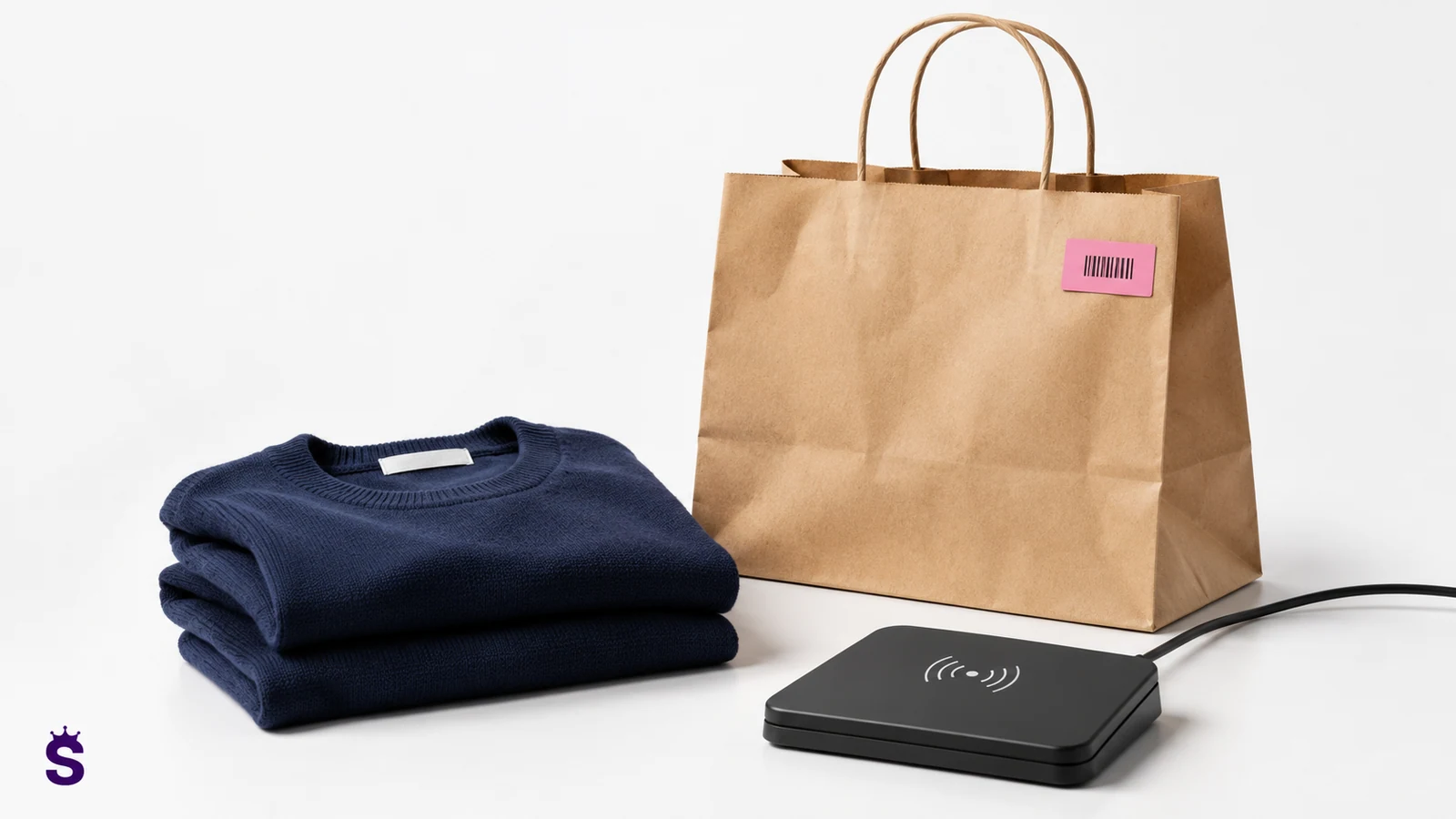
Physical stock and reservations are different kinds of information
The list shows the detected items within the specified range. Availability for sale also depends on reservations, returns, holds and synchronization. Reading the tag should not independently delete a reservation or confirm a sale.
| Data | Meaning |
|---|---|
| Product and variant | Correct model, size or color. |
| Item | Individual item if tracked. |
| Location | Shop, backroom or other area. |
| Status | Available, reserved, returned or blocked according to system rules. |
Physical stock and sales availability are different kinds of information
Item may be in store, but reserved, damaged or awaiting return assessment. The stocktake confirms a specific scope of physical presence. Should not independently remove holds or change obligations to the client.
Set the binding source for availability and the moment of update. If different systems interpret statuses differently, more frequent readings will not solve the problem. There is a need for common meaning of data and verification of order, reservation and return changes.
Variants and individual items support different decisions
The size or color describes the variant, and the individual identifier describes a specific item. When inspecting a larger batch, UHF may facilitate recognition if tags are assigned correctly. The same product name is not sufficient to provide a clear history of the item.
When replacing a label, you must maintain the link to the existing item. If a second record is created, the stocktake could overstate the state. For a support code, make sure it indicates a model, variant or item. The operator should know what he actually recognized.
Test in an actual shop
Markings, shelves and arrangement of goods affect the reading. Check border zones, facilities and returns. Misreading things from an adjacent space may inflate your score.
Label replacement and damaged marking require a procedure to avoid creating a second piece. Additional code can lead to the same record if the data is properly linked.
Service-King and the sales system
Service-King can help you keep track of your equipment, load carriers and tagged assets. Handling POS, store orders, reservations and multi-channel sales requires confirmation of scope and integration. The mere fact of using RFID does not create a ready-made omnichannel platform.
Start with a specific problem: inventory, batch return or equipment workflow. Determine which system is the source of the binding state.
Example: The product has returned but is not ready for sale
The returned item has been read in the store. However, it may require an assessment, have incomplete packaging or await a decision. Updating your physical presence should not automatically increase online accessibility for your customer. Determine which system assigns the status and when the lock is released. This scenario shows the difference between correct counting and correct workflow. Both are needed if data is to support a credible promise of accessibility.
Related topic: handling return for inspection.
Scenarios to include in an omnichannel trial
| Scenario | What to check | Possible discrepancy |
|---|---|---|
| Store directory | Range and adjacent zones. | Back room counted as sales floor. |
| Reservation | Status source and lock moment. | Item is present, but already promised. |
| Return | Status and further decision. | Automatic release before inspection. |
| Transfer | Departure and receipt confirmation. | Two locations show the same item. |
| Exchange interruption | Data age visible. | The old status looks current. |
Reading a group of items requires control over the read area
Shelving, merchandise arrangement and room boundaries influence the result. Check for marked off-list items and items that are missing. A high number of reads is not proof of correct zone assignment.
Conduct the test with typical stock and team operation. Include fitting room items, returns and backroom items if they are in scope. Write down how the operator explains the difference and whether he can recognize the item in a different way when the tag fails.
The scope of records and sales must be agreed
Service-King can assist with tagged assets, states, and agreed workflows. POS, e-commerce integrations and detailed reservation rules require confirmation for the project. RFID alone does not create a ready-made omnichannel platform.
Start from where the error occurs. Practical areas are described trade and shops, warehouse and inventory. The right combination of these needs should lead to reliable information, not just faster counting.
Scenario: a stocktake detects a reserved item
The product is in the back room but has already been promised to the customer. Physical presence is valid and should not automatically remove your booking status. Inventory and commercial availability must have an agreed relationship. If systems use one field for both purposes, model refinement is needed.
Determine the binding source of the reservation and the moment of its check-out. Cancellation, collection and expiration may require different events. Rules should not be adopted based on the counter demonstration alone. The operator should know why the current item is not available for the next check-out.
On multiple channels, check for delayed update and repeated message. An old record should not overwrite a newer decision without proper principles. Visible data timing helps avoid seeming certainty. If the product changes location, the history should also show the actual handover between zones or stores.
Add a return awaiting grading and an item with a damaged mark to the sample. A reading does not prove commercial readiness and the absence of a reading does not prove a physical deficiency. These exceptions show whether the team can distinguish technical information from process decisions.
Pilot output should include stocktake time, clarifications, and data consistency after changes. A higher number of identified pieces alone does not guarantee a credible promise to the customer. The scope of sales and booking integrations must be confirmed for the project, and the records should indicate which information is actually provided.
| Area | Practical arrangement |
|---|---|
| Presence | Physical confirmation scope. |
| Reservation | Source and rules for changing status. |
| Time | Data freshness and order. |
| Movement | Location changes confirmed. |
| Exceptions | Return for assessment and ineffective marking. |
| Effect | Process compliance after full scenario. |
Checklist
- Consistent product and variant model.
- Unique identification of items.
- Reservations, returns and holds described.
- Data synchronization confirmed.
- Attempt full operation, not just scan.
Questions worth clarifying before implementation
Does RFID eliminate all availability errors?
No. The result depends on markings, data, reservations and operations. Technology helps recognize item, but the logic of workflow still requires preparation.
Can the stocktake automatically correct every condition?
Correction should result from agreed rules and explanation. It is necessary to distinguish the lack of reading from the lack of things and take into account commercial statuses.
How to check profitability?
Compare full inventory time, difference handling, and resolution costs on a similar scope. You should not base your decision solely on the number of tags per minute.
Go to solutions related to this topic
- Trade and shops - Assortment records and identification applications.
- Warehouse management (WMS) - Receipts, storage locations and issues.
- RFID stocktaking — Physical inventory and comparison of the reading with the records.
- Reports and movement history - Statements and documents related to operations.
Free consultation
Let's check where the availability difference comes from.
Describe stores, facilities and sales systems. We will establish the level of identification and responsibility for the condition and status.
Thank you for your inquiry.
Your message has been sent to the correct department. We will contact you to determine next steps.
Send another inquiry