

Knowledge base · Service-King
WMS for e-commerce: picking, variants and returns
Incorrect variant, incomplete package and return without recognition are different problems. Selecting a solution starts with where errors occur, not with a promise to eliminate all errors.
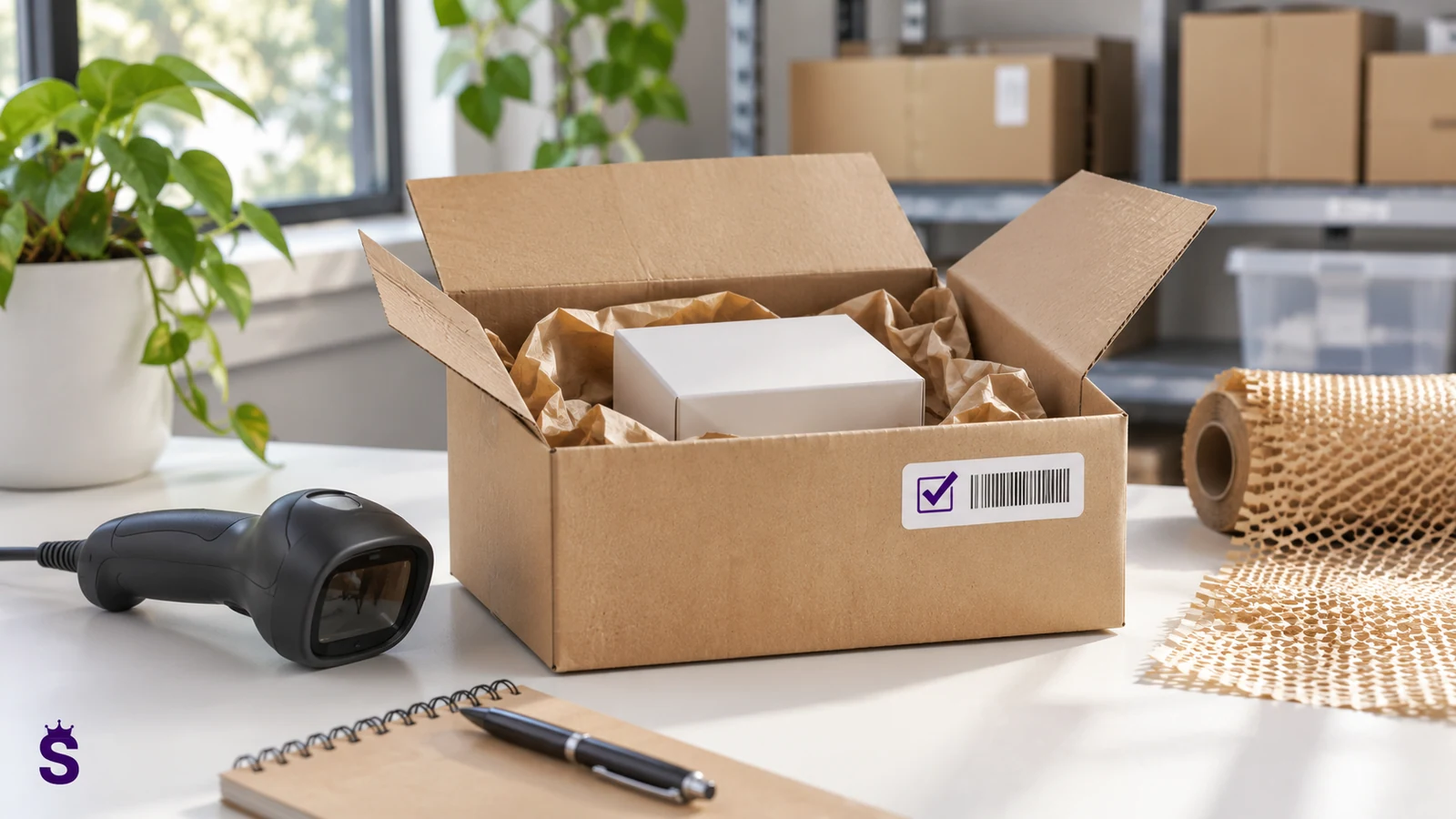
Map the workflow from order to return
| Stage | What you need to check |
|---|---|
| Import order | Variant, quantity, status and completeness of data. |
| Cash on delivery | Correct place, product and possible batch. |
| Packing | Actual content matches the list. |
| Shipping | Linking the package and shipping label to the correct order. |
| Return | Identification of items, condition and decision on further workflow. |
An order passes through several areas of responsibility
Data from the platform, picking, packing and shipping should describe the same scope. Mistakes often occur at the boundary of systems: a quantity change did not arrive, a variant has a different code, or only part of the order was canceled. Correct import at the beginning does not guarantee compatibility at the end.
List the statuses and the moment when a change is still possible. If the package has already been prepared, canceling should trigger a specific path, not just disappear from the list. To receive the solution, you need examples of partial implementation and repetition of the message, not just a perfect order.
Variant, batch and serial number are different data levels
Color or size distinguishes the variant. A batch combines a group of goods according to appropriate principles. The serial number may refer to a specific item. Determine what information you need in your category. Too much detail increases work, and lack of required data makes feedback and explanation more difficult.
With the codes, check what they really identify. A model label may be common to multiple pieces, so it does not create an individual history. If you're tracking item, all systems should understand their IDs. In the case of UHF, it is necessary to associate tags with the appropriate records and control the batch reading.
Match identification to the goods
The product model code will not always distinguish a specific item or batch. If you need serial numbers, date checks or piece history, please arrange this before importing. Do not add unique identification where the process will not use it.
RFID can help with tagged batches, but requires zone control and tag selection. A simple code scan often remains sufficient to deliberately confirm a single item.
Service-King asset records and a full WMS
Service-King focuses on asset records, markings and their workflow. It can be useful for warehouse equipment, returnable containers or rental equipment. Store integrations, couriers, reservations and picking planning are not automatically included in every inventory implementation.
If you need it, prepare a list of platforms and interfaces and determine the division of responsibility between programs. Test re-import, cancellation and partial fulfillment.
Test what happens when an order changes
The order may be canceled once collection has started or the quantity may be changed before shipping. Check how the information is delivered to the station and what happens to the goods already stored. It is equally important to return some of the items in the package. Systems should agree on the actual status rather than just sending a "done" message. It is worth showing these scenarios to the supplier using your own examples, because a demonstration of a correct single shipment will not reveal all the problems.
Related topic: integration error handling.
Checks at each e-commerce stage
| Stage | Control | Example exception |
|---|---|---|
| Order acceptance | Variant, quantity and status. | Unknown index. |
| Cash on delivery | The right product and place. | Missing at saved location. |
| Packing | Actual content and list. | Swap similar variants. |
| Shipping label | Correct package and order. | Printout to another recipient. |
| Return | Diagnosis, condition and further decision. | Item is back, but not ready for sale. |
Returned goods need assessment before becoming available again
Product may be returned damaged, incomplete or requires verification. Reading the ID confirms recognition, not approval for sale. Physical presence and commercial availability should be distinguished.
Determine which system assigns the status and how the information reaches the sales platform. Claims, billing and customer data requirements are part of due process. The practical division is described returns and RMA guide.
How to separate the scope of WMS and equipment records
WMS concerns a specific warehouse flow, and station equipment, devices and return load carriers may have their own history. Service-King shows areas warehouse, trade and containers. The detailed scope of platforms, couriers, bookings and picking routes should be confirmed for the project.
When comparing offers, prepare a list of required connections and scenarios. It is not worth concluding that integration is ready just from the presence of an export button. The owner of the data and the way errors are handled are as important as the transport of the message itself.
Scenario: a return contains a different item or variant
The parcel returns with a product similar to the one sent. First, recognize the scope you actually control: model, variant, batch, or item. The correct name does not always confirm the identity of a specific item. If you carry out individual identification, the number should be checked against documents and history.
Record the actual received status and completeness. You should not immediately increase commercial availability if an assessment is needed. The actual complaints or returns process may have separate requirements that are not replaced by stock status. It is important that the waiting goods do not look like they are ready for another order.
Check your connection to the sales platform. Who receives information about receipt, who receives information about the decision and when does the status change? If systems only list a single "returned" value, they may not distinguish physical receipt from further resolution. Integration should have an agreed meaning for these stages.
Include partial returns and incorrect codes in the pilot. The operator should be able to flag a case for investigation without creating a random new item record. Measure the time taken and whether the next person receives all the information they need. Good handling means routing the return correctly, rather than simply closing the parcel as quickly as possible.
| Area | Practical arrangement |
|---|---|
| Identity | Control level and relevant numbers. |
| Status | Actual range received. |
| Waiting | Separation from commercial availability. |
| Platform | The moment and meaning of the message. |
| Exception | Path for another variant or number. |
| Decision | Due process and accountability. |
Solution selection checklist
- Actual error types from the last period.
- Data model: variant, batch and serial number.
- List of required connections to other systems.
- Handling shortages, cancellations and partial returns.
- Measurement of the entire operation, not just the scan.
Read on picking control and handling RMA returns.
Questions worth clarifying before implementation
Is RFID necessary in e-commerce?
No. The codes may be sufficient for many purposeful confirmations. UHF is worth evaluating where identifying marked parts provides an advantage in full surgery.
How to test store-warehouse integration?
Include change, cancellation, partial fulfillment, return and repeat message. Check data compliance after each situation, not just the fact of sending.
Is it possible to track equipment and goods in one project?
You can plan for related scope, but you need to separate data models and responsibilities. The employee tool and the product variant being sold have different operations and requirements.
Go to solutions related to this topic
- Warehouse management (WMS) - Receipts, storage locations and issues.
- Trade and shops - Assortment records and identification applications.
- Reports and movement history - Statements and documents related to operations.
- Returnable containers and pallets - Specific carriers, recipients and returns settlement.
Free consultation
Let's check the ordering and return route in your warehouse.
Describe platforms, product variants, and common mistakes. We will determine the process requirements and the scope of connections with other systems.
Thank you for your inquiry.
Your message has been sent to the correct department. We will contact you to determine next steps.
Send another inquiry