

Anti-theft gates and RFID: key differences
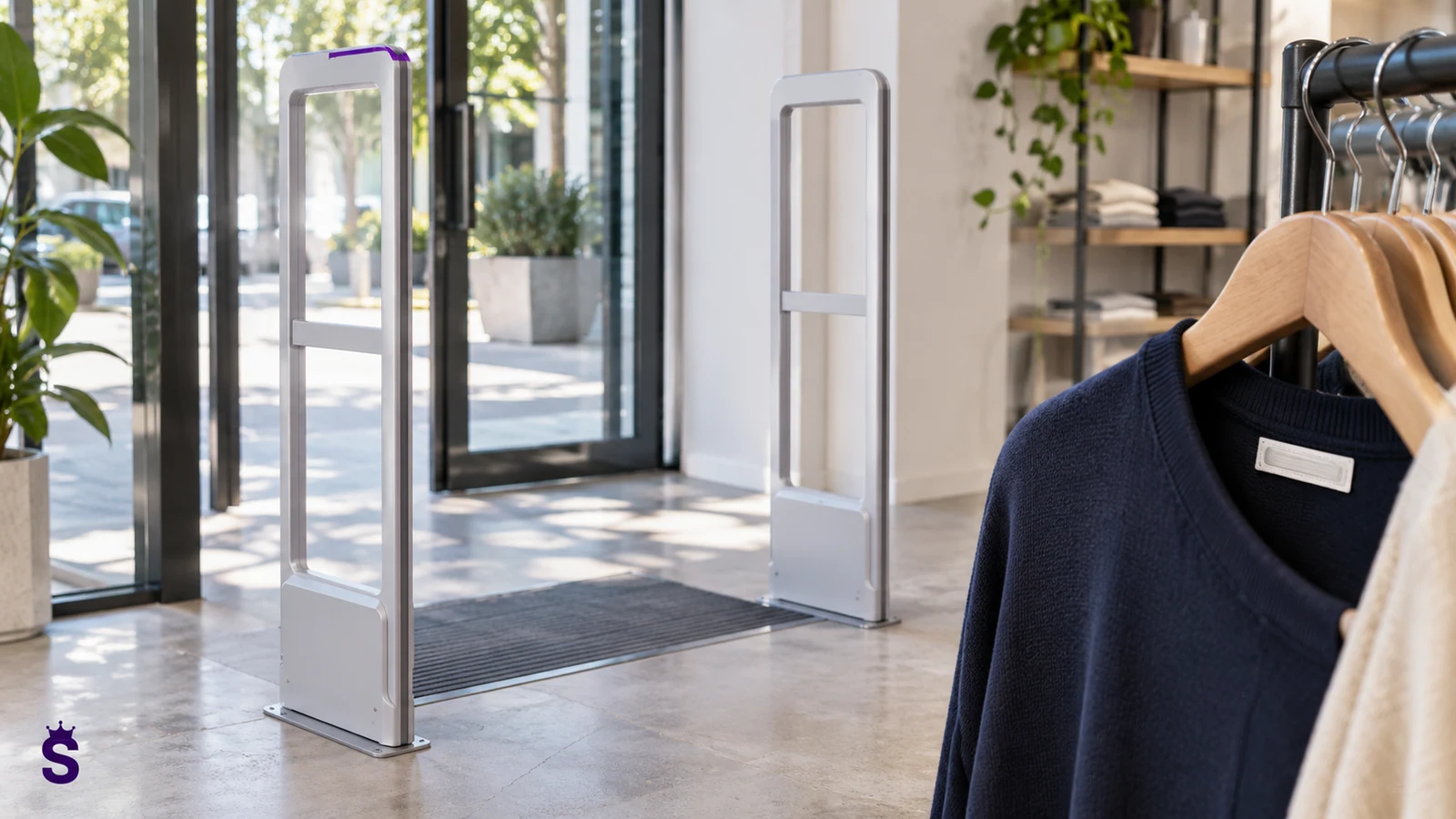
Anti-theft gates: electronic theft prevention for your shop
Losses in retail are a topic that keeps many store owners awake at night. Stolen clothing, cosmetics, small electronics - each such item is a real hole in the budget.
Today, an anti-theft gate is a standard and one of the most effective protection tools that a store can implement - regardless of the industry and size. But for the system to really work, it must be selected well, installed correctly and equipped with appropriate accessories.
Why electronic anti-theft systems are central to shop security
Electronic anti-theft systems have one fundamental advantage - they operate passively and continuously. A customer who tries to take out an item with an active tag triggers the alarm. The employee does not have to follow anyone, and the security guard does not have to stand at every aisle. The anti-theft gate does it for them - quietly, effectively and without using additional resources.
Deterrent effect
The appearance of the system itself acts as a deterrent - before anything happens. This means that the investment in store security pays off not only through actual detections, but also through the prevention of theft attempts.
How an anti-theft gate works: from tag to alarm
The mechanism is simple: a label (tag) is stuck or attached to the product, which communicates with the gate's antenna. If the tag is not deactivated at the checkout, the antenna detects its presence when passing through the gate and triggers an alarm.
RF or AM: matching the technology to the industry
AM Technology (Acousto-Magnetic)
Very sensitive, rarely generates false alarms. Frequency 58 kHz.
Perfect for: Cosmetics, PharmaceuticalsRF (Radio Frequency) technology
Cheaper to implement, widely used. Frequency 8.2MHz.
Perfect for: Clothing, FashionGate accessories: security tags, labels and retail displays
Effective store security requires appropriate accessories matched to the assortment:
- Clips (hard tags)
Hard clothing protection, difficult to remove without a detacher.
- Self-adhesive labels
Discreet security for the cosmetics and food industries.
- Shop presenters
Aesthetic pendants and displays with integrated protection.
- Detachers and decoders
Checkout devices for clip removal and label deactivation.
RFID gates: a solution that goes beyond theft prevention
Classic anti-theft gate protects goods. The RFID gateway does something more - it manages it in real time.
RFID technology allows not only to detect unauthorized removal of an item, but also to track the flow of goods throughout the store. Each item marked with an RFID tag is individually identified - the system knows how many pieces of a specific model are on the sales floor.
The advantages of RFID in retail
In the clothing industry, RFID eliminates tedious counting of goods and inventory errors. The store always knows what it has on display.
Discover Service-King RFID gatewaysInstalling a gate: what you need to know
Even the best anti-theft gate will not work if it is installed incorrectly. The key issues are:
Passage width
Standard goals cover up to 120 cm; wider inputs require additional antennas.
Interference
Metal structures and cash registers may affect antenna sensitivity.
Customer counters and ControlPoint: a complete security system
Anti-theft gates are increasingly becoming part of a broader ecosystem of store protection and analytics. Modern solutions combine it with customer counters that measure traffic at the entrance and help assess sales conversion.
Secure your business
Consult our expert on anti-theft systems.
Get in touch
Tell us what you need so we can prepare an initial assessment.
FAQ – Frequently asked questions
What is the difference between AM and RF technology?
AM (Acousto-Magnetic) operates at a frequency of 58 kHz, is very sensitive and ideal for the cosmetics industry. RF (Radio Frequency) operates at 8.2 MHz, is cheaper and commonly used in clothing stores.
Can an RFID gate replace a classic anti-theft gate?
Yes, the RFID gate not only protects goods against theft, but also identifies a specific product, which allows for automatic inventory and tracking of inventory in real time.
What determines the effectiveness of gate assembly?
The key factors are: passage width, elimination of electromagnetic interference (e.g. from cash registers) and correct calibration of antennas by a professional installer.
Reduce losses by 60%
A well-selected EAS system is an investment that pays off every day.