

Knowledge base · Service-King
RFID in the military: equipment records and project boundaries
Large sets and frequent transfers require a clear history. In defense applications, there are specific access, security and approval requirements that cannot be derived from the word RFID alone.
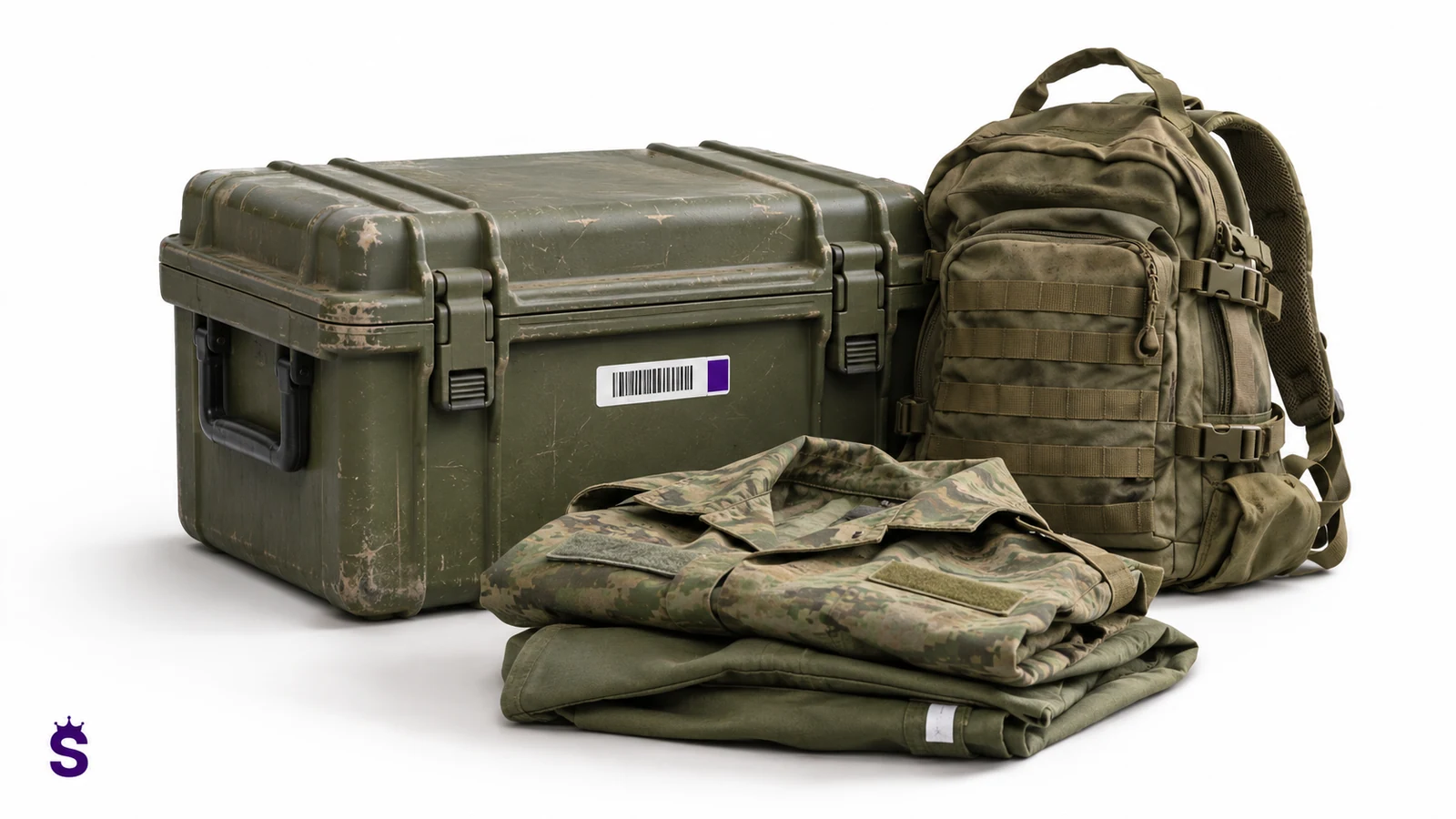
Start with a defined scope of equipment
Separate model, individual piece and set. Determine what is to be returned, how the condition is assessed and who confirms the transfer. Package identification does not constitute proof of completeness of contents.
| Area | Arrangement needed |
|---|---|
| Item | Permanent ID and proper record. |
| Set | List of items required for settlement. |
| Handover | Person or entity, time and document. |
| Exception | Missing, damaged and further decision. |
Project requirements take precedence over general demonstration
Information security, environmental and approval conditions depend on the specific application. A standard RFID product is not automatically an approved solution for all defense needs. Scope should be defined and assessed in an appropriate manner.
The first interview may cover general processes without providing data that should not be included in the public form. It is worth establishing the limits of liability, required documents and acceptance criteria. Back-end records and operational systems are different areas that should not be combined by the technology name alone.
Reconcile each kit against an explicit contents list
One package may contain individually identified items and quantitatively controlled items. Determine what is to be confirmed upon issuance and return. Packaging reading is not proof of the presence of all components.
Transfers between persons or entities require continuity. The missing item should remain visible until clarified. When a tag is damaged, an alternative identification and tag replacement is needed without creating a second asset. This logic is the basis of a believable history.
Special conditions require separate assessment
Environmental performance, radio compatibility, information security and required approvals should result from the design and applicable requirements. A standard handheld terminal or tag is not automatically approved for military use.
Reading in difficult conditions, secure transmission and operation without communication require confirmation. You should not promise features based on a demonstration in a regular warehouse.
Asset records and operational systems
Service-King may be considered as a solution for specific equipment workflows once requirements are confirmed. This article is not a declaration of military implementation, certification, or operational systems compatibility.
UHF Passive RFID is not a satellite tracking system. Helps you recognize tagged items within the range of the correct reader. The workflow history remains dependent on correct operations.
Include exceptions in acceptance testing
Prepare a scenario of partial set, damaged marking and person-to-person transfer. Check whether the system does not close operations without opening positions. Also agree on a way to demonstrate where the asset status information comes from. Such a test concerns the logic of records and does not replace the required specialized tests. However, it allows you to separate the operation of the basic workflow from additional requirements that must be assessed in the authorized design process.
Related topic: process acceptance criteria.
Areas requiring separate confirmation
| Area | What to determine | What to check |
|---|---|---|
| Data | Allowable scope and access. | Roles and exports. |
| Devices | Required parameters and approvals. | Application-specific documents and tests. |
| workflow | Transfer, Return and Exception. | History readability. |
| Communications | Disconnect behavior. | Method of data reconciliation. |
| Maintenance | Responsibility and updates. | Procedures and substitutions. |
Separate identification from location and protection
The passive UHF tag is detected within the reader's range. It does not mean transmitting a satellite position yourself. Check-out history is also not a continuous measurement of place. Any information presented should have a known source.
Similarly, records do not replace physical safeguards and procedures. If the project is to include additional functions, the devices and evaluation method must be indicated. A general presentation of the equipment cannot be used as an endorsement of specialized use.
How to discuss equipment records for support operations
Initially, describe the item types, number of users, kinds of handover and requirement categories. Do not put classified information, operational details or information unsuitable for this channel into an ordinary contact form.
Service-King can be considered within a certain scope after confirming the requirements. They are the reference point equipment workflows and access organization. The article does not constitute a declaration of certification or specific implementation in the armed forces.
Scenario: acceptance testing for a limited support equipment workflow
The project starts with a specific equipment group and general requirements. It should be clearly recorded what data and functions the trial covers and what the results do not confirm. Correct demonstration of records does not automatically constitute formal approval for specialized use. Applicable requirements must be assessed separately.
In workflow, check the identity of the pieces, completeness, transfer and partial return. The user should be able to leave the discrepancy to be resolved rather than closing it with an accidental correction. If a marking is replaced, the history of the relevant piece should be preserved. These principles are valid regardless of the name of the technology.
Separate data required by the operational user from information available to the administrator. View scope, exports and documents need proper policies. A public ID should not be treated as a permission. Access tests use the agreed scope and appropriately prepared data, without transmitting classified content through a regular channel.
Communication outage requires checking the specific application and how to reconcile it later. Having a mobile reader does not in itself confirm the correct offline mode. If the operation is to continue through another route, the procedure must maintain consistency and accountability, rather than creating a stand-alone list without further accountability.
The final protocol should refer to the established criteria: correctness of workflow, data, exceptions and maintenance. The result can be used to decide on further analysis, rather than automatically extending it to other classes of applications. This approach facilitates a responsible technical conversation and the assessment of what additional conditions need to be confirmed in the appropriate manner.
| Area | Practical arrangement |
|---|---|
| Scope | Features and data included in the specific sample. |
| workflow | Pieces, sets and actual transfers. |
| Access | Roles and exports assessed separately. |
| Communications | Confirmed break behavior. |
| Requirements | Formal conditions beyond general demonstration. |
| Protocol | Requests limited to proven scenarios. |
Checklist for the project discussion
- Precise, allowable data range.
- Required standards and conditions of use.
- Rules for access and maintenance of infrastructure.
- Real set and exception tests.
- Formal criteria for accepting the solution.
Describes the basics of the process RFID guide and documenting equipment transfers.
Questions worth clarifying before implementation
Does this description support certification of the solution?
No. The required approvals and compliance must be assessed for a specific project based on appropriate documents.
Can I start with regular support facilities records?
Scope should be confirmed with the organization and its requirements. A limited pilot can help evaluate the logic of the workflows, but is not a substitute for a formal evaluation.
What data should I provide in the first query?
General purpose and categories of needs with no classified or sensitive content. Further information exchange procedures should be agreed upon as required.
Go to solutions related to this topic
- Inspection of tools and equipment - Specific pieces, check-outs, phrases and history.
- Property records - Records of company equipment and fixed assets.
- Reports and movement history - Statements and documents related to operations.
- System security - Information about access organization and data protection.
Free consultation
Let's define the allowable scope of the project.
Describe general equipment flow and organizational requirements without communicating classified or sensitive information. We will determine the further course of the conversation.
Thank you for your inquiry.
Your message has been sent to the correct department. We will contact you to determine next steps.
Send another inquiry