

Knowledge base · Service-King
RFID in the museum: collection records and transfer history
In a museum or gallery, the information must be reliable and the marking method must be safe for the object. First, conservation principles and documentation are established, then the identification technology is selected.
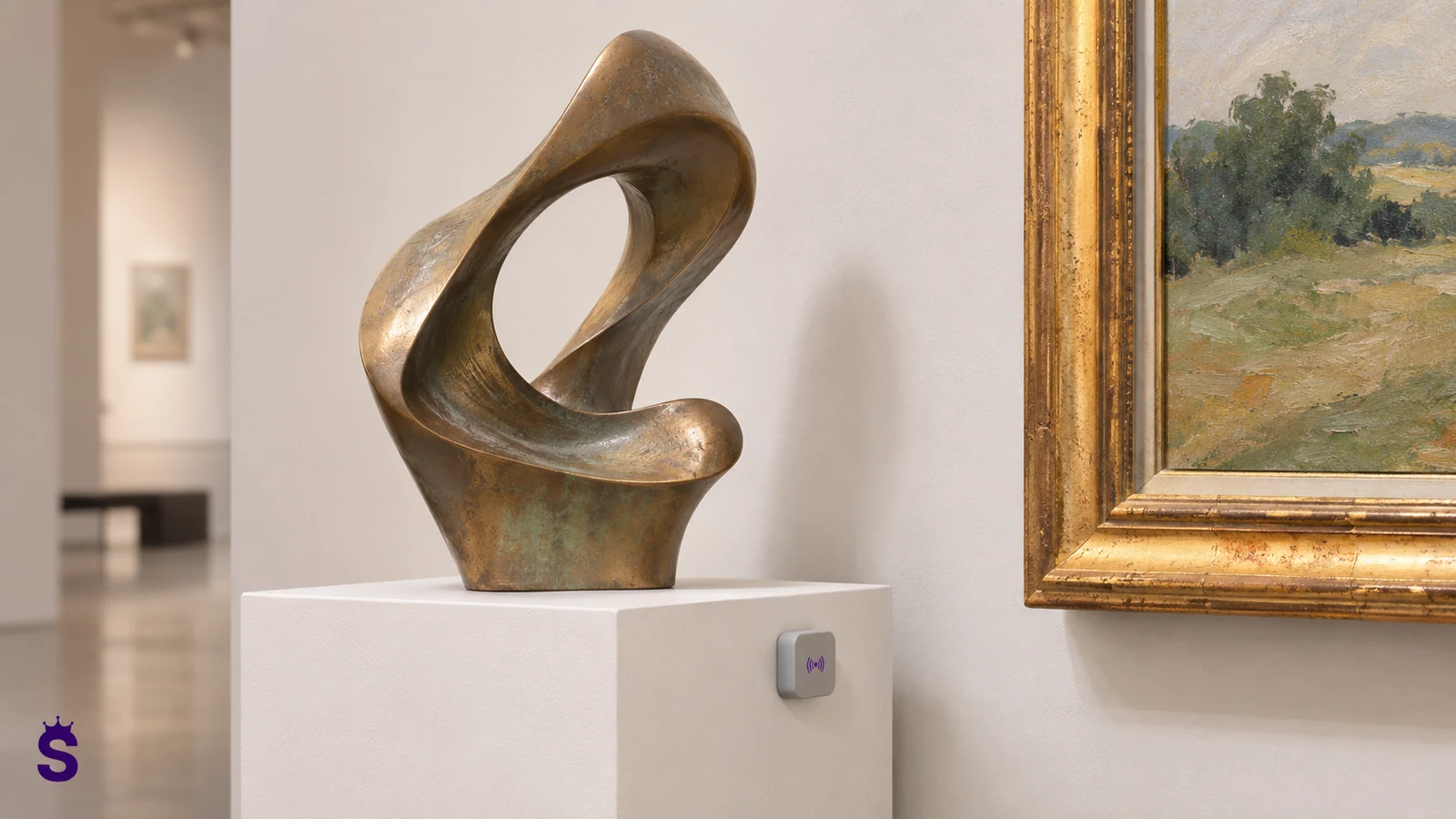
Assess the object before attaching a tag
The choice of location and method of marking should be approved by the appropriate person responsible for the collection. Material, adhesive, method of removal and effect on the object all matter. In some cases, the packaging, base or other related equipment is marked, rather than the exhibit itself.
You then need to remember what the reading confirms: the identification of the marked package, not automatically the presence and condition of the object inside.
| Area | Sample entry |
|---|---|
| Identity | Appropriate record number and link to documentation. |
| Location | Location and confirmed movements. |
| Handover | Rental, transport and responsible persons. |
| Status | Comments and documents according to institution procedures. |
Approve the tagging method for each specific object
Material, glue, durability and removability are important when harvesting. The decision should be preceded by appropriate conservation arrangements. The method of marking office furniture should not be transferred to a historic building. In some cases, packaging or an ancillary element is identified.
Define exactly what the read confirms. A crate tag identifies the crate; the presence and condition of its contents require separate checks. The documentation should retain that relationship and the scope of confirmation without implying automatic assessment of the collection.
Movements, loans and condition are separate kinds of information
Transfer between warehouse and display does not constitute a condition assessment. The loan requires appropriate documentation and transfer rules. The records are intended to help reconstruct the road, not to replace a specialist assessment.
Prepare roles and access to location data. Not all transportation information should be available when you open a public label address. Determine what a person outside the institution sees and what a logged in user sees. It is also worth checking these rules for attachments.
RFID does not replace security or condition assessment
Reading can help control tagged assets. It is not automatically an alarm system, confirmation of authenticity or conservation assessment. Access control, monitoring and handover procedures remain separate elements.
Also the last saved location is not a measurement of the current position. During transport and display, actual handovers must be documented.
Where to start the trial
A safe area for the pilot may be the technical equipment of the institution: projectors, assembly tools and transport boxes. Service-King Records assists in equipment workflow; the scope of specialized museum records and required documents must be determined separately.
This separation allows you to improve back-end work without pretending that a regular record will replace all collection duties.
Maintain traceability while an item is on loan
Before leaving the facility or equipment, record the appropriate document, recipient and agreed scope of inspection. Upon return, confirm actual acceptance and further assignment. If a box is marked, the facility must be inspected in accordance with a separate procedure. This division prevents over-interpretation of the reading. It's also worth checking who sees your location and transportation data; not every piece of information should be available by opening a public link from a label.
Related topic: data access rules.
Checks at different layers
| Layer | Target | An important distinction |
|---|---|---|
| Collection | Proper documentation and identification. | Specialized Record Requirements. |
| Packaging | History of the chest and connections. | Read does not prove content. |
| Equipment | Projectors, tools and devices. | Normal facility technical flow. |
| Protection | Access control and security. | RFID is not an automatic alarm. |
| Status | Assessment by appropriate procedure. | Identification does not evaluate maintenance. |
A practical pilot can start with support equipment
The technical equipment of an institution is often a good area for a first try: devices, boxes and assembly kits have recognizable handovers. You can check identification and documents without interfering with the collections. The scope of the pilot should be clearly separated from the specialist records.
Skip departure to an event, transfer to another department and incomplete return. At Service-King you can talk about: equipment and operation history. Museum requirements and integrations must be confirmed separately.
How to evaluate the result
Check if the correct user can find the item, document and last confirmation without querying the team. Measure the time it takes to prepare the list and explain the difference. Also assess the correctness of data access.
The result should not be presented as a guarantee of collection protection or authentication. It is an assessment of a specific workflow, with appropriate boundaries. This separation makes it easier to develop the project responsibly.
Scenario: a tagged crate is returned after a loan
The reading indicates the correct box, but the institution must still confirm the scope of collection according to its own procedures. Packaging identification does not prove the presence, authenticity or condition of the item. The document should clearly show what was actually checked and by whom, rather than implying complete inspection based on a single signal.
Compare chest association with documents and contents. If the wrapper is used for different objects, the relationship must be updated on subsequent operations. A fixed load carriers number should not lead to old content indefinitely. Otherwise, the next reading may be misleading even if technically correct.
Access to transportation and location history should be role specific. Publicly visible code does not necessarily open all documentation. In the test, it is worth checking the logged in and unlogged user and access to attachments. Data protection is a separate layer from the method of marking.
Specialized assessment and documentation rules remain with the relevant facility. At Service-King you can discuss a specific scope of equipment or load carriers records; museum requirements must be confirmed separately. A limited back-end pilot allows you to evaluate ergonomics and history without automatically extending conclusions to collections.
When you return, close the scope you actually executed and leave the visible cases open. If a container requires repair, its presence in the warehouse does not necessarily mean it is ready for the next use. This separation allows for clarity of both the packaging flow and responsibility for specialized content control.
| Area | Practical arrangement |
|---|---|
| Reading | Indicates a marked chest. |
| Binding | Current content according to relevant documents. |
| Rating | Separate specialist confirmation. |
| Access | Roles and attachments validated in the sample. |
| Load carriers status | Ready or need for service. |
| Closing | Executed scope separated from open issues. |
Checklist
- Consent to the method of marking.
- Clear indication of what the tag actually identifies.
- Link to appropriate documentation.
- Transfer and return procedure.
- Separate security and condition assessment.
See equipment inspection at events and RFID stocktaking in Service-King.
Questions worth clarifying before implementation
Can the tag be attached directly to the exhibit?
This requires proper assessment and approval for the facility. The safety of any adhesive or installation method should not be assumed.
Will RFID replace the alarm system?
This is not due to identification alone. Protection requires separate solutions and procedures, and their scope must be designed.
Does Service-King replace a complete museum system?
This scope requires confirmation of requirements. Records of equipment and workflow are not automatically full specialist documentation of collections.
Go to solutions related to this topic
- Public institutions - Order in equipment and responsibility for property.
- Property records - Records of company equipment and fixed assets.
- RFID stocktaking — Physical inventory and comparison of the reading with the records.
- Reports and movement history - Statements and documents related to operations.
Free consultation
Let's define a safe scope for identification and collection movements.
Describe facilities, packaging, and back office equipment. We will select the pilot project taking into account the appropriate marking rules.
Thank you for your inquiry.
Your message has been sent to the correct department. We will contact you to determine next steps.
Send another inquiry