

Knowledge base · Service-King
Cloud security: access, copies and checklist
The word "cloud" alone does not describe access, backup, or recovery policies. Before implementation, it is worth determining the responsibility of the supplier and the company and checking it in specific scenarios.
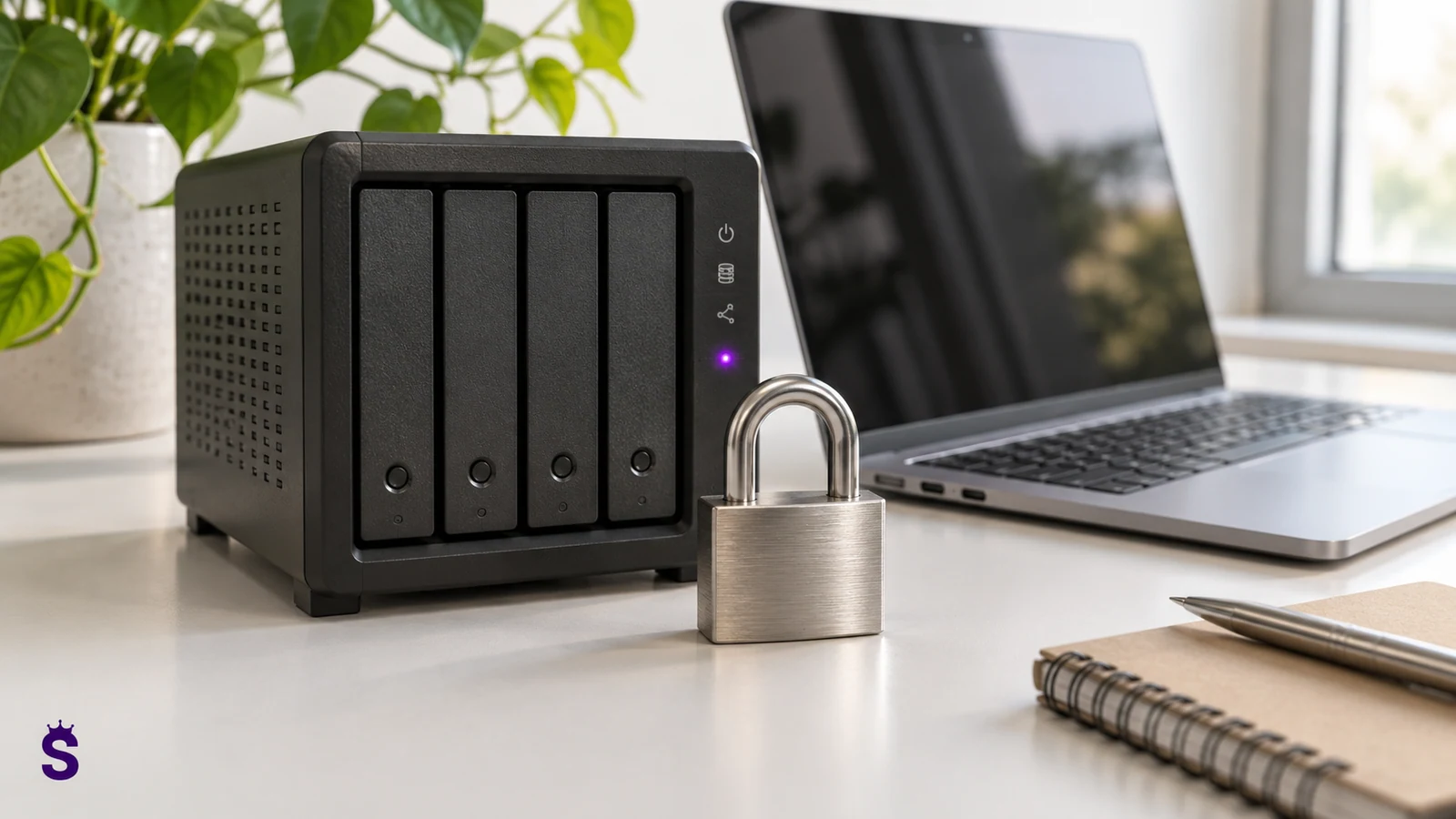
Define who is responsible for each area
| Area | What to confirm |
|---|---|
| Access | Roles, permissions, and revoking access when a person leaves. |
| Authentication | Available login methods and privileged account protection. |
| Copies | Scope, frequency, retention and recovery responsibility. |
| Transmission and storage | Data protection method and administrative access rules. |
| Incident | Reporting channel, responsibility and method of reporting. |
| End of cooperation | Export, data format and agreed deletion of remaining copies. |
Access should be based on the role and scope of work
The warehouseman, manager and customer do not need the same view. Separate the rights to read, perform operations, correct and configure. In an organization with multiple branches, the scope of location is also important. A role describes what a user can do and a data scope describes which assets. Both parts need to be tested.
Prepare sample accounts and check specific scenarios: the employee sees his own equipment, the coordinator sees the selected unit, the customer sees his items. Don't judge permissions based solely on the appearance of the menu. Access to documents, exports and direct addresses should also be verified. We discuss the scope of disclosure at: customer and employee portal.
Backups, exports and archives serve different purposes
| Item | Target | Review question |
|---|---|---|
| System copy | Disaster recovery. | Does it include database, configuration and necessary files? |
| Export summary | Further analysis or data submission. | Which fields and relationships does it actually contain? |
| Document archive | Access to approved records. | How do you find a document and associate it with an operation? |
| Change history | Clarification of the sequence of events. | Is it known who made the change and when? |
The asset list CSV file may be useful, but it will not automatically recreate all attachments and settings. Before implementing, agree on the scope of each of these mechanisms.
A backup is useful if it can be restored
CSV export does not have to be a full system copy. May not include attachments, configurations, or document relationships. Determine what the backup contains and how to recover from an error or failure.
Ask about the allowable loss of recent shifts and the time it will take to get your work back. Do not assume parameters only based on the information that the provider performs backups. A controlled restoration test is good practice.
Permissions should match the team's work
The person performing the stocktake does not need to have access to the entire system configuration. An employee and a manager may need different views and data ranges. The least amount of access needed reduces the effects of error.
We establish the conditions for a specific Service-King implementation during a technical conversation. This guide is a list of questions, not a declaration of certification, a specific SLA level or the availability of each security method.
Catalog of common application risks publishes OWASP.
Practise the employee offboarding process
Prepare a list of accounts, devices, and access to attachments and exports. Once a person leaves, simply removing their name from the employee list may not end all sessions or privileges. You need to determine the appropriate actions for your specific system. Also check for handover of responsibility for assets and tasks so that the history doesn't disappear with the account. A good process removes access but retains necessary records of the operations performed.
Related topic: IT equipment workflow.
Define data recovery as a testable scenario
Ask what recent changes may be lost and how long it will take to recover. These are two different parameters. A backup that is made frequently may require a long recovery, and running an older copy quickly means losing more operations. Terms should be agreed, not assumed from the word "backup".
The recovery attempt should be performed in a controlled environment and confirm the completeness of critical data. Also check who has access to the copy, where the procedure is stored and who replaces the administrator. Your own server and cloud service raise the same questions about liability, although the answers may be different.
Employee offboarding and changing providers are part of security
When a user leaves, appropriate access must be revoked and open tasks and responsibility for assets must be transferred. The history of performed operations should remain legible. You should not delete important data just to remove your name from the list of active people. Termination of access and retention of records are separate decisions.
Similar preparation applies to ending cooperation with a supplier. Determine the export format, the scope of attachments, the availability time and the agreed handling of copies. Model comparison describes cloud vs. local installation. It is worth collecting organizational requirements before choosing a technology.
Evidence to prepare for a technical discussion
- Description of the roles and scopes of data that need to be shared.
- Conditions for creating a copy and an example of a recovery check.
- Incident reporting procedure and contact details of responsible persons.
- Rules for privileged accounts and substitutions.
- Scope of required contracts and documents regarding data processing.
- Export method at the end of cooperation.
This is a set of questions to be agreed upon, not a declaration of identical parameters for each implementation. The current scope of the solution and documents should be confirmed with the technical team by system security area.
Scenario: the administrator account is unavailable
Someone familiar with the configuration can't log in and the team needs an urgent fix. Before such a situation occurs, it is worth determining a replacement, a contact channel and a safe way to regain access. A password written in a private message is not a business continuity plan. The procedure should be known to the appropriate people and should not be based on a single telephone call.
Check which tasks really require administrator privileges and which can be performed by operational users. Giving full rights to everyone as a fallback increases other risks. Instead, agree on roles, fallback access and how to confirm identity. In the case of external services, also determine how the provider recognizes the person authorized to report the change.
After regaining access, impact control is needed: updating responsible persons, organizing active accounts and checking open cases. If the incident was the cause, action requires the correct mode, not just a password reset. A well-prepared record of systems and roles allows you to quickly assess the scope without disclosing data to unauthorized persons. The test of such a scenario should be controlled and agreed upon so that it does not disrupt production work.
| Area | Practical arrangement |
|---|---|
| Substitute | Persons authorized to act and report. |
| Identity | Secure way to confirm submitter. |
| Roles | Operations possible without full access. |
| Documentation | Procedure available without explicit passwords. |
| Recovered | Scope of inspection after recovery. |
| Incident | Separate mode if situation indicates violation. |
Pre-launch checklist
- Account owner and replacement administrator.
- Roles tested on sample users.
- Agreed copy and reproduction procedure.
- Confirmed data processing principles and cooperation documents.
- Export and access removal plan.
Compare also cloud and local installation and discuss technical requirements.
Questions worth clarifying before implementation
Does HTTPS mean the entire system is secure?
Protects a specific aspect of the transmission, but is not a substitute for access control, updates, copies, or proper configuration. Safety is assessed in relation to the overall process and agreed responsibilities.
Can I request a playback attempt?
It is worth agreeing on the method of confirming the operation of the copy and the scope of proof. The test must be controlled and should not expose production data to loss.
Does every user need export access?
It depends on the role and actual need. Export may allow you to view a larger range of data than the view of a single record, so it should be considered separately.
Go to solutions related to this topic
- System security - Information about access organization and data protection.
- Customer and employee portal - Records and notifications within the scope provided.
- Service-King App - View system areas and select a scope for your company.
- The implementation process - Process analysis, markings, tests and assembly commissioning.
Sources and further verification
Free consultation
Let's agree on access and data protection requirements.
Describe the users, data types, and requirements of your organization. We will determine technical questions, division of responsibility and scope of implementation.
Thank you for your inquiry.
Your message has been sent to the correct department. We will contact you to determine next steps.
Send another inquiry