

Knowledge base · Service-King
Event logistics: equipment sets and return checks
Boxes, cables, projectors and accessories are arriving at the event. When you return, it's easy to confirm the number of packages, and only the next day discover that an element needed by the next team is missing.
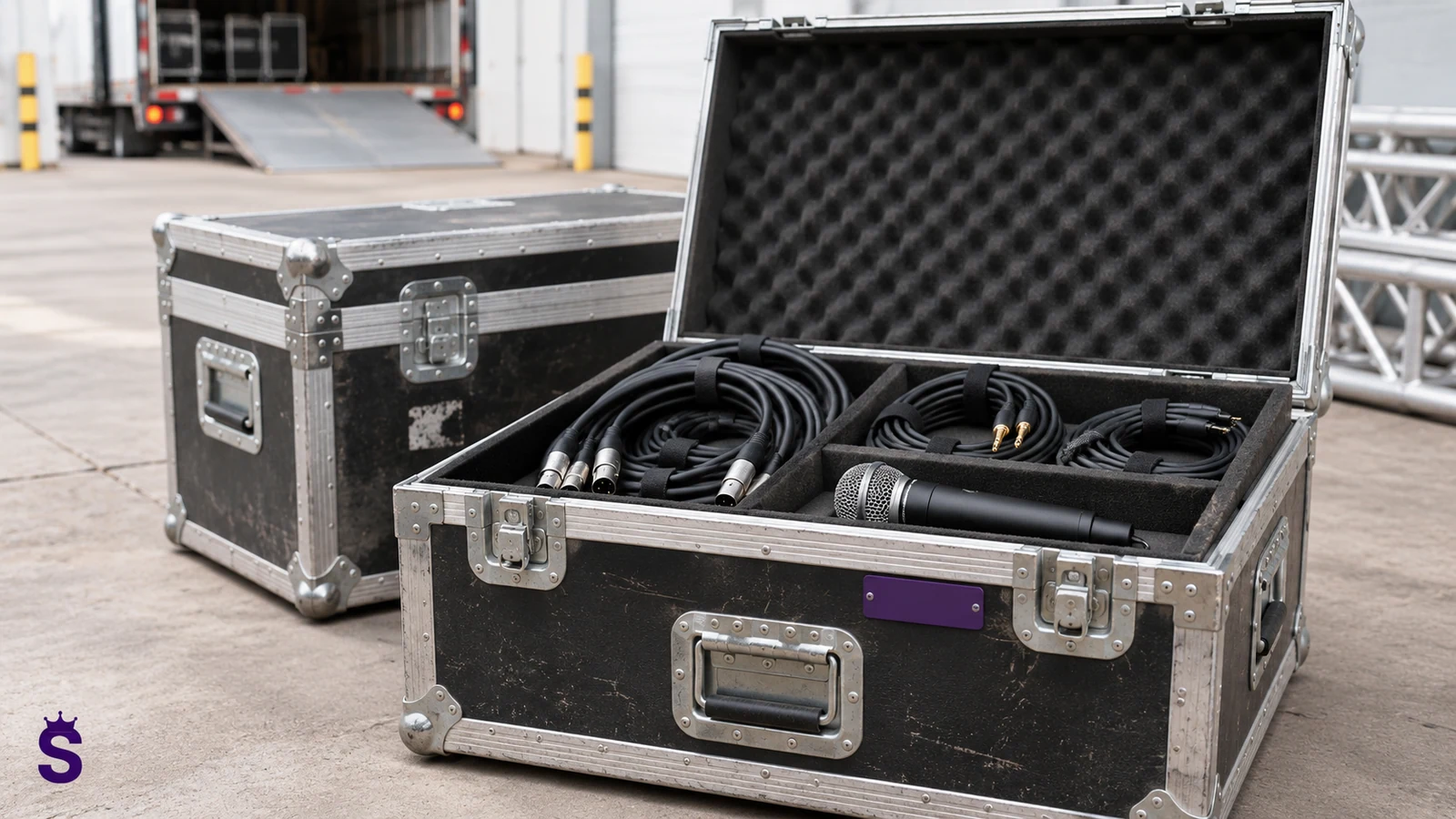
Define the kit's contents clearly
Define a set, but separate the chest identification from the items inside it. Reading the tag on the chest does not confirm that its interior is complete. Expensive devices should be tracked as items, and small accessories should be controlled according to the agreed list and quantity.
| Wait | What to confirm |
|---|---|
| Before leaving | Set composition, condition and person receiving it. |
| En route handover | Change of responsible person or location. |
| Return to base | Actual content, damage and readiness for next check-out. |
The dispatch list should match the actual kit
The technician needs a clear list: device, required accessories and quantity. The warehouse also needs to know whether it is a specific item. Separate these perspectives while maintaining the connection. The set as a template is not yet a confirmation that all items have been physically released. The list must be compared with the prepared content.
For expensive devices, it is worth tracking pieces, and for small, replaceable elements, choose the appropriate quantity level. With identical cables, the length and number may be more important than a separate tag for each piece. For a microphone or projector, the history of a specific item will be important. This division simplifies the work and does not turn the preparation of the implementation into excessively detailed records.
Equipment needed for the next event requires a return-check area
Hardware that returns is not always immediately ready for the next check-out. May require evaluation, charging, cleaning or repair. Establish a status and place for items waiting for these activities. Physical presence in the database is different information than availability for the next implementation. Otherwise, one team will pick up the suitcase with the unresolved problem of the previous one.
After checking, save the result and open positions. If an accessory is missing, the list should show this until clarification or approved addition. In the event of a failure, the item-related report limits the transmission of the symptom orally. This direction is supported Report-King ticket handling, and they describe the history of check-outs and returns equipment rental.
Example: a case is returned with items missing
The operator accepts the projector and cables, but the pilot project is missing. It records the return of the items actually returned and leaves the missing items to be explained. He doesn't close the whole set just because the suitcase came back. A damaged device goes to service instead of automatically returning to available.
History allows you to check the last issue and the recipient. In the case of several events on the same day, an order ID or other agreed document link is also needed.
Where RFID helps
For larger batches of tagged devices, UHF may speed up list comparison. The installation location must be selected according to the housing and method of transport. Metal boxes and tightly coiled cables require testing in the target system. QR is sometimes more convenient for consciously indicating one thing.
In Service-King, it is worth combining the designation with issuance and return of equipment and document history. The reading itself will not replace the transfer confirmation.
What to check when equipment goes straight to the next event
The set returns from one order and is to be delivered to the next team on the same day. It's not worth skipping the inspection just because your suitcase looks full. Compare contents, confirm status and save transfer. If some elements remain on the first object, the history must show the separation of the set. Otherwise, the next team will discover the missing item already in place, and the warehouse will still see a seemingly complete issue.
Related topic: rental service.
Different handover stages need different confirmations
| Wait | Confirmation scope | Risk without record |
|---|---|---|
| Warehouse → crew | Pieces, complete and condition at issue. | Vague list of things to come back. |
| Team → subcontractor | Items actually delivered and recipient. | History still shows the first team. |
| Return of part of the batch | Positions surrendered and remaining in the field. | Apparent closure of the entire set. |
| Inspection upon return | Complete and ready for use. | Check-out of an untested device. |
| Next implementation | New list and correct recipient. | Mixing two orders in one record. |
How to evaluate a pilot for one type of event
Choose a repeatable set and complete the entire workflow: preparation, check-out, transfer to the facility, return and inspection. Measure the time required to complete and clarify differences. Determine how many pieces require individual marking and whether UHF actually helps with a given arrangement. Metal cases and tightly packed cables require trial, not assumption of effectiveness based on a loose tag.
Also practice changing your list right before you leave. The extra element and replacement should go into the actual operation, not into a separate message that someone will rewrite later. The test result should show the work of a typical operator, not just the person designing the solution. Scenarios and related workflows can be found on the website event industry.
Scenario: part of the kit remains at the venue
The implementation is completed in stages, and some of the equipment is to remain until the next day. Accepting the entire list as returned would be inconsistent with the actual workflow. Just confirm what has reached the database. Items remaining on the facility should still have a clear assignment and expected further movement. The person preparing the next trip needs to see what is actually available, let alone expected to return.
If another team picks up the remaining items, record the transfer. You should not create a fictitious return to stock and reissue if no such movement has occurred. It is also important to account for accessories. The device may return via a different route than the cables or mountings. Records should reflect this division, rather than relying solely on the name of one set and one closing date.
Once completed, check that all open positions have been settled and that the template composition has not been silently changed. If the set was supplemented with another item, the new list should show the actual equipment of the next implementation. This allows you to maintain a history of bugs and check-outs without assigning it to a random replacement. It is worth checking such an imperfect return in the pilot, because it reveals the usefulness of the process better than a full suitcase given at one time.
| Area | Practical arrangement |
|---|---|
| Partial return | List of items actually received. |
| Other pieces | Place, recipient and expected movement. |
| Another team | Actual handover without fictitious route. |
| Accessories | Separate settlement of missing items. |
| Replacement | Identity of the item released for the next production. |
| Ending | No hidden, unsettled items. |
Checklist before the next dispatch
- List of required items and items.
- Checked condition of devices and set of accessories.
- Designated person to take possession of the set.
- Rules for reporting shortages and breakdowns on the route.
- Separate return check before next booking.
See also how to calculate the cost of missing equipment and reports and workflow history.
Questions worth clarifying before implementation
Are the suitcase and contents marked separately?
This depends on the level of control required. The suitcase marking helps you recognize it. If you need confirmation of individual devices and accessories, they must be identified or controlled against an explicit list.
How to handle equipment that does not return to base?
Record the actual transfer to the next person or location as per the agreed process. The history should not suggest a return to a warehouse that did not physically exist.
Does RFID remove the need for health checks?
Reading helps confirm the identification of tagged items. It does not evaluate the efficiency, quality of operation or completeness of unmarked accessories. These activities still require proper control.
Go to solutions related to this topic
- Event equipment - Departure list, partial returns and preparation for the next implementation.
- Check-outs and loans - Active rentals, returns and archives.
- Reports and movement history - Statements and documents related to operations.
- Report-King Submissions - Description and photos of the problem with the actual item.
Free consultation
Let's establish a clear workflow for your equipment kits.
Describe what goes to events, who collects equipment and how you control returns. We will keep records of sets and exceptions.
Thank you for your inquiry.
Your message has been sent to the correct department. We will contact you to determine next steps.
Send another inquiry