

Knowledge base · Service-King
IoT in the warehouse: RFID, sensors and event registration
Tag reading, temperature indication and gate opening signal are different data. In order for them to support the operation of the warehouse, you need to know where they come from, when they were collected and what operations result from them.
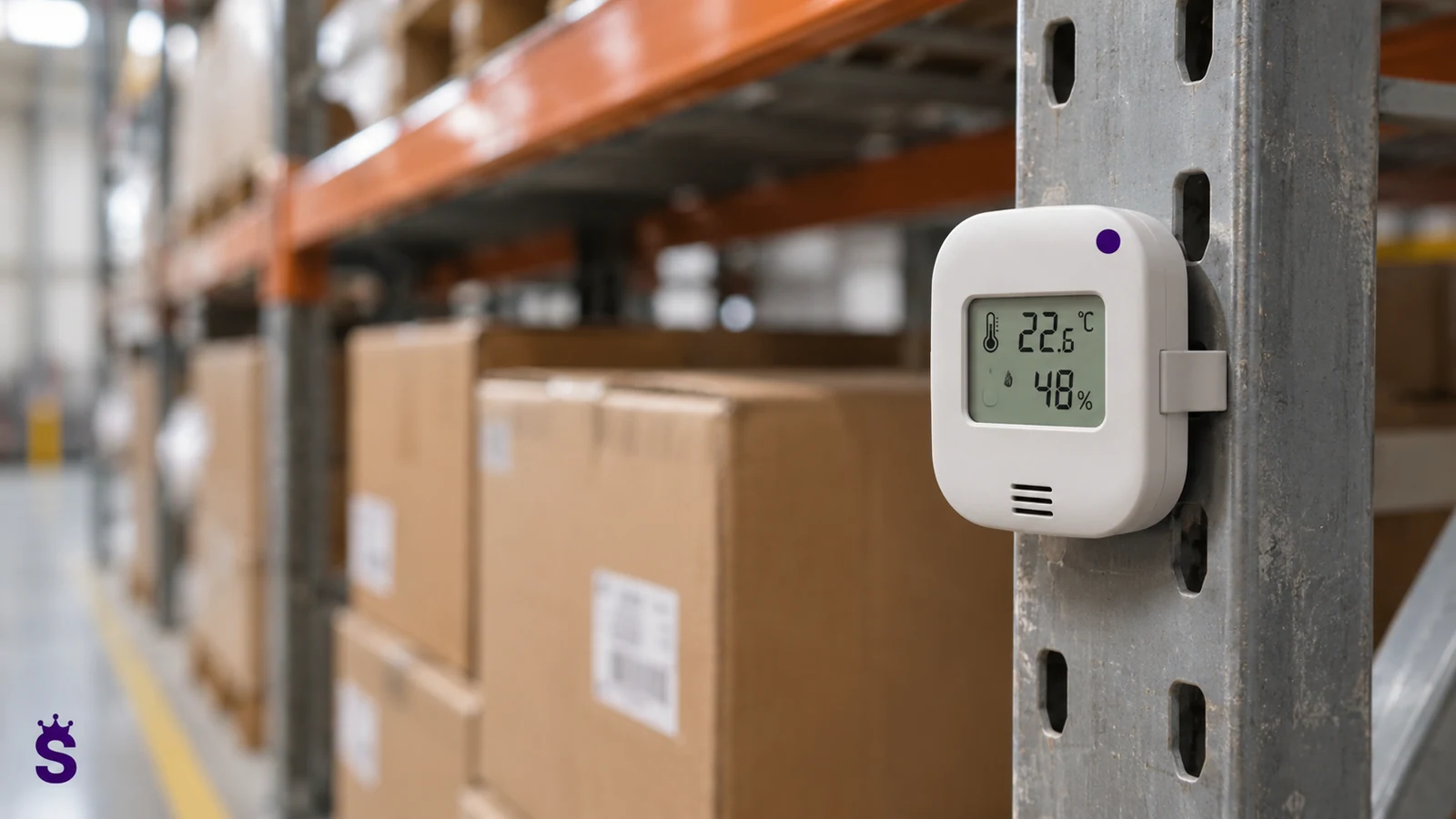
Different sensors answer different questions
| Source | Information | What needs to be clarified |
|---|---|---|
| RFID reader | IDs detected. | Zone and operation assignment rule. |
| Temperature sensor | Measurement for a specific point and time. | Calibration, installation location and frequency. |
| Opening sensor | Change the state of an input or device. | Whether the event requires a response and who responds. |
| Operator | Confirm action and exception. | Permissions, scope and required data. |
A technical reading and a business event mean different things
The reader can detect the same tag multiple times and the sensor can transmit subsequent measurements without changing the state. The process needs to define an event: batch acceptance, presence confirmation or threshold crossing. A stream of signals should not transform into a series of documents without rules.
Set the start and end time of the session, the validity conditions, and the person who approves the exception. At the gate, the presence of adjacent items, direction and connection to the document are important. For temperature - source, unit and place of measurement. Only such a description allows you to choose the integration through Alert-King or other agreed installation elements.
Every record needs a source and timestamp
In practice, it is worth distinguishing between the moment of measurement, sending and receiving data. May vary during network outage. Determine which time is the basis of the report and how you show the delay. No new data should show as no update, not the correct status by default.
A stable device number and the version of the relevant configuration will be useful to identify the source. After replacing the sensor or changing the threshold, the difference in results can then be explained. It is not necessary to show all the details to the operator, but the system and those maintaining the installation should be able to check them.
First, define the business event
The batch passes the reading point. Is it a receipt, a check-out, or just a technical run? The signal itself does not explain the purpose of the move. Rules are needed: session start, document, direction and approval method.
When communication is lost, determine what is saved locally, how to recognize a delayed transmission and how to avoid repeating the same operation. The view should show the age of the data so that the old reading doesn't look like the current state.
Confirm integration scope separately
Service-King organizes records and equipment operations. Connecting a specific sensor, gateway or control system requires checking the devices, interfaces and scope of the project. Not every product described as IoT works automatically with every system.
Start from one point and check the full scenario: correct signal, no signal, repeat and data outside the correct zone.
Example: a signal received after a transmission delay
The sensor records the event during a network interruption and sends it when the connection is restored. If the system only shows the moment of reception, the user may consider the old event as the current one. Therefore, it is necessary to store the source time and establish the order of interpretation. The same problem applies to resubmitted readings. The project should define when an event is only information and when it can lead to the approval of an operation.
Related topic: data exchange rules.
Signal, rule and action: an example of separate roles
| Source | Rule to be determined | Possible action |
|---|---|---|
| RFID UHF | Which readings belong to one session? | Batch comparison with list. |
| Temperature sensor | What is the extent and time of deviation that requires response? | Report to the appropriate person. |
| Opening signal | Does it apply to planned use? | Event record or audit. |
| Operator details | How does he confirm that the action has been completed? | Closing the task with the result. |
| No transmission | How long does it take for data to be out of date? | Break mark and source check. |
A network outage belongs in acceptance testing
Check what the device saves without transmission and how the data returns after connection. The repeated message should not create a second operation. An older record should not overwrite a newer state without explanation. Retry and ordering support is part of the solution, not a post-deployment add-on.
For a critical process, also determine the operator's behavior: whether he can continue or switch to an emergency procedure. Offline mode and subsequent data reconciliation must be confirmed for specific devices and applications. The mere presence of memory in the reader does not guarantee proper operation of the entire workflows.
What to measure after launch
- Percentage of events correctly recognized and approved.
- Omissions and unwanted reads.
- Transmission gaps and delays.
- Response time to data source problem.
- Number of manual fixes and their causes.
- Cost of maintaining devices and configuration.
Results should be related to actual work. View zones and equipment can organize information about places, but the freshness of the data still depends on agreed sources and operations.
Scenario: delayed events after a transmission outage
The device is offline for a period of time and then transmits a series of records. During the same period, the operator could perform a correction or other operation. The order in which messages are received does not have to match the order of events. The integration rule should know which information is a historical measurement and whether it can change the current state.
Check reps. If the source did not receive the confirmation, it can send the same message again. A technical duplicate should not create a second issue or subsequent cycle accrual. On the other hand, two similar but real events should not be thoughtlessly connected. You need operation identity and clear time meaning, not just a "same item number" filter.
The user should be able to see whether the data has been accepted, rejected or requires review. Failure to update cannot appear to be confirmed correct. During collection, prepare such a break and make subsequent arrangements. This shows whether the system can cope beyond a perfect continuous connection. Rule documentation will also be useful when replacing a device and changing the person maintaining the installation.
| Area | Practical arrangement |
|---|---|
| Time | Source and data entry. |
| Identity | Clearly distinguish event from retry. |
| Conflict | Rule for corrections made in the meantime. |
| News | Visible gap and data age. |
| Result | Accept, decline or explanation queue. |
| Collection | Controlled break recovery test. |
Project checklist
- Goal and outcome measure for one process.
- The source, time and ID of each event.
- Filtering and duplicate handling rules.
- Disconnected and reconnected behavior.
- Exception responder and device maintenance person.
Questions worth clarifying before implementation
Is every RFID tag a sensor?
No. The usual marking is used for identification. Measuring temperature or other quantities requires an appropriate device and a confirmed method of obtaining data.
Can I connect my existing equipment?
You need to check the model, interface and available data. The scope of collaboration depends on the device and project, not just the common term IoT.
What to do when the data is contradictory?
Agree on binding source, correction rules and clarification path. Automatic selection of the last message may be erroneous if the data arrives late.
Go to solutions related to this topic
- RFID reading points - Zone readings and preparation of operations rules.
- Alert-King — Connection of the system with RFID readers and automation.
- Map of locations and facilities - Structure of zones, shelves and saved places.
- Reports and movement history - Statements and documents related to operations.
Free consultation
Let's turn device signals into useful information.
Describe the readers, sensors, and decisions they support. We will determine data sources, event rules and how to respond to exceptions.
Thank you for your inquiry.
Your message has been sent to the correct department. We will contact you to determine next steps.
Send another inquiry