

Knowledge base · Service-King
WMS and warehouse insurance: data, risk and damage
Structured data helps describe assets and explain events. However, they do not automatically mean a lower premium. The terms of protection and required security are specified by the insurer and the contract.
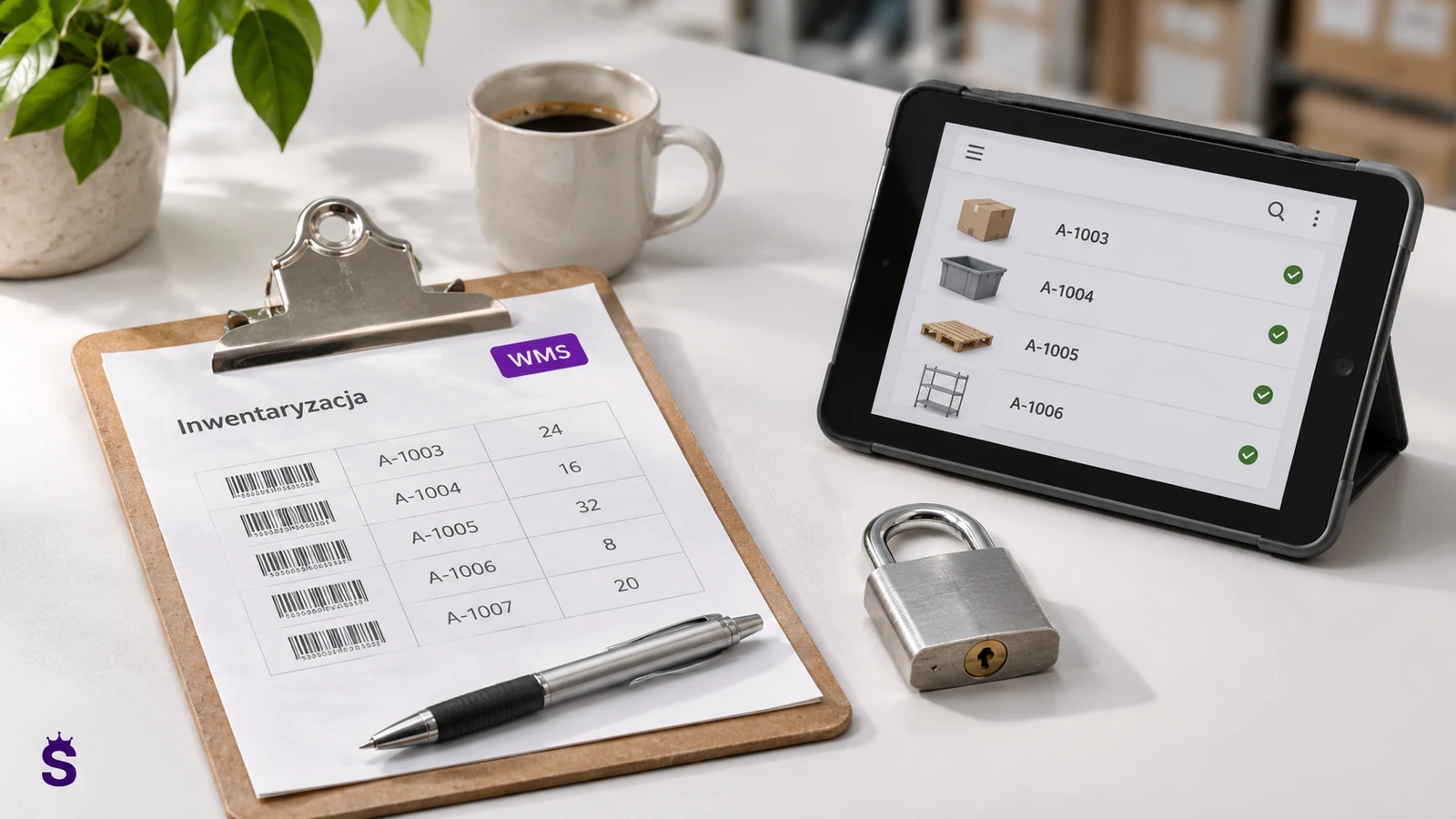
The system alone does not guarantee an insurance discount
Implementation of WMS, RFID or records does not guarantee an insurance discount. Risk assessment and conditions are determined individually. If the goal is to change your policy, ask your insurer or broker what information and protections are important to them.
Don't use the app as a substitute for contract-required security. The identifier helps recognize the item, but it does not alone prevent theft or damage.
| Area | Useful information |
|---|---|
| List of assets | Names, IDs, serial numbers and agreed values. |
| Locations | Deployment and documented transfers. |
| workflow | Check-out outside the company and entrusting it to other people. |
| Event | Description, date, documents and established extent of damage. |
A conversation about the policy should start with its terms and conditions
Coverage depends on the contract, scope of risk and fulfillment of specific obligations. A record-keeping system can help organize information, but it does not determine premiums or decisions after a claim. The expected impact of the termination on the policy must be confirmed with the insurer or broker.
It is worth asking what data is needed to describe the property and the event. You should not assume that simply having tags meets security requirements. Access control, locks, alarms and procedures remain distinct elements of the organization. Records may supplement them, not replace them based on guesswork.
Separate ownership from location in the asset list
Equipment may be your own, rented or entrusted. It may also be held by an employee or business partner. This information should not be hidden in one grand total. The current location and title of the item answer various questions.
Prepare IDs, serial numbers and agreed values with source. The valuation date is important, as is whether it is book value or another accepted method of determination. The system should help find a document, and not provide apparent certainty to data that has not been verified by anyone.
History helps establish facts
When explaining the lack, you can go back to the last issue, return and document. Lack of radio reading is not proof of insurance loss. The designation, documents and circumstances need to be verified.
Service-King helps collect data about equipment and its workflow. It does not replace the assessment of damage or the insurer's decision on liability.
Prepare data before the event
After a damage, it is more difficult to reconstruct serial numbers, the place of transfer and the complete list of equipment. It is worth maintaining this data in advance and ensuring that it can be recovered after a local hardware failure. The list should have a known scope and date, and the documents should be able to be linked to the appropriate item. This does not determine the insurer's decision, but it allows you to present consistent facts and avoid accidental mixing of your own property, rented property and property entrusted to business partners.
Related topic: organizing property records.
Before and after an incident: different tasks
| Wait | What to prepare | Target |
|---|---|---|
| Before | Current records and IDs. | Clear recognition of things. |
| Before | Offsite locations and check-outs. | Understanding the flow. |
| Before | Access to copies and documents. | Information can be reproduced. |
| After | Description of circumstances and scope established. | Presentation of facts. |
| After | Documents and history of transfers. | Event data verification. |
A missing read is not proof that an item has been lost
During stocktaking, first check movement documents, the tag and read conditions. The equipment may be outside the read area or have a faulty tag. Do not go from an undetected ID straight to the final damage qualification.
Service-King's history helps you figure out where to start explaining: last check-out, shift, and return. The report should separate confirmed facts from open findings. The principles of inventory and control of differences are described RFID stocktaking.
What benefit can be assessed independently of the premium
Measure the time it takes to prepare the inventory, find documents and clarify the location. These are practical organizational benefits that can be checked without promising a discount. It is also worth assessing the completeness of the data and the number of items without a clear identifier.
Thanks to this, the decision on registration is not based solely on an unconfirmed change in the cost of insurance. Common list i document history are also useful in everyday equipment management.
Scenario: preparing an asset list after an incident
The company needs to determine what items were in a specific location and who owned them. If the list is only current as of the date of the old stocktake, it will be necessary to reconstruct subsequent movements. History is useful when it can be linked to a clear record. The names of similar devices alone are not sufficient to reliably distinguish them.
Separate confirmed data from data requiring further investigation. Don't automatically assign all building equipment to one event if the scope is different. It's a good idea to keep serial numbers, documents and the source of value. The requirements of a specific case should be discussed with the appropriate person; the records are intended to provide facts, not to resolve the insurer's liability.
Also check equipment rented, entrusted and located outside the company. A current list of your own assets may not include everything in a given location and may include items that are not physically present. A proper report should show the defined scope, date and method of determining the status. Missing information should not be hidden behind an apparently accurate total.
Once completed, evaluate what data was missing and how to improve its logging. The benefit may be faster preparation of documents and fewer unclear items. This is not a guarantee of a payout or a lower premium, but a practical improvement in the organization. The same ordered list will also be useful in purchases, service and subsequent inventory.
| Area | Practical arrangement |
|---|---|
| Scope | The place, moment and things covered by the question. |
| Identity | Numbers and documents of the relevant items. |
| Property | Separation of own and entrusted assets. |
| Value | Source and accepted basis of data. |
| Confidence | Confirmed and open positions. |
| Application | Data streamlining after case completion. |
Checklist before discussing the insurance policy
- Current list and scope of insured property.
- Correct locations and off-site equipment.
- Verified obligations and exclusions in the contract.
- Documents confirming the transfer and status of the goods.
- Method of securing and archiving data.
See costs of lost equipment and reports and workflow history. The data should support a reliable description of the situation and not create the appearance of guaranteed protection.
Questions worth clarifying before implementation
Can the system provider guarantee a premium reduction?
Such a guarantee should not be derived from the records function itself. The conditions are determined by the insurer, and the impact of the project must be confirmed individually.
Is the book value sufficient for the policy?
This depends on the required basis of value and the terms of the contract. Records should indicate what data it stores and where it comes from, rather than treating all values interchangeably.
Will the system replace physical security?
Identification and history are not an automatic substitute for contract-required security features. The project should be considered as part of the organization, with a clearly defined scope.
Go to solutions related to this topic
- Property records - Records of company equipment and fixed assets.
- RFID stocktaking — Physical inventory and comparison of the reading with the records.
- Reports and movement history - Statements and documents related to operations.
- System security - Information about access organization and data protection.
Free consultation
Let's prepare reliable asset records.
Describe what hardware data is distributed today. We will determine the records, locations and documents needed to recreate history.
Thank you for your inquiry.
Your message has been sent to the correct department. We will contact you to determine next steps.
Send another inquiry