

Knowledge base · Service-King
Cold chain: temperature monitoring and RFID
The label helps identify a container or batch. The temperature must be measured by an appropriate sensor. A useful notation connects both sources to the time, place, and principle of response to deviation.
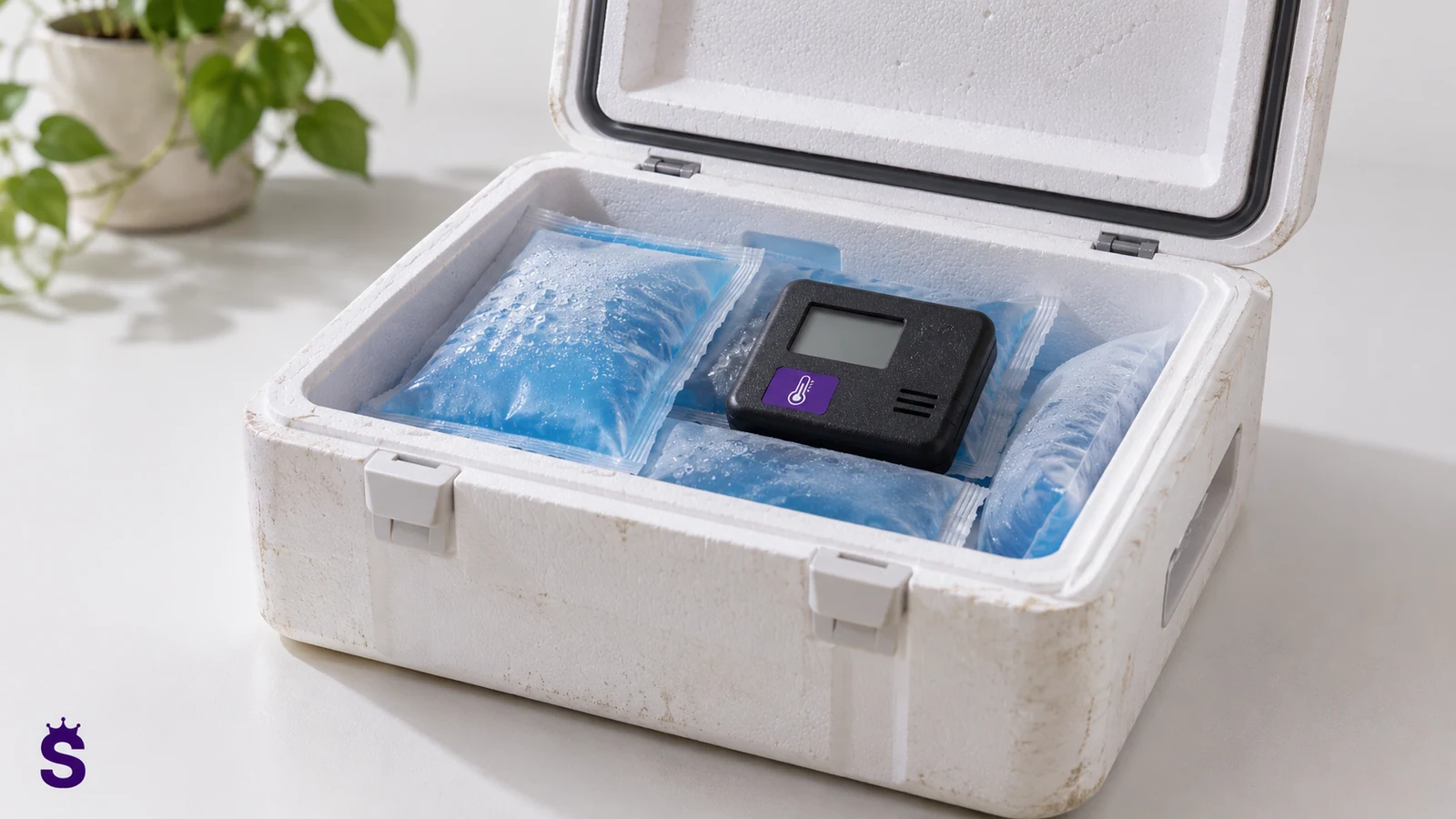
Distinguish the item, the measurement and the decision
| Information | Example |
|---|---|
| Identity | Which container, transport or batch does the entry apply to? |
| Measurement | Value, unit, time and measurement point. |
| Decision | Who assessed the deviation and what action was taken. |
A regular passive UHF tag is not automatically a temperature sensor. Marking, recorder and data transmission may be separate elements. The scope of cooperation of the devices with the system must be confirmed.
First determine your measurement requirement
Single-point air temperature, packaging measurement, and product rating may answer other questions. Determine what information is needed in a given process and who approves the requirements. The location and method of measurement are part of the meaning of the result.
Don't choose a solution based solely on data sending frequency. Range, accuracy, response time and proper device control are important. Different requirements may apply to different products. The records should indicate which source and object the record concerns, and not hide them behind one common average.
Identification helps assign data to the correct scope
The RFID or code may identify a container, batch or logistic unit. The sensor provides a separate measurement. The relationship between them over time needs to be determined, especially when the container is emptied and reused. Fixed load carriers ID does not mean fixed content.
In the system, it is useful to be able to determine which batches were in a given zone during a specific event. If the motion data is incomplete, the temperature graph may not be sufficient to determine the scope of control. The workflow of load carriers is described container management, and the integration requirements should be established in the project.
What to check in a measurement project
Requirements vary by product and process. Determine the temperature range, the necessary frequency and the appropriate location of the sensor. Measuring air at one point does not always describe the temperature of the entire load. Device inspection and documentation are also important.
In the event of a break in communication, it is important to save the records and later distinguish the measurement time from the transmission time. The online panel itself does not guarantee the completeness of the history.
Example: an alarm with no link to a batch
The sensor detects a deviation, but it is not known which goods were in this zone. The chart alone is not sufficient to determine the scope of the check. Records of batch movement and evaluation rules are needed. The result should not automatically allow the product to be used without proper procedure.
Service-King may be part of your equipment and load carriers records. Measurement functions, process validation and integrations require separate agreement; do not result from the use of RFID itself.
Test the response as well as the alarm
During the test, trigger a controlled deviation scenario according to safe test rules. Check who will receive the information, how they will confirm its receipt and where the decision will be recorded. Test the lack of fresh measurements - silence in the alarms does not mean the correct temperature. The user should see that the data source is down. Such a test reveals organizational gaps that a graph from a properly functioning sensor alone will not show.
Related topic: data flow from devices.
From measurement to reaction: four layers
| Layer | Example question | Result |
|---|---|---|
| Measurement | Do the device and location meet the requirements? | Reliable value with time and unit. |
| Binding | Which facility or batch does it apply to? | Specified data range. |
| Rule | How do we recognize a deviation or missing data? | Understandable signal for evaluation. |
| Action | Who makes the decision and what is documented? | Record of reaction and follow-up. |
The alarm should be tested together with the procedure
In a controlled trial, check who receives the information and whether they know what to do. Plan replacement and confirmation of service. An alarm sent is not equivalent to a response. The assessment and actions should be traceable after the incident.
Also check the transmission interruption. No alarms may indicate a lack of current measurements rather than correct conditions. The user should be able to see the age of the data and the scope of the vulnerability. Outstanding readings after network recovery must be distinguished from current information.
The scope of Service-King and the measurement system must be separated
Service-King can organize records of equipment, load carriers and operations. Measurement, recorders, process validation and specialized quality decisions require separate confirmation. A regular UHF tag does not become a temperature sensor just by being assigned to a record.
Prepare a list of devices and interfaces and how to export the history. Then determine which data is to be visible in the records and what decisions will be made on their basis. He describes further issues IoT data flow.
Scenario: no measurements during part of the transport
There is a gap in the history after delivery. Do not override it with the default correct temperature or take the absence of an alarm as evidence of correct conditions. Missing data is separate information requiring evaluation. First, determine whether the source failed to measure, failed to record the result, or simply failed to submit it on time.
Check available device records and timestamps. Outstanding measurements can supplement the history, but information about the moment they were obtained and the source must be retained. If the data is not available, the appropriate person assesses the situation according to the product and process procedure. The system should not create missing values on its own just to make the graph appear continuous.
Scope binding is also important. Which batch or unit was measured and did it change container or zone during the gap? Without this information, it is difficult to determine what the further inspection involves. A persistent load carriers tag can help you find a history, but it does not itself confirm the terms of all content or replace measurement.
After clarification, check the organizational and technical reason. Has anyone seen the lack of updates, was the responsibility clear and did the emergency trial cover this situation? The proposal should lead to an improvement, e.g. better source control or response. Increasing transmission frequency alone will not solve every type of gap.
| Area | Practical arrangement |
|---|---|
| Vulnerability type | No measurement, recording or transmission. |
| Time | Scope and source tags. |
| Batch | Real object binding. |
| Rating | Appropriate person and procedure for further action. |
| Visibility | Way to show outdated data. |
| Improvement | Cause and preventive action. |
Preparation checklist
- Product and process requirements established by appropriate person.
- Measuring devices and method of controlling their operation.
- Associate the measurement with the correct object or batch.
- Record time, data gaps and transmission interruptions.
- Responsibility for alarm and decision after deviation.
See IoT data sources and lot traceability.
Questions worth clarifying before implementation
Does RFID measure temperature?
Select specialized solutions may include measurement capabilities, but a regular ID tag does not. You need to check the specific structure and the entire measurement path.
Does the chart confirm the suitability of the product?
The decision depends on product requirements, data coverage and quality procedures. A chart alone or the absence of an alarm is not a universal approval for use.
How to handle missing data?
Mark the vulnerability and run the agreed assessment. Do not overwrite missing history with the correct status by default or hide the last measurement time.
Go to solutions related to this topic
- RFID reading points - Zone readings and preparation of operations rules.
- Reports and movement history - Statements and documents related to operations.
- Returnable containers and pallets - Specific carriers, recipients and returns settlement.
- The implementation process - Process analysis, markings, tests and assembly commissioning.
Free consultation
Let's agree on measurement sources and batch identification.
Describe the product, devices, and how to respond to deviations. We will check how to associate data with the right objects and operations.
Thank you for your inquiry.
Your message has been sent to the correct department. We will contact you to determine next steps.
Send another inquiry