

Knowledge base · Service-King
SSCC and GS1: logistics units, products and RFID
A pallet as a carrier and a pallet with a specific delivery are two different objects of identification. The distinction matters when data moves between companies and between different stages of transport.
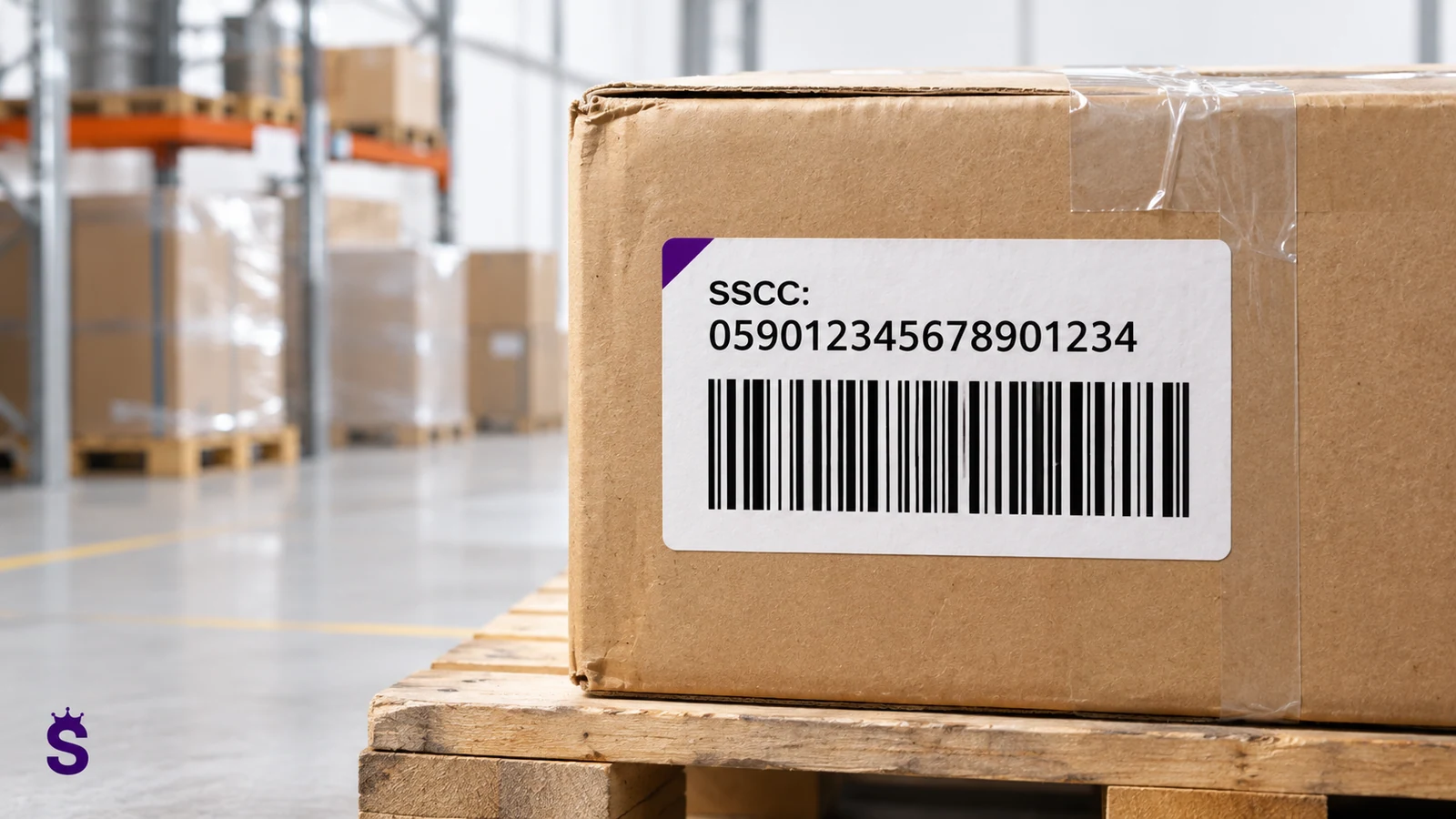
What does an SSCC identify?
SSCC is the identifier logistic unit in GS1 standard. Allows you to reference information about an organized shipping unit. The identifier and its content data must be linked in an agreed process - the code itself does not automatically describe the entire delivery.
Reusable load carriers, on the other hand, can have its own identity over multiple circulations. In GS1, GRAI is used for returnable assets. It should not be replaced without agreeing on the identifier of the current logistic unit.
| Level | Question example |
|---|---|
| Product | What type of goods is this? |
| Lot / item | Which game or item does the entry refer to? |
| Logistics unit | Which prepared shipping unit does SSCC apply to? |
| Return load carriers | Which container or pallet returns in subsequent rounds? |
Base: GS1 about the logistic unit and GRAI.
One pallet can represent two different objects
The word pallet describes both a physical carrier and a prepared unit of cargo. A permanent asset can be used multiple times and its contents change with each workflow. Carrier identification and current logistic unit identification should be separated. This allows you to track returns without mixing them with your delivery history.
In GS1, SSCC is for logistic unit identification and GRAI is for returnable assets. The use of specific keys and structures must be agreed with partners and the relevant standard rules. It's not about adding an arbitrary long number, but about the common meaning of the data throughout the workflow.
A label does not replace data about the contents
Reading SSCC can lead to entity and related transaction information. However, the mere presence of a number does not prove that the content description is current. When dividing, repacking or changing cargo, proper relations must be maintained. The identifier value also results from the correct operation of the operation.
Agree on how the data will be sent to the recipient and when it will be available. If the content message arrives later than delivery, the intake process should know what to do. In the case of correction, a responsible person and a clear update result are needed, instead of silently replacing data in one program.
The code and the data standard are different things
GS1 defines the identification rules and data structure. Barcode or RFID is the way they are transferred. Any number written in the tag does not therefore become a valid GS1 ID. Broadcasting rules and partners' requirements need to be agreed.
When rebuilding an entity or changing content, the process must update the bindings properly. Copying an old label onto another shipment without checking the rules leads to ambiguity.
Example: returnable container in the next delivery
The container retains its own identity, but its contents and connection to the shipment change. Upon receipt, you need to know whether the reading concerns a permanent asset or a current logistic unit. Do not use a previous shipping label as a new shipment without checking. The same code visible for several cycles may then indicate outdated information. Establish the rules for creating identifiers and content data with your partners and in accordance with the standard used.
Related topic: return load carriers history.
What identifies each level
| Level | Question | Sample information |
|---|---|---|
| Product | What kind of goods is this? | Index or appropriate product ID. |
| Batch | What group do the items come from? | Lot number and required details. |
| Item | Which specific item? | Individual ID. |
| Logistics unit | Which prepared cargo does the entry refer to? | SSCC by GS1 rules. |
| Return load carriers | Which asset returns in subsequent rounds? | Fixed load carriers identity, e.g. GRAI properly applied. |
Barcode and RFID can carry agreed identifiers
The data medium is selected according to the process and requirements of the recipients. You need to check what symbols, standards and formats the devices and programs support. The fact that the reader read the number does not confirm the correct interpretation of the standard.
In the Service-King project, it is worth separating asset records from data exchange with partners. The extent of compatibility and integration must be confirmed. They discuss the choice of markings QR and barcodes and RFID tags. For physical load carriers, the reference point is workflow of containers and pallets.
Tests before handing over the label to the business partner
- Check the identifier assignment according to the agreed rules.
- Compare encoded data with a readable description.
- Test the recipient's devices and program.
- Skip splitting, repacking and returning.
- Check for correction and missing content data.
- Establish liability for incorrect or repeated markings.
The test should involve a joint process between both parties. Correct operation in your own warehouse is necessary, but it does not yet confirm the compliance of the entire chain.
Scenario: repacking part of the delivery to another load carrier
The unit arrives at the warehouse and some of the contents are to be sent further in the new arrangement. First, determine what identifiers apply to the products, the original entity, and the physical load carriers. Changing packaging should not indiscriminately copy the meaning of the old label onto the new shipment. Proper broadcasting and linking must meet the applicable standard and partner requirements.
Prepare breakdown information: what items and quantities were transferred and what remained. If the recipient uses electronic data, it should correspond to the actual load. Just printing a new label without updating the connections is not enough. You also need to know what happens to the previous unit and its designation, so that subsequent reading does not lead to an outdated list.
A return load carrier can maintain its own identity even though its current usage changes. Therefore, its permanent identifier should not be treated as a universal number for every shipment. Separating these objects facilitates both the settlement of the delivery and the subsequent return of the container. It is also important when analyzing history, because the same physical assets can participate in many independent operations.
With the business partner, test a correct delivery, missing contents data and a correction after repacking. Both sides should understand the result and how discrepancies will be resolved. This provides a better basis for acceptance than merely showing that a scanner can read a string of characters. Compatibility includes the identifier's meaning, the currency of its data and an agreed process for using it.
| Area | Practical arrangement |
|---|---|
| Objects | Product, logistic unit and carrier separated. |
| Division | Actual items and quantities. |
| Identifiers | Given according to the appropriate rules. |
| Labels | No obsolete designations in current workflow. |
| Recipient | Electronic data consistent with the payload. |
| Correction | Agreed path after content change. |
What to agree with the business partner
- Which object should be identified.
- Required data standard and structure.
- Responsibility for issuing the ID.
- Passing content information.
- Handle repackage, return and mislabel.
Compliance implementation and system interconnection require scope confirmation. See RTI workflow and 2D code comparison.
Questions worth clarifying before implementation
Does GRAI replace SSCC?
They should not be treated interchangeably. They concern other objects of identification. The selection and method of use result from the rules of the standard and the partners' process.
Can I come up with a GS1 number myself?
GS1 IDs have specific assignment rules. Correct scope and responsibility must be agreed upon, rather than accepting any extension as compliant with the standard.
Is a tag on the load carriers enough to control the content?
Only within the scope of the maintained association. If the contents have changed without being written, reading the load carriers will not confirm the actual list of items.
Go to solutions related to this topic
- Warehouse management (WMS) - Receipts, storage locations and issues.
- Returnable containers and pallets - Specific carriers, recipients and returns settlement.
- QR codes and barcodes - Recognize a single item and access its data.
- Choosing labels and tags - Designations for clothing, tools and other working conditions.
Sources and further verification
Free consultation
Let's determine the appropriate level of identification.
Describe load carriers, shipping units, and business partner requirements. We will separate the constant asset identifier from the current delivery data.
Thank you for your inquiry.
Your message has been sent to the correct department. We will contact you to determine next steps.
Send another inquiry