

Knowledge baseContainers and logistics
RTIs and reverse logistics: reconciling containers and pallets
The container leaves full, returns empty and starts the next cycle. The problem arises when we know the number of items shipped, but we cannot indicate which load carriers are at the business partner's, being washed or being repaired.
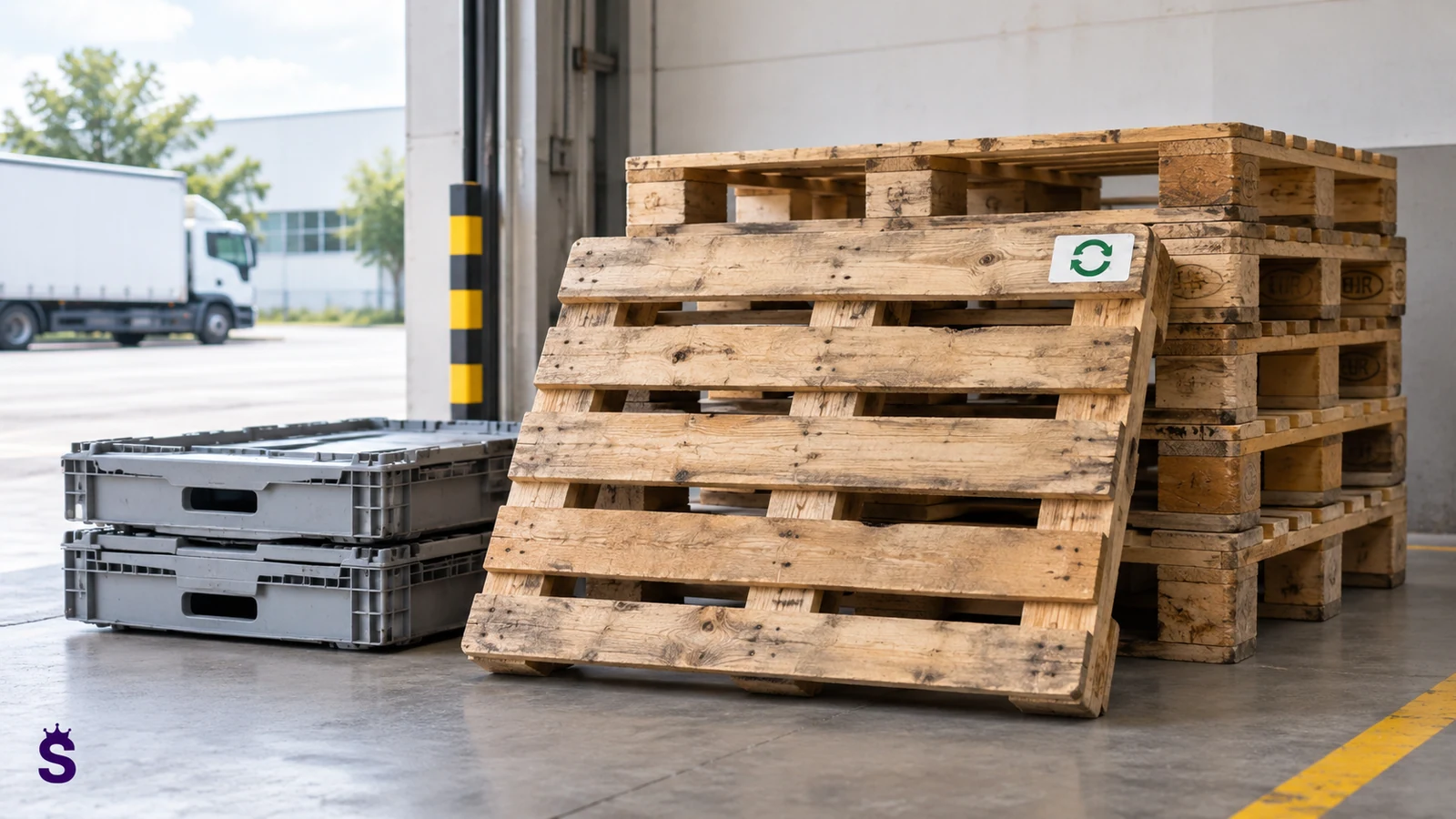
What are RTIs, and what should be identified?
RTI, i.e. Returnable Transport Item, is a repeatedly used transport load carrier: a box, container, pallet or other returnable packaging. The load carrier has its own circulation, independent of the transported content. The same container can be used sequentially for different deliveries.
Therefore, the container ID should not be equated with the current shipment number. When settling individual items, it is necessary to distinguish between the type of load carriers and a specific item. GS1 standards use GRAI to identify returnable assets; the selection of the standard and its structure must be agreed with the circulation participants.
More about load carriers identification: GS1 - GRAI. The mere implementation of records does not mean automatic compliance with every business partner's standard.
What events need to be recorded
| Event | Information needed |
|---|---|
| Check-out | Which pieces, to whom, when and on the basis of which document. |
| Pickup/drop off | Which load carriers actually returned and in what condition. |
| Offset | Change internal location or forward. |
| Washing/service | Process stage and result or readiness status. |
| Damage | Description, use limitation and further decision. |
| Withdrawal | Reason and end date of the active circulation. |
The customer's balance is the result of saved transactions. If issues are recorded but returns remain on paper, the report will show a growing problem instead of the actual status.
RFID speeds up batch recognition
With marked UHF carriers, multiple IDs can be read during a prepared operation. This helps you compare the batch with the check-out or return list. The reading can take place via the handheld terminal or at a planned fixed point.
Passing by the antenna is not yet a clear return from the customer. You need to associate the reading with the direction, zone, business partner and appropriate operation. Unwanted readings from adjacent stacks and situations when part of the batch is not detected are also important in the gate.
A load carrier's tag must withstand its working conditions
Different tags may be needed for plastic, metal and impact areas. Check washing, temperature, chemicals, friction and stacking. Test load carriers empty and with typical content. Liquids and metal elements can change radio conditions.
Do not mount the tag where it will be regularly sheared by the guide or obscured by another container. Replacing a marking should preserve the history of the same load carrier. Practical requirements for the surface are described Zebra RFID tag overview.
Which reports help recover load carriers?
- Customer status: items transferred and not yet settled.
- Off-base time: load carriers requiring contact or checking.
- Partial returns and items awaiting clarification.
- Damage and withdrawals, kept separate from active assets.
- History of a specific item when the total balance does not explain the difference.
Don't promise savings just based on the number of reads. Compare the cost of new load carriers, time to clear balances, actual recoveries and cost of maintaining the solution.
Where to start
- Select one business partner or one circulation route.
- Establish load carriers type and instance identification.
- Schedule issue, return, handling and withdrawal.
- Test full stacks and read target point.
- Arrange to handle shortages, foreign containers and partial returns.
- Compare the report with the actual state before expanding the deployment.
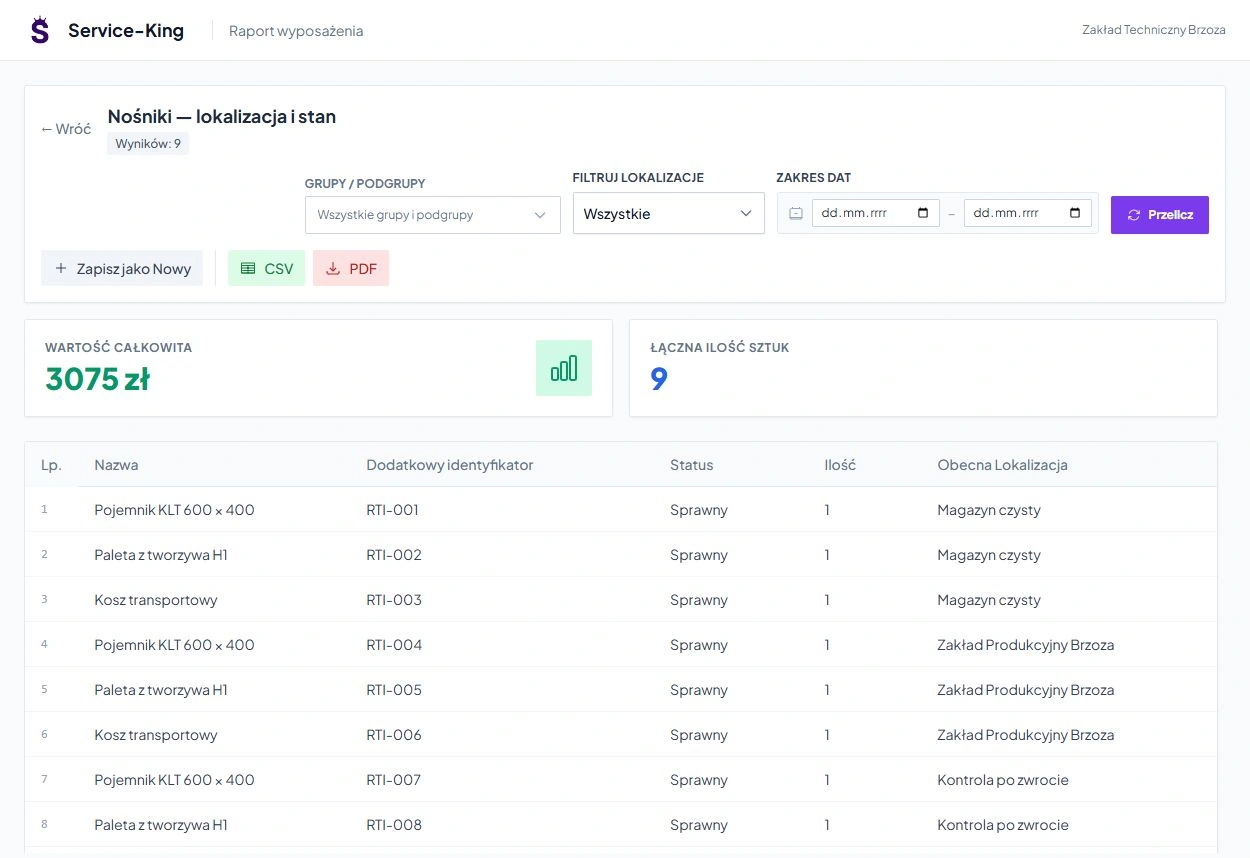
See container and pallet management in Service-King and reports and workflow history.
Sources and further verification
Continue on this topic