

Knowledge base · Service-King
Food traceability: batches, data and recalls
When there is a problem with a batch, you need to check its origin and recipients. Packaging identification only helps if content changes and operations are recorded correctly.
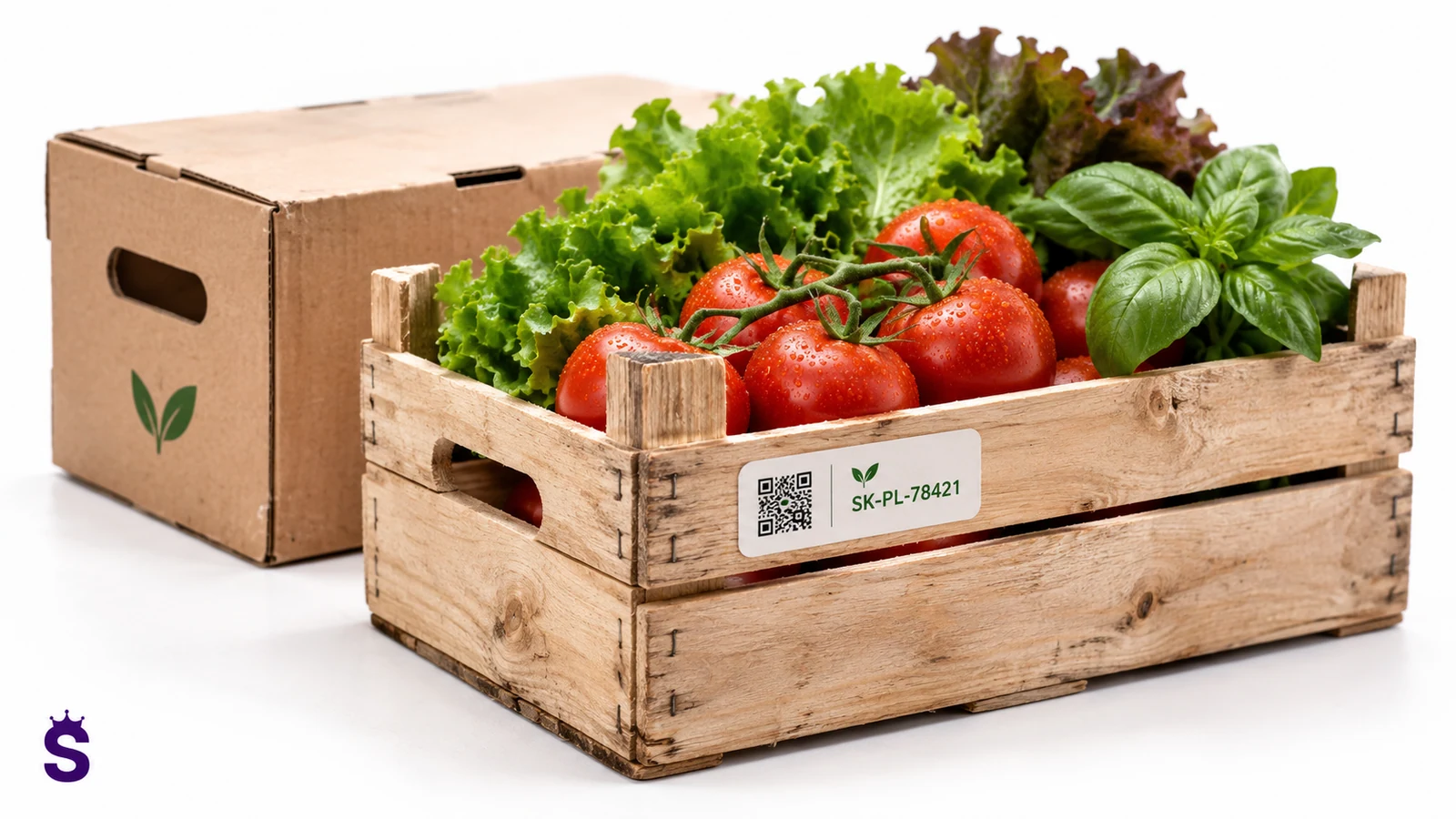
Track the batch independently of its load carrier
The same box can transport different batches. The container ID is not automatically the ID of the food inside. Correct association must be maintained during receipt, repackage, and check-out.
Traceability rules and entity responsibilities should be established in accordance with applicable regulations and process. An inventory of tools or load carriers is not a complete food safety system in itself.
| Data | Why they are needed |
|---|---|
| Lot and product | Specifies the scope of the question. |
| Supplier/consignee | Allows you to trace transfers. |
| Operation and time | Indicates receipt, processing or issuance. |
| Bindings after repackaging | Combine origins with new units. |
| Documents | Allows you to verify the record. |
Batch relationships must be retained when a batch is split
Goods are received, separated, combined and repacked. At each of these moments, you need to know what relationships you want to remain in the data. New packaging should not cut off the origin information. If you only identify a container, changing the contents requires the binding to be updated correctly.
Set the level of detail appropriate to the process and requirements. Data that are too general may expand the scope of the explanation, and excessive detail may increase the costs of recording. Traceability rules and documentation must be agreed with those responsible for quality and applicable legal obligations.
Trace the source and recipient without manually piecing together the history
The basis is the ability to trace the origin and further transfer according to the appropriate scope of requirements. The European Commission describes an approach to identifying the direct supplier and downstream recipient, with appropriate exceptions and specific regulations. The batch number alone without documents and reports may not be sufficient for practical operation.
Inside the company, it is also worth checking the connections after division and processing. Warehouse, production and quality records should have agreed identifiers. Data exchange requires indication of a binding source, and correction requires responsibility and justification.
RFID carries identification data
UHF can accelerate recognition of marked packages and load carriers. It does not independently determine the quality, temperature or expiration date of the product. This data comes from the right sources. Reading does not replace process control.
For liquids and densely packed packages, a test must be performed. Also agree whether you are tracking a batch, a logistics unit or an individual item.
Test whether you can answer a recall query
Select a sample batch and check if the source, recipients, quantities and residue can be identified. Include repacks and partial check-outs. A list of IDs without relationships between operations may not be sufficient.
Separate Service-King’s equipment and carrier workflows from specialist ERP or quality-system functions. Data exchange is agreed for the particular project.
Example: splitting one batch
The received batch is divided into several packages and issued to different recipients. The records must maintain the origin of new units and the confirmed quantities. If the entry ends with the name of the container, it is difficult to determine the scope of the check later. Also track the return and repacking in the sample. The goal is to recreate the actual data path, not just get a green read status. Formal requirements and quality decisions remain in appropriate procedures.
Related topic: GS1 identification levels.
Traceability test on one example
| Question | Data to find | Typical vulnerability |
|---|---|---|
| Where did she come from? | Supplier, batch and receipt document. | Ambiguous ID. |
| What was done to her? | Splitting, repacking or other appropriate events. | No relationship with old unit. |
| Where did she go? | Issues and applicable recipients. | Connect to load carriers only. |
| How much is left? | Confirmed quantities and condition. | Inconsistent units. |
| What needs to be checked? | Scope of items and documents. | Incomplete data treated as a sure result. |
RFID identifies a data carrier, not food quality
UHF can speed up the identification of marked packages and load carriers. It does not independently evaluate product temperature, quality or safety. This information has appropriate sources and procedures. Convenient reading is not a substitute for process control.
Fluids, metal and batch arrangement may alter radio conditions. Carry out the test on real packaging. If the tag is on a returnable container, clearly show whether the reading refers to the asset, the current content, or both related ranges.
How to use records without assigning unconfirmed functions to them
In Service-King, you can consider the workflow of equipment, load carriers and agreed operations. Full food industry requirements, specialized quality system and integrations must be confirmed separately. The design should name which layer provides which information.
Start with a scenario on your own sample: select a batch and recreate the source, links, check-outs and residue. Write down the time and gaps. They are helpful warehouse operations, process steps and reports with the correct scope.
Scenario: one batch is split between several recipients
After acceptance, the batch is distributed in several packages and into different check-outs. A history should allow you to move from the source to new entities and audiences. It is not enough to find just the last bin if the data is to recover the entire range needed. Determine which operations create relationships and who confirms them.
When dividing, keep quantities and units according to the appropriate rules. If you write down packages in one place and pieces in another, a clear interpretation is needed. The discrepancy may be due to a conversion factor, repackaging or incomplete recording. It is not worth hiding it by adjusting the amount without information about what was actually determined.
In the trial, select the batch backwards and check the supplier, documents and internal relations. Then go ahead and establish your audience and residual. Measure the time and note any missing data. If part of the history only exists in the conversation with the operator, this indicates a process gap, not just a lack of search functionality.
Formal recall scope and subsequent decisions must follow the relevant procedures. The records should help gather reliable facts quickly, rather than independently assess product safety. Well-designed relationships reduce manual data assembly and help warehouse, production and quality teams communicate using the same identifiers.
| Area | Practical arrangement |
|---|---|
| Source | Supplier and proper receipt. |
| Division | Relationships of new units with the batch. |
| Quantities | Consistent units and agreed conversions. |
| Check-outs | Appropriate recipients and documents. |
| Remnant | Confirmed range in stock. |
| Gaps | Incomplete data visible for clarification. |
Checklist
- Unambiguous batch and rules for assigning it.
- Record source and recipients.
- Links after changing packaging or composition.
- Quantity and document control.
- Attempt to reproduce waveform on real data.
Read about SSCC and load carriers and on temperature measurements.
Questions worth clarifying before implementation
Is it enough to write down the pallet number?
This depends on the level of identification required. The load carriers can change the content, so a fixed number alone will not maintain the history of the batch without proper relationships and operations.
Does RFID replace food safety requirements?
No. It is a way of identification. Legal, quality and measurement requirements must be met with appropriate procedures and a confirmed scope of systems.
How often should I test?
Frequency should be based on appropriate requirements and process evaluation. It is also worth checking it after changing packaging, system or repacking method, instead of relying on the old demonstration.
Go to solutions related to this topic
- Warehouse management (WMS) - Receipts, storage locations and issues.
- Returnable containers and pallets - Specific carriers, recipients and returns settlement.
- Process monitoring — Equipment, parts and recorded stages on the shop floor.
- Reports and movement history - Statements and documents related to operations.
Sources and further verification
Free consultation
Let's check whether you can reconstruct a batch's journey.
Describe receipt, repackaging, and check-outs. We will establish identifiers, relationships and the scope of data needed for control.
Thank you for your inquiry.
Your message has been sent to the correct department. We will contact you to determine next steps.
Send another inquiry