

Knowledge base · Service-King
Cable reel tracking: RFID, cable length and returns
When a drum goes to construction, you need to know what has been spent and what is left. Identification helps keep a history, but is not a substitute for measuring cable length or securing the storage area.
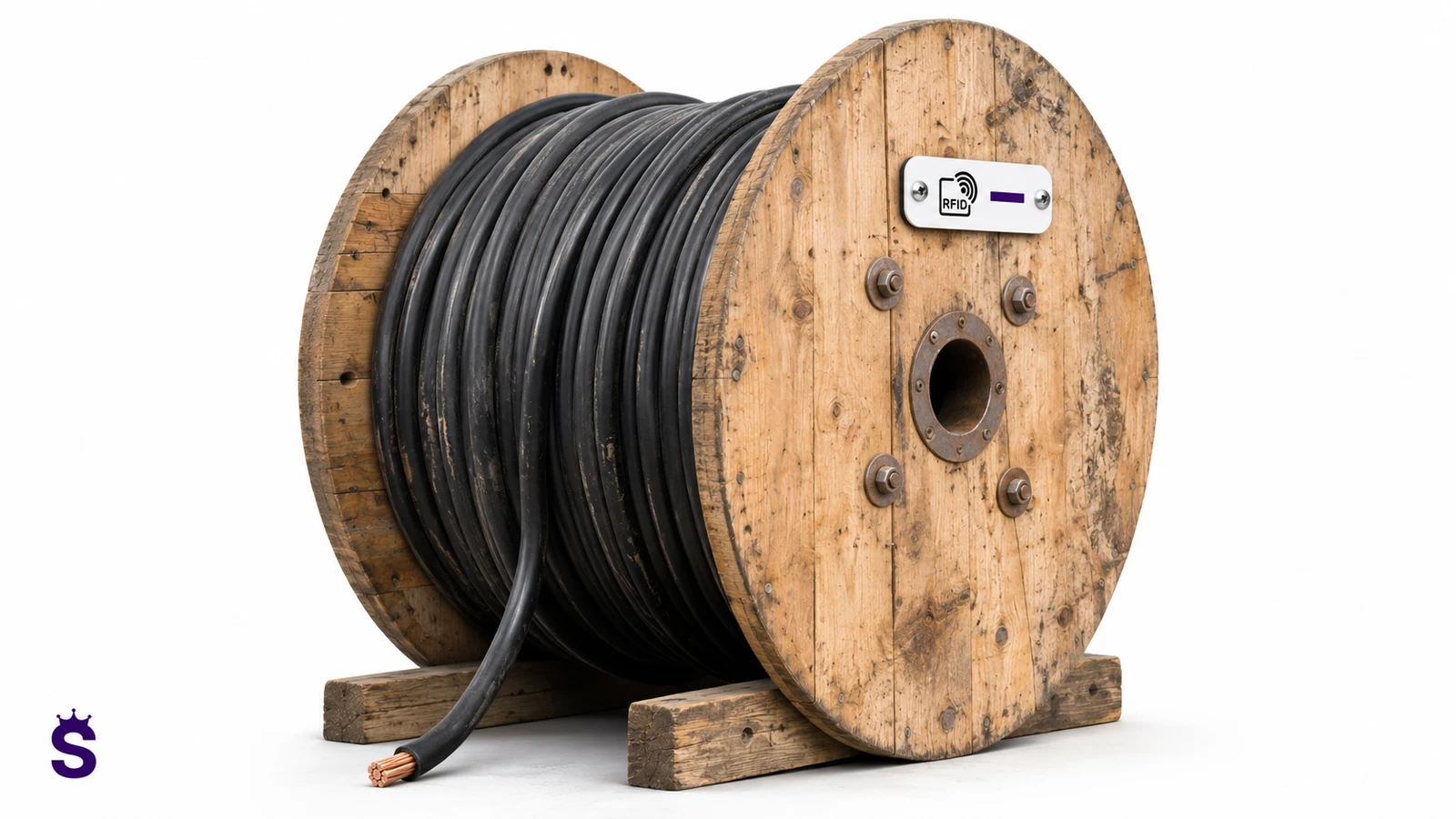
Distinguish the drum from the cable
The load carriers and its contents have different data. The drum can come back empty and be used again. For the cable, the type, batch or other required markings, quantity released and residue are important. The tag itself on the load carriers does not measure length.
| Stage | Information needed |
|---|---|
| Check-out | Drum, cable type, agreed quantity and pickup location. |
| Consumption | Confirmed quantity according to the adopted measurement method. |
| Return | Actual load carriers remaining and condition. |
| Difference | Explanation of measurement, documentation or missing. |
The drum has its own workflow; the cable has a separate quantity
A permanent reel ID helps you get back to your reel history. However, the amount of cable requires proper measurement and recording. Reading the tag should not be equated with confirming the square footage. The load carriers number answers the "which?" question and the measurement answers the "how many?" question.
When you reuse the drum, the contents may change. Determine the moment to end the previous relationship and start a new one. Cable type, batch and required documents belong to the appropriate use and do not have to be permanent features of the load carriers. This division avoids transferring old data to the next delivery.
Compare measurement methods on a consistent basis
Supplier data, check-out measurement, and residue measurement can come from different methods. Before qualifying the difference, record the source and process-specific accuracy. Document discrepancy does not necessarily mean loss of material.
Separate consumption, measurement correction and offset. If all changes are saved in one go, the later report will not show the reasons. When assessing, you need the context of implementation and actual handovers between teams. Just a list of conditions without a history can make it difficult to explain.
RFID supports identification; it does not physically prevent theft
The tag can make it easier to list load carriers and find a record. Passive UHF does not transmit GPS position itself and does not alarm without a reader and appropriate logic. Protection also requires organization of access and physical security.
The tag is selected according to the drum structure, surroundings and external conditions. Metal and a large amount of conductive material require testing in the target system.
An example that explains the difference
A carrier with a specified amount of cable was issued to the team. Less residue is returned than would appear from consumption records. The team checks measurement, operations and handovers. A discrepancy should not automatically indicate theft or the individual's fault.
Service-King can help you organize the workflow of equipment and load carriers. Settlement of square footage and integration with measurements should be confirmed for a given project.
Keep measurements separate from recorded stock figures
If the quantity of cable in the records comes from the supplier's declaration and the return comes from a different measurement method, the discrepancy may have several reasons. Record the source and how the quantity was determined. Separate measurement correction from issue or consumption operations. This allows the history to show what really happened, rather than reducing every difference to a loss of material. Drum identification helps find the correct data, but does not alone determine its accuracy.
Related topic: warehouse data audit.
Three areas of cable drum tracking
| Area | What provides | What it doesn't replace |
|---|---|---|
| Identification | Recognizing the correct load carriers. | Content measurement. |
| Movement records | Check-out and return history. | Physical security of the site. |
| Measurement | Quantity information by method. | Explanation of the reason for the difference. |
| Security | Access restriction and other agreed actions. | Current list and documents. |
RFID and GPS meet different needs
Passive UHF is read within the range of the reader. It does not transmit a satellite position on its own. If you need a locator with transmission, this is a different scope of equipment and maintenance. Don't promise an alarm for every movement based on a label alone.
At the drum, choose a tag that suits the structure and external conditions. A large amount of conductive material and metal elements require testing in the final arrangement. Protection against theft is also planned by organizing access and physical security.
Example plan for organising the cable drum workflow
- Give unique IDs to load carriers.
- Separate cable data from drum data.
- Determine the measurement method and source.
- Record issues, consumption and actual returns.
- Explain differences with history and documents.
- Compare the time and number of unclear items before and after the change.
The scope of Service-King when recording load carriers and equipment can be discussed by construction industry and containers and returnable load carriers. Measurement and integration details require confirmation.
Scenario: the remaining cable length differs from the documents
The crew returns the drum and the measured residue is less than the consumption records show. First, compare the data sources: quantity on receipt, how issuance is measured, and how is the return assessed. Different methods may produce incomparable results without explanation. Don't start by automatically classifying the entire discrepancy as a loss.
Check for inter-crew transfers and partial returns. If the material was issued in several stages, one final total may not show the missed operation. It is worth keeping the units and rounding method appropriate for the process. The drum ID will help you find the data, but it won't tell you which value is correct.
Once you determine the cause, save the appropriate correction type. Changing a measurement, completing a missing operation, and confirming a loss should not have the same meaning. This will ensure that reports do not suggest theft where the document has been corrected or hide the real problem under a general condition correction.
In the pilot, evaluate the waveform recovery time and the proportion of differences with an unknown cause. If the main gap is a lack of measurement, the new tag won't solve it on its own. If measurements are good but data gets lost between teams, a simpler handover record is needed. Improvement should address the actual cause and physical security should remain a separate element of the organization.
| Area | Practical arrangement |
|---|---|
| Measurements | Sources and methods for issue and return. |
| Movement | All stages and handovers. |
| Units | Data consistency and rounding. |
| Correction | Reason separate from normal wear and tear. |
| Application | Cause confirmed or still open. |
| Improvement | Selection of measurement, records or security. |
Checklist
- Fixed load carriers ID.
- Separate content data.
- Agreed measurement method.
- Confirmed check-outs and returns.
- Record-independent security.
Read on load carriers workflow and inspection of construction equipment.
Questions worth clarifying before implementation
Does the tag measure the amount of cable?
A regular tag identifies the load carriers. Quantity requires the right data source and record. Integration with a measuring device is a separate scope.
Can any unauthorized departure be detected?
This requires appropriate infrastructure, rules and testing. Marking alone does not guarantee motion detection or replace physical security measures.
How to explain the difference?
Compare documents, measurement methods, consumption and transfer. Only the findings allow us to determine the cause; it shouldn't start with an automatic assignment of blame.
Go to solutions related to this topic
- Equipment on construction sites - Handovers between warehouse, vehicles and crews.
- Returnable containers and pallets - Specific carriers, recipients and returns settlement.
- Reports and movement history - Statements and documents related to operations.
- Choosing labels and tags - Designations for clothing, tools and other working conditions.
Free consultation
Let's separate drum history from cable quantity reconciliation.
Describe load carriers, how to measure and communicate to crews. We will determine what should be identified and how to explain the differences.
Thank you for your inquiry.
Your message has been sent to the correct department. We will contact you to determine next steps.
Send another inquiry