

Knowledge base · Service-King
Containers and BDO: operational records and obligations
The container, its contents and the waste document are different pieces of information. Organizing assets helps in operational work, but does not replace mandatory records kept in the appropriate system.
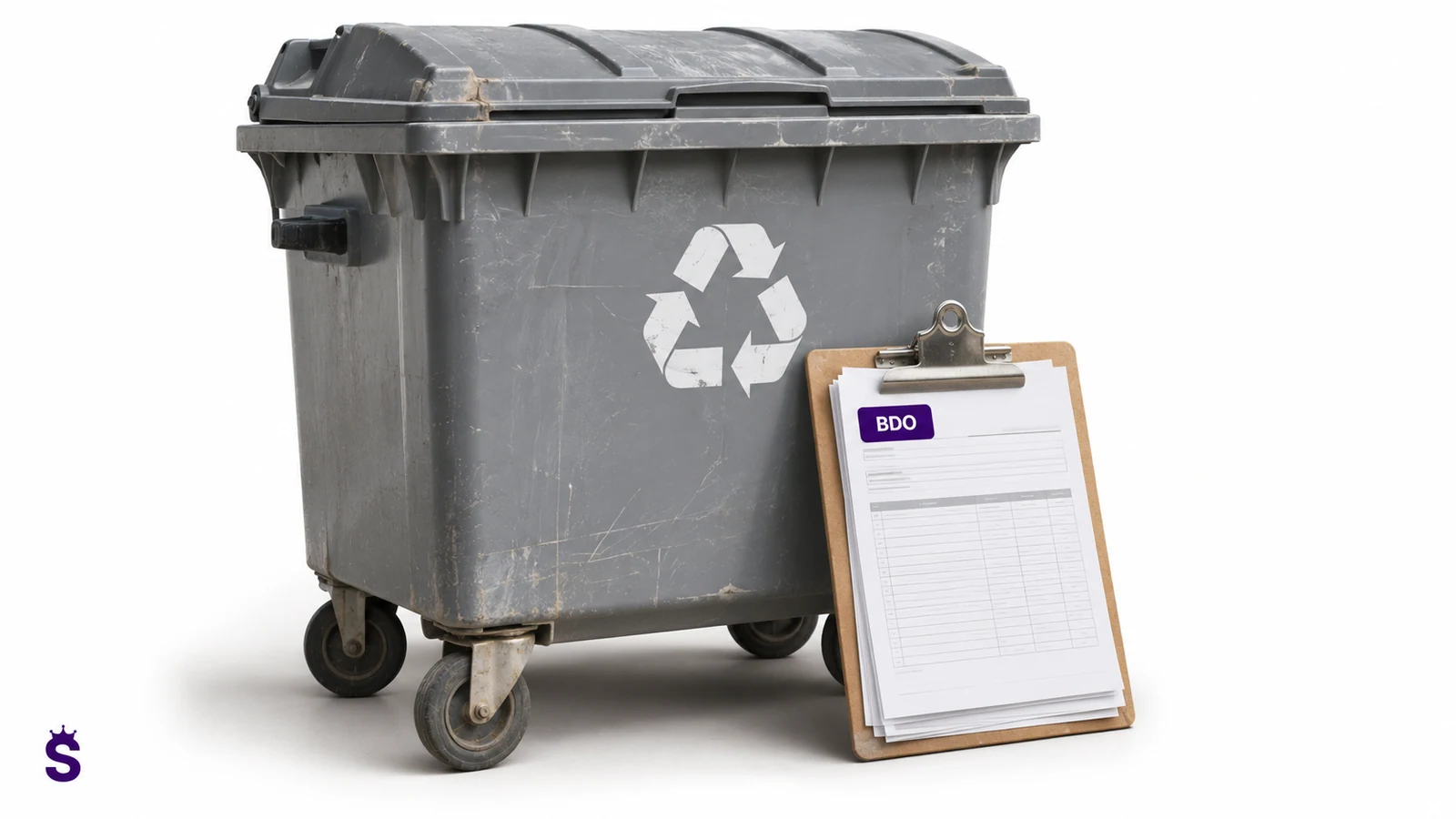
The load carrier has its own history
The container may be released, returned, washed or damaged. The type of waste and its mass relate to the content and the specific event. The container tag reading does not confirm the weight or correct classification of the waste. Proper measurements and decisions are needed.
| Layer | Sample range |
|---|---|
| Asset | Container, location, owner and condition. |
| Operation | Reception, transfer, content and confirmed measurement data. |
| Formal records | Documents and entries required in the relevant BDO procedures. |
The container, contents and document are separate records
The load carriers can be issued, emptied and repaired multiple times. The type and weight of waste relate to specific contents and operations. The document has its own requirements. Common connections are needed, but the meaning of the data should not be blurred.
Before implementation, determine which information is created in the field, which is after measurement, and which is approved by the appropriate person. If they are all added later from memory, the new tag will not change much. Identification should make it easier to find the right asset and operation, rather than automatically assigning unverified values.
Each handling record needs a clearly defined scope
The information "handled" may indicate that the container has been received, emptied, washed, or replaced. Define event types and minimum data. The same operation name should mean the same for all changes.
For exceptions, you need a list: foreign container, damaged tag, lack of access and other arrangements. An operator should not select a random item just to close a job. In Service-King, such a workflow can be discussed in the area containers and waste containers.
Using RFID does not automatically fulfil BDO requirements
Obligations regarding entry, records and documents depend on the entity's situation. The Service-King system does not automatically replace BDO nor is it a declaration of ready submission of all documents. The scope of data exchange must be agreed and verified.
Current document handling paths show official BDO instructions. You shouldn't transfer principles from a random example to every company.
A practical example of using equipment records
The company wants to know which containers are with customers and which ones are waiting for service. Identification of items and recording of check-outs and returns organize the balance. Content data and required documents are created according to separate rules.
This allows you to avoid confusing the missing container with the unagreed mass of transferred waste. Both problems have different explanations.
Agree how two independent records will be corrected
Incorrect container location and incorrect data in the waste document require different actions. Correcting one piece of information does not necessarily correct the other piece of information. In your project, determine where the data comes from and who is responsible for approving it. If integration is planned, also check for document rejection and resubmission. It is important that the operator sees the result of the exchange and does not assume correctness just because his local operation has been completed.
Related topic: responsibility for data exchange.
What each source can provide
| Source | Information | Restriction |
|---|---|---|
| Tag or code | Identity of the tagged asset. | Does not measure mass or classify waste. |
| Operator | Confirmation of actions and comments. | Requires an understandable procedure. |
| Measuring device | Value by method and conditions. | Requires proper assignment and control. |
| Formal system | Documents according to applicable rules. | The scope does not result from the load carriers register itself. |
BDO requires the right procedures and responsibilities
Responsibilities depend on the entity's situation and applicable regulations. Please use current instructions and appropriate sources. Service-King does not automatically become a BDO replacement when a container number is added.
If you plan to exchange data, agree on fields, validation and error handling. Correcting the location of the load carriers does not necessarily correct the formal document. Both changes should have an owner and a visible result. It is worth treating the official BDO materials as a source of service rules, and the records project as a separate operational layer.
How to evaluate the pilot
Select one container type and go through check-out, handling, return and exception. Check if the history is readable without talking to the operator. Then compare the data needed for further documentation. Missing information should be marked and not replaced with a random value.
Measure container clarification time, completeness of records and number of manual corrections. These are practical measures of operational order, independent of formal assessment of responsibilities. They are helpful reports and event history.
Scenario: a container moves and its document needs correction
The operator confirms the handling of the container, but upon inspection it turns out that the incorrect location or value was indicated. First, determine which layer is affected. Asset location correction and formal document correction are not the same activity. One does not have to automatically execute the other.
Check the ID, recipient and actual mileage in the records. If the tag was not read, establish another reconnaissance path instead of assigning the operation to a similar container. The entry should indicate the source of confirmation. The right person needs to know whether a fact, interpretation or missing data has been corrected.
Measurement data also requires a source. If the mass comes from a device, you need to associate the result with the correct operation and unit. Changing it manually without justification can make it difficult to clarify later. The load carriers identifier alone does not determine the accuracy of measurement or content classification.
If the project involves export or integration, check the result on the recipient side. A patched file does not mean that the previous version has been replaced by the correct process. Status, accountability, and rules for dealing with rejection are needed. Technical data compliance is only part of the overall task.
After trial, record who can make each adjustment and how they are documented. You shouldn't give everyone full permissions just to close discrepancies faster. A clear division facilitates field and office work and reduces manual reproduction of operations. Formal obligations still require appropriate procedures and sources.
| Area | Practical arrangement |
|---|---|
| Layer | Asset, operation, measurement, or document. |
| Identity | Correct container confirmed. |
| Reason | Source and justification for the correction. |
| Exchange | Visible result on the data recipient side. |
| Permissions | Person responsible for this type of change. |
| History | Previous and revised scope possible to explain. |
Preparation checklist
- Persistent container ID.
- Separate content and measurement data.
- Responsibility for classification and documents indicated.
- Confirmed scope of possible integration.
- Data reconciliation after surgery.
See returnable container workflow and reports and workflow history.
Questions worth clarifying before implementation
Does RFID confirm the weight of waste?
A regular tag identifies the resource. The mass must come from the correct source and be correctly associated with the operation.
Is BDO integration ready for every process?
Scope must be confirmed for specific requirement, interface and responsibility. It does not automatically result from the ability to export the file.
Where to check the rules of formal service?
In current regulations, official BDO instructions and with persons responsible for the entity's obligations. The article primarily organizes the separation of operational data.
Go to solutions related to this topic
- Waste bins and containers - Records of assets, locations and services provided.
- Returnable containers and pallets - Specific carriers, recipients and returns settlement.
- Reports and movement history - Statements and documents related to operations.
- The implementation process - Process analysis, markings, tests and assembly commissioning.
Sources and further verification
Free consultation
Let's organize the bins and operational data.
Describe load carriers, recipients, and how to record service. We will separate the asset records from the data required in formal workflow.
Thank you for your inquiry.
Your message has been sent to the correct department. We will contact you to determine next steps.
Send another inquiry