

Software for tracking containers and returnable packaging
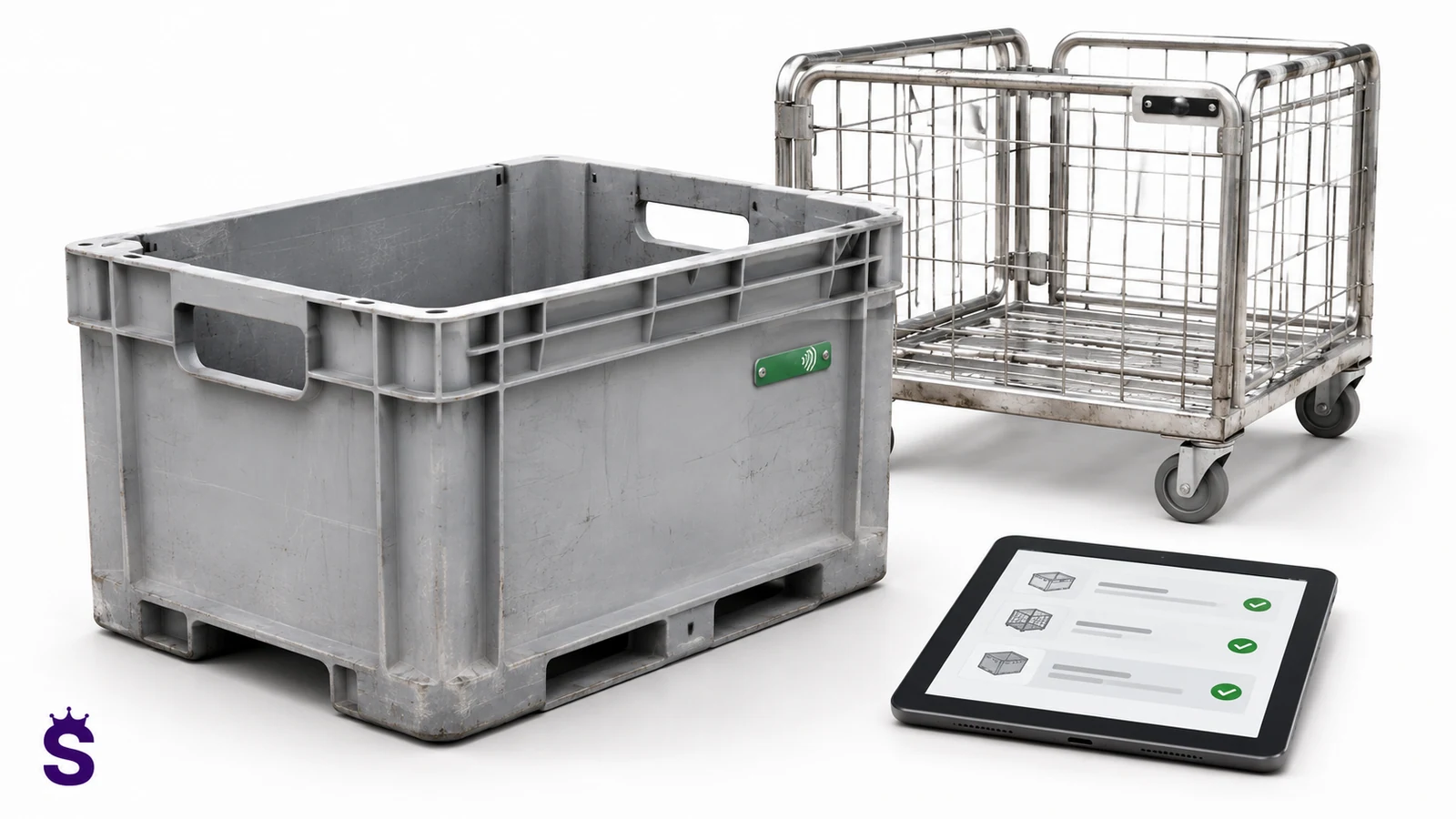
Container tracking software: records for returnable packaging, pallets and IBCs
Every company that ships goods in reusable packaging sooner or later faces the same problem: containers and pallets leave the warehouse, but do not always return on time - or at all. The lack of efficient records of returnable packaging translates into real financial losses, disputes with business partners and chaos in the warehouse space. The answer to this problem is dedicated container control software, which - supported by RFID technology or QR codes - turns paper protocols into a fully automatic, digital documentation flow.
What is container tracking software?
Container control software is a specialized program for recording returnable packaging, which allows you to supervise each container, pallet or IBC throughout its entire use cycle - from check-out from the warehouse, through transport, to confirmed return. Unlike spreadsheets or paper notes, a dedicated application tracks the status of each package in real time, assigns them to specific business partners and drivers, generates automatic alerts when the return deadline is exceeded and maintains a full history file of each asset.
In practice, such a management system includes:
- records of check-outs and returns – each movement of packaging is recorded with the date, time and responsible person,
- container location monitoring – it is known at any time which business partner or logistics point has a given container,
- deposit and documentation management – acceptance and check-out protocols generated automatically, without manually filling out forms,
- technical condition inspection – ability to register damage and plan repairs or disposal.
Why poor packaging tracking costs more than you think
Before we discuss specific system functions, it is worth dwelling on the costs of inaction. Lack of control over the circulation of returnable packaging generates unnecessary losses on several levels at the same time.
Financial losses. IBC containers, industrial pallets or specialized KLT pallets (Kleinladungsträger, standardized small-series containers) are assets of real value. Losing several dozen pieces a year in a large enterprise costs tens of thousands of zlotys - without taking into account the administrative costs of disputes with business partners.
Operational chaos. When there is no central records, warehouse workers waste time manually counting inventory, searching for missing containers and recreating shipment history from emails or notes. This is time that can be saved through automation.
Scheduling problems. If you do not know how many packages are currently with your business partners and how many are available in the warehouse, planning the shipment of your own products becomes difficult. The company either freezes excessive stock of packaging "just in case" or faces a shortage of it at a crucial moment.
Legal and complaint risks. Without documentation, it is difficult to prove that a given package was issued to a specific driver or business partner. The lack of authorization and handover protocols opens the door to disputes that consume time and assets.
How RFID-based returnable packaging records work
RFID (Radio Frequency Identification) technology is the foundation of modern returnable packaging management in industrial and logistics environments. Each container or container will be marked with an RFID tag - a durable label with a microchip that can be read without contact using a reader or data handheld terminal, without the need for direct line of sight.
Rapid recording of check-outs and returns
The classic problem of paper records is time: it takes minutes to complete the form for each issue or return, and employees under time pressure skip this step. With an RFID or QR system, one pass of the scanner is enough - the reader registers several or several dozen tags at a time (in the case of UHF RFID), updating the inventory and documentation in real time. Quick registration of check-outs and returns is the most frequently mentioned benefit after implementation by users.
Identifying and authorising business partners and drivers
The mobile application module allows the warehouse employee to assign the issued container to a specific business partner and driver before loading. The system generates a digital handover protocol that the driver can confirm on his mobile device. The authorization is two-sided - it eliminates situations in which the packaging gets "lost" between the company and the recipient without a trace in the documentation.
Monitoring throughout the entire supply chain
After the container is issued, the system tracks its status: "with the business partner", "in transport", "returned", "damaged", "for disposal". Monitoring the location of a container is particularly valuable in an extensive distribution network, where packages circulate between many collection points. Any exceeding of the agreed return deadline generates an automatic alert - instead of time-consuming manual monitoring.
Inspection and audit of technical condition
With each return, the employee can register the condition of the packaging using a mobile device: add a photo, select the status from a predefined list (functional / damaged / for repair / for disposal). Thanks to this, the company has full documentation of the history of each container - invaluable in the case of claims or during an internal audit.
Barcodes and QR codes – an alternative for lower budget environments
Not every implementation immediately requires RFID infrastructure. In smaller companies or in industries where packaging is not exposed to extreme conditions, barcode labels or QR codes work well. A mobile application for a smartphone or a dedicated scanner is enough for an employee to register the check-out or return of a container in a few seconds. It is a flexible entry point - the system can be launched quickly and cheaply, and if necessary, expanded with RFID tags without changing the entire software architecture.
Returnable packaging software: what should it do?
When selecting a program for registering returnable packaging, it is worth checking whether it meets several key functional criteria:
Management of returnable packaging in various categories
The system should handle heterogeneous assets: EUR pallets, IBC containers, gas cylinders, KLT containers, barrels, crates and other carriers. Each category has its own life cycle, deposit rates and inspection requirements – the software should take this into account.
A business partner record with a complete history
Each business partner should have his own record with a list of currently owned packages, transaction history, deposit balance and any arrears. This is the basis for logistics management and monitoring the timeliness of returns.
Mobile module with offline access
Registration using a mobile device must also work without constant access to the Internet - this is the reality of work in production halls, on loading ramps and in the field. Data syncs automatically once the connection is established.
Automation of the documentation process
Report forms, issuance and acceptance confirmations, packaging status reports - everything should be generated automatically based on recorded events. Copying data manually is a source of errors and unnecessary time waste.
Flexible reporting and analytics
The logistics manager should be able to check at any time: how many packages are in circulation, with which business partners, for how long and what is their status. This data supports better purchasing planning, optimization of warehouse space and asset management in a broader sense.
Modern returnable packaging management – who uses it and in what industries?
Container inspection software is used wherever packaging leaves the company's premises and returns - or should return. Typical industries and usage scenarios include:
- Food and beverage producers and distributors – glass bottles, plastic boxes, pallets, IBC containers with syrups or concentrates. Due to the high volume and dense network of recipients, the lack of a system quickly generates losses.
- Chemical and petrochemical industry – managing returnable containers such as barrels or IBC containers with chemical substances requires not only quantitative records, but also documentation of the technical condition and history of the contents.
- Construction and equipment rental – transport cargo (formwork boards, trolleys, material containers) often circulates between many construction sites. Monitoring the location of the container has both cost and security dimensions.
- Logistics and transport – companies managing a fleet of vehicles and making deliveries to many customers need a system that allows for the settlement of RTI (Returnable Transport Items) packaging with each driver separately.
- Pharmaceutical and medical industry – documentation requirements are particularly high here; an audit trail and full identification of each container is not an option, but a regulatory requirement.
Implementing RFID container tracking: what does it involve?
Implementing a returnable container management system based on RFID or barcodes does not have to mean a multi-month IT project. Modern platforms like Service-King are designed for flexible and rapid launch:
- Stocktaking and labelling — each warehouse container receives a suitable RFID tag or barcode/QR label. A large population can be counted in stages, with the operating plan agreed around ongoing work.
- Configuration of categories and business partners – the system defines packaging types, deposit rates, return dates and a list of business partners with invoicing data.
- Employee training – working with the mobile application is intuitive; standard system implementations include short training (a few hours) for warehouse staff.
- Commissioning and monitoring – after a few days, the company has full control over the packaging circulation, and the manager can generate the first reports and audits.
Adapting the system to the specificity of the industry - a different protocol form, different data fields, integration with ERP - this is an element that a good supplier should provide as part of the implementation.
Service-King – container control software with RFID technology
Service-King offers dedicated container and pallet management software that combines a returnable packaging records module, real-time monitoring, RFID and QR code support, and a mobile application for field employees. The system is flexible and scalable - it works well both in small companies with several hundred packages in circulation, and in large enterprises managing thousands of IBC containers, pallets and KLT containers.
If you are looking for a reliable program for recording returnable packaging that will give you full control over the circulation of logistics assets - check out our solution for RFID container and pallet management.
Tracking returnable packaging is an investment, not a cost
Managing returnable packaging without dedicated software is a game of chance: some containers will come back, some will not, and determining responsibility will be difficult. A dedicated program for recording returnable packaging based on RFID or barcodes eliminates this problem at the source - every issue and return is registered, authorized and documented automatically.
For companies that ship their products in reusable packaging, implementing a returnable container management system means real optimization: less unnecessary losses, better timeliness of returns, full documentation for audit purposes and much less time spent on manual administration. This is modern logistics asset management - easy to use, quick to implement and measurable effects.
Track container movements
Contact us to implement a modern packaging and returnable pallet inspection system.
Get in touch
Tell us what you need so we can prepare an initial assessment.
Manage returnable packaging
Replace paper protocols with automatic circulation and save on logistics costs.