

Knowledge base · Service-King
Asset Management and ESG: Repairs and Asset Data
Before you calculate the environmental indicator, make sure you know what the company has and how long it has been using it. The inventory can provide data on repairs and reuse, but it does not create a complete ESG report on its own.
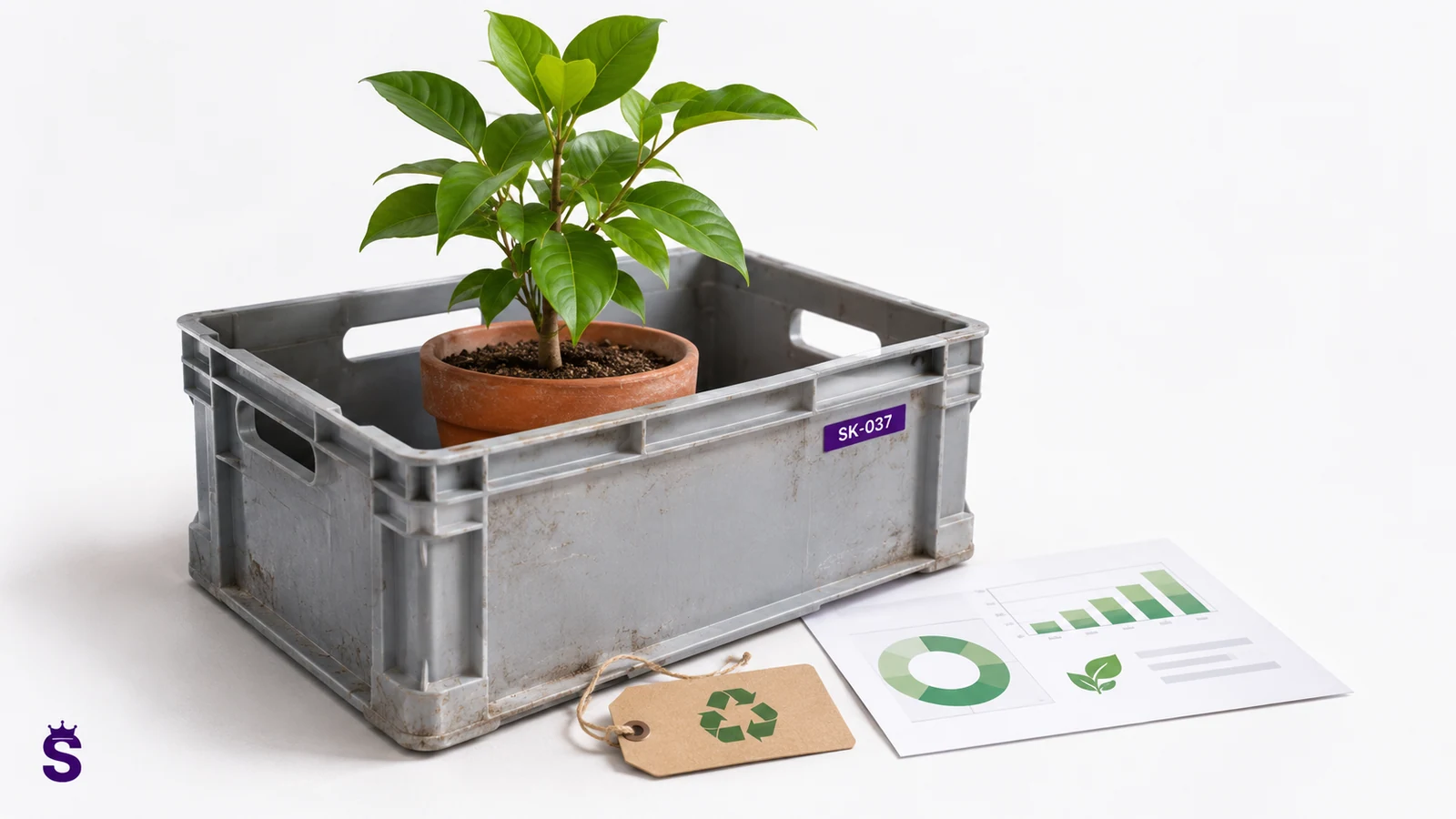
Start with verifiable data
| Data | What they help you evaluate |
|---|---|
| Usage time | How long items stay in active workflow. |
| Repairs and replacements | Whether the asset was maintained rather than immediately replaced. |
| Re-check-out | Whether functional equipment is returned to use. |
| Withdrawal | Why it was terminated and what happened next. |
| Availability | Whether the subsequent purchase was due to necessity or illegible condition. |
Records provide the basis for reusing equipment
If equipment is returned to workflow after repair under a new, unrelated record, it is difficult to calculate its useful life. If the retirement is not saved, the active inventory contains items that the company no longer uses. Consistent asset identity is the basis for a credible history.
It is a good idea to keep the dates and causes of important events: repair, transfer, reissue and end of use. Not all fields need to be mandatory from the start, but they should have a clear meaning. Distinguish data confirmed by a document from an approximate completion of an old history.
Repair, replacement, and relocation are different decisions
A company may purchase a new device even though a suitable unit is available at another branch. It may also take a long time to repair equipment whose condition or costs justify a different decision. The inventory does not automatically select the best option, but provides the necessary context.
When analyzing, it is worth comparing availability, fault history, costs and expected use. It should not be assumed that any repair is always better over the entire life cycle. Well described data from technical support facilitate the assessment of a specific case.
Do not treat every record as “CO₂ saved”
Calculating a carbon footprint requires a specific method, limits and factors. The number of RFID reads or extension of use alone does not provide a reliable emission amount without these assumptions. It is worth retaining sources and distinguishing between measurement and estimate.
Similarly, the benefits of repair depend on the situation. Not every repair is better than replacement throughout the life cycle. Records help collect facts needed for analysis.
What Service-King can contribute
Records, workflow history and documentation help determine the fate of a specific item. You can check what has been returned to use, what has been handed over to service and what information is incomplete. This is not a declaration of automatic compliance with any ESG reporting standard.
A good start is to remove outdated assignments and separate available, in-service and retired equipment. This improves everyday purchasing decisions even without an extensive report.
Example: repaired equipment is assigned to another person
History confirms repair, inspection and reissue. This is useful information about the further use of an item, which can be verified with documents. However, it should not be automatically attributed to specific emission reductions. If a company wants to use such events in reporting, it should establish the method and scope with the person responsible for the analysis. The records provide facts about the asset, and the methodology determines what conclusions can be drawn from these facts.
Related topic: asset history data.
Operational data and environmental indicators
| Information | What can be said | What the follow-up application requires |
|---|---|---|
| Re-check-out | Asset returned to use by operation. | Scope and status confirmations. |
| Repair | Specific activities recorded. | Effect and cost assessments. |
| Usage time | The history covers the indicated period. | Data completeness checks. |
| Carbon footprint | A specific methodology is needed. | Limits, coefficients and sources. |
| ESG Report | Dataset may be input. | Compliance with appropriate reporting scope. |
Don't turn scan count into emissions reduction
Tag reading shows identification activity, not environmental impact alone. Even extending the use of things requires an appropriate method if it is to be converted into emissions. The result should indicate the assumptions, sources and extent of uncertainty.
Similarly, automatic reporting compliance cannot be derived from the mere possession of records. Service-King can organize the facts about assets, and the methodology and requirements of the report fall into the appropriate area of analysis. Separating these roles increases the reliability of the data.
How to get started with a metric that's useful for your business
Select a question: How much functional equipment has been returned to service, what remains unassigned, or which groups are frequently retired. Establish a definition and scope, then review a sample of documents. A simple, confirmed metric is better than a complex number with an unknown source.
Common property records and history reports can help you organize your data. You can then discuss their use in your broader analytics project.
Scenario: using serviceable equipment instead of buying more
The department reports a need for a device, although the appropriate device is located in another department. If the inventory does not show availability and condition, the company may purchase a new item without checking for transferability. Current data helps you first assess your assets. This does not automatically mean that relocation will always be the best option.
Check parameters, condition, documents and preparation cost. The device may require maintenance or may not meet the needs of the new user. It is important to keep the justification for the decision in the records, especially when the purpose of the analysis is to later understand purchases and reuse. The mere presence of a record does not prove readiness.
If the transfer is approved, record the actual transfer, new location and recipient. The history should stay with the same item. You should not create a new item just because your branch or support number has changed. This ensures that the time of use and service are still reproducible.
Organizational performance can be assessed by decision time, number of reissues, and purchases that were not actually made. However, they should not be automatically converted into a specific emission reduction. An environmental application requires the right method, boundaries and data, not just the number of offsets.
A history constructed in this way is useful regardless of the specific reporting standard. Provides verifiable facts about assets and decisions. With further analysis, the source, scope and uncertainty can be identified. This increases the credibility of the summary and limits situations in which impressive indicators are not based on real workflow.
| Area | Practical arrangement |
|---|---|
| Needed | Required parameters and application. |
| Asset | Status and actual availability. |
| Decision | Justification for transfer or purchase. |
| Movement | Confirmed transfer of the same item. |
| Effect | Reuse and actual cost. |
| Analysis | Separated methodology for environmental indicators. |
A checklist for sound analysis
- Specified data scope and period.
- Confirmed repairs and reuse.
- Separated measured and estimated data.
- Known indicator methodology.
- Ability to return to source documents.
Read about the history of the device and costs of illegible records.
Questions worth clarifying before implementation
Does the system automatically calculate the carbon footprint?
This range should not be assumed based on records. You need proven methodology, data and features for the right project.
Can the previous history be completed?
You can prepare the import this way, but it is worth marking the source and incompleteness of the data. The estimate should not appear as a confirmed record of the event.
What assets should I start with?
From a group for which decisions about reuse or replacement have practical implications and data can be verified.
Go to solutions related to this topic
- Property records - Records of company equipment and fixed assets.
- Machinery management - Machine records, parts, documentation and saved status.
- Maintenance management - Work plan, contractor and documented service result.
- Reports and movement history - Statements and documents related to operations.
Free consultation
Let's build a reliable history of asset use.
Describe property, repairs, and replacement decisions. We will establish data that can support daily management and further analysis.
Thank you for your inquiry.
Your message has been sent to the correct department. We will contact you to determine next steps.
Send another inquiry