

Knowledge base · Service-King
Records of work clothes: issues, washing and returns
The size and number of sets issued are not enough when clothes circulate between the employee, the laundry and the warehouse. The records should explain what was transferred, in what condition and what we expect back.
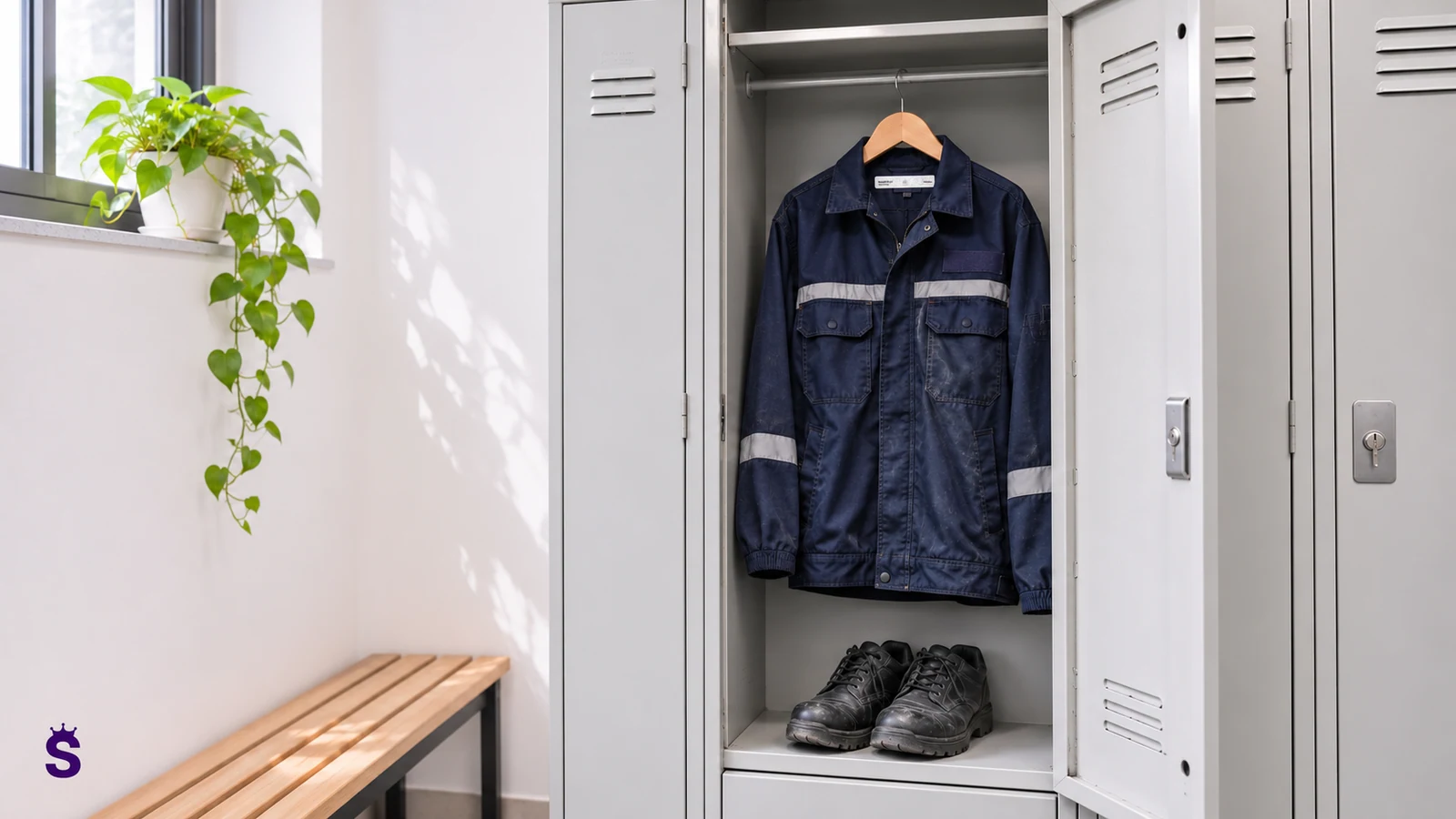
Define what you track as an individual item
Record the type, size and identifier of each sweatshirt, pair of trousers or jacket when tracking individual garments. The same model in the same size is not the same item. For assigned workwear, track successive handovers alongside the current total.
| Stage | Useful notation |
|---|---|
| Receipt | Type, size, number and identifiers. |
| Issued to employee | Person, specific items and date of surgery. |
| Transfer to laundry | Lot and relevant workflow zone. |
| Return/exchange | Pieces returned, condition and reason for replacement. |
| Withdrawal | Reason and termination of active use. |
Distinguish employee allocations from stock on hand
An issue of ten sweatshirts reduces the available stock, but should also indicate who received them. When handling several plants and multiple sizes, these two views easily diverge. The assortment record describes the type of clothing, and the assignment shows the equipment of a specific person. When tracking items, an individual identifier for each item is added.
Start with consistent definitions for model, size, purpose and unit. Agree how to handle unusual sizes and substitutes. The storekeeper needs to know what is available for check-out; the person managing allocations needs to know who has a complete kit and what needs replenishing. These requirements are described in PPE and employee clothing service.
Replacement should preserve the old garment's history
A damaged sweatshirt may be repaired and the employee may be given a different one. If the operator only changes the number next to the name, the information about the previous item will disappear. Correct workflow separates the return, condition assessment and new issue. A new item takes over the allocation, but should not take over the wear history of another item.
Likewise, repairing a tag is not automatically a replacement of the garment itself. When assigning a new designation, maintain the identity of the product. The distinction is useful when analyzing common damages, comparing models and talking to a dry cleaner. The outcome of such analyzes depends on consistent descriptions of causes. Just counting reads without workflow events won't show why things are being rolled back.
How RFID supports larger-scale tracking
UHF textile tag allows you to recognize marked items during a prepared operation. It can reduce batch counting before sending to the laundry and after returning. The reading does not by itself confirm cleanliness, suitability for use or washing. This information results from the procedure and relevant records.
The tag must match the temperature, pressure, chemicals and sewing method. An example of a narrow format is 70 × 10 mm, but the parameters are always checked for the selected model. More: selection of laundry tags.
Example: replacing a damaged sweatshirt
An employee returns a marked sweatshirt that requires repair or recall. The operator saves the status and reason and issues a new item as a separate operation. It is not enough to replace the number in the sheet, because then the history of consumption and settlement of the old product will disappear.
By maintaining history, it is easier to determine whether the problem is related to a specific model, batch or usage. However, applications require reliable data, not just the number of scans.
Quantity records or individual tracking: a comparison
| Approach | What gives | When to consider |
|---|---|---|
| Quantity by type and size | Simpler handling of allocation and warehouse status. | When you don't need the history of every item. |
| Individually with code | Distinguishing items when scanning intentionally. | When the number of operations and access to labels allow it. |
| Individual with UHF | Possibility to read marked batches and history of pieces. | When workflow between employees, zones and the laundry room is important. |
| Mixed model | Different level of detail for different groups. | When marking costs need to be adjusted to the usefulness of the data. |
You don't have to mark the entire warehouse individually from day one. It is important that the selected rules are public and applied uniformly by the team.
How to prepare a trial with the laundry
Select a few representative types of clothing and check out the full flow. Tags should be installed using a method appropriate to the product and washing process. The test is performed after washing, drying and other actual steps, not just on a new dry piece. For narrow textile markers, e.g. 70 × 10 mm, the parameters must result from the specific model.
Agree who confirms receipt, how third-party items are separated and how failed reads are reported. The batch declared on a document can differ from the items actually identified, so a discrepancy-handling procedure is necessary. Compare the time spent on picking, reconciliation and shortages. An example workflow is described in RFID laundry cycle guide.
Scenario: changing the size and allocation of a clothing kit
The employee receives a different size and the previous garments return for assessment. Changing a size field does not reconcile every garment previously allocated. Confirm what was actually returned and in what condition. The need for a new assignment is not proof of the return of the previous one. The records should show the clothes remaining with the person and the items accepted for storage or service.
If the old set is suitable for reuse, subsequent check-outs should preserve the history of the relevant pieces. If a part goes into repair or recall, record the reason. For quantitative records, keep the rules for type and size equally clear, without pretending to be an individual history where you don't keep one. The mixed model requires a clear distinction for the operator, so that the same symbol does not mean once a piece and sometimes an entire group.
After several operations, you can assess which sizes and models lead to frequent replacements. The conclusions need reliable reasons, rather than a single shared status. Size changes, normal wear, damage and tag faults are different events. A report can support stock planning and supplier discussions when its scope is clear and you know whether it reflects actual returns or planned allocations.
| Area | Practical arrangement |
|---|---|
| Return | The actual garment type, size and individual items returned. |
| New check-out | Appropriate scope for employee. |
| Status | Ready for use, service or retirement. |
| Reason | Resizing separated from damage. |
| Laundry | The actual stage and expected return. |
| Report | Comparison of exchanges over a known period and scope. |
Checklist for setting up records
- Dictionary of types and sizes.
- Clear assignment of items to employees or zones.
- Replacement, Repair and Recall Policy.
- Agreed steps in the laundry cycle.
- Control of shortages and unassigned items.
Questions worth clarifying before implementation
Should the employee's number be written on the tag?
To maintain a record, it is enough to properly link the identifier with the system. The scope of data recorded directly on the marking should be limited to justified need. When reassigning, the history remains in the system and does not have to be the public content of the label.
Does RFID confirm that washing has been completed?
The reading itself confirms that the tag has been detected. Information about the completed stage and cycle calculation requires an agreed process rule. Detecting the same item multiple times at the antenna should not accidentally increase the counter.
How to settle an incomplete set when an employee leaves?
Confirm items actually returned and leave visible items unsettled. The condition and reason for the shortage require explanation. The records organize the facts, while further personnel decisions result from the company's policies and relevant regulations.
Go to solutions related to this topic
- Workwear services - Assignments, exchanges and subsequent handling of the set.
- Health and safety equipment and assignments - Job Standards, Sizes, Preparation and Issue.
- RFID laundry - Identification of textiles and accounting for their workflow.
- Customer and employee portal - Records and notifications within the scope provided.
Sources and further verification
Free consultation
Let's link workwear allocation with the rest of its workflow.
Describe the number of employees, size and cooperation with the laundry. We will determine which items are worth identifying and how to settle exchanges and returns.
Thank you for your inquiry.
Your message has been sent to the correct department. We will contact you to determine next steps.
Send another inquiry