

Knowledge baseLaundry and textiles
UHF RFID laundry tags: selection, sewing in and laundry trials
The laundry tag must survive the entire agreed process and be readable in the actual load. The inscription "waterproof" alone or the large declared range are not enough to select the marking.
How a laundry tag differs from an ordinary label
The textile marker is prepared to work together with the product: in washing, drying, ironing or ironing - within the parameters of a specific product. A regular self-adhesive carton label is not a substitute for a laundry tag.
In practice, the resistance of the entire structure is checked, not only the electronic system. A damaged cover, improper sewing, or too much pressure can destroy the marking even though it worked before the first wash.
Examples of requirements and marking methods are described HID in textile materials. Declarations always refer to a specific structure and conditions.
Parameters worth collecting before purchasing
| Parameter | What to ask |
|---|---|
| Temperature | What is the maximum value and duration of its effect at each stage? |
| Pressure | Does the product pass through a press or mangle and under what conditions? |
| Chemistry | What agents and concentrations are used? |
| Drying | What is the method, temperature and time? |
| Assembly | Sew-in, pocket or other method approved for the product? |
| Operation | Will the tag be bent, stretched or exposed to friction? |
| Reading | What reader, antenna, trolley and number of textiles in the session? |
Don't compare products only using the slogan "up to several hundred washes". Number of cycles makes sense with test conditions and usage. It is worth keeping the technical data sheet of the selected model.
Dimensions and sewing position
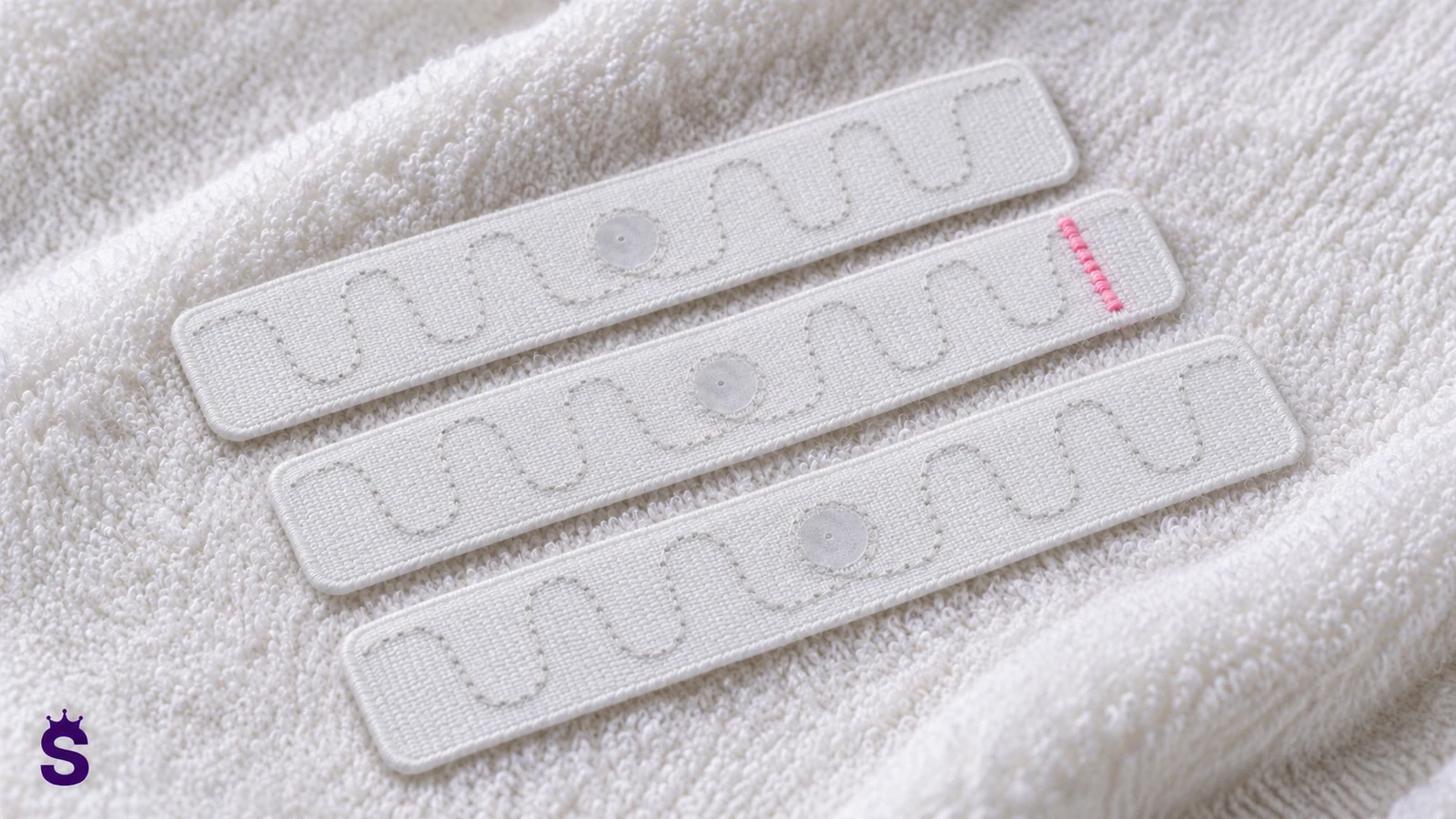
Narrow format, e.g. 70 × 10 mm, can facilitate discreet installation in textiles if the specific tag is intended for this purpose. Placement must take into account user comfort, seams and pressure zones. Do not sew through the antenna or system elements in a place not approved by the manufacturer.
For towel, bedding and workwear, appropriate locations may vary. On clothes, also check for friction against the body and the possibility of damage during seam repair. Consistent mounting location facilitates subsequent inspection and replacement of markings.
Sample laundry tag 70 × 10 mm shows the product format; its suitability must be confirmed for your own process.
How to conduct a meaningful test
- Prepare a sample of various products, not just one loose piece.
- Mount the tag according to the planned batch method.
- Save the IDs and check the link to the records.
- Test the full laundry cycle and reading in a real cart or bag.
- Check the effect of moisture, positioning and density of textiles.
- After the agreed number of cycles, evaluate the fit, comfort of use and readability.
- Analyze missed items and undesirable reads from adjacent zones.
A reading, a wash cycle and textile status are different things
The reading says ID detected. The cycle is calculated according to the agreed circulation rule. The condition requires an assessment or other defined information. The tag itself does not automatically establish that the textiles are clean, safe and suitable for further use.
In Service-King, this data can be associated with a specific item, its zone and history. See how to organize the laundry cycle and consumption and history reports.
Checklist before marking the entire batch
- Approved tag model and data sheet.
- Confirmed sewing location for all types of textiles.
- Verified reading in target batch.
- Unique identifiers with no accidental duplicates.
- Rules for replacing a damaged tag while preserving the history of item.
- Established rule for counting cycles and product withdrawal.
A good tag is part of the overall workflow. The solution for the laundry room is described RFID Laundry page.
Sources and further verification
Continue on this topic
From guidance to action.
Explore it in Service-King
If you are looking for just tags or devices, you can also see RFID laundry tags in the RFID Store .
Examples of tags and equipment