

RFID in logistics and supply-chain tracking
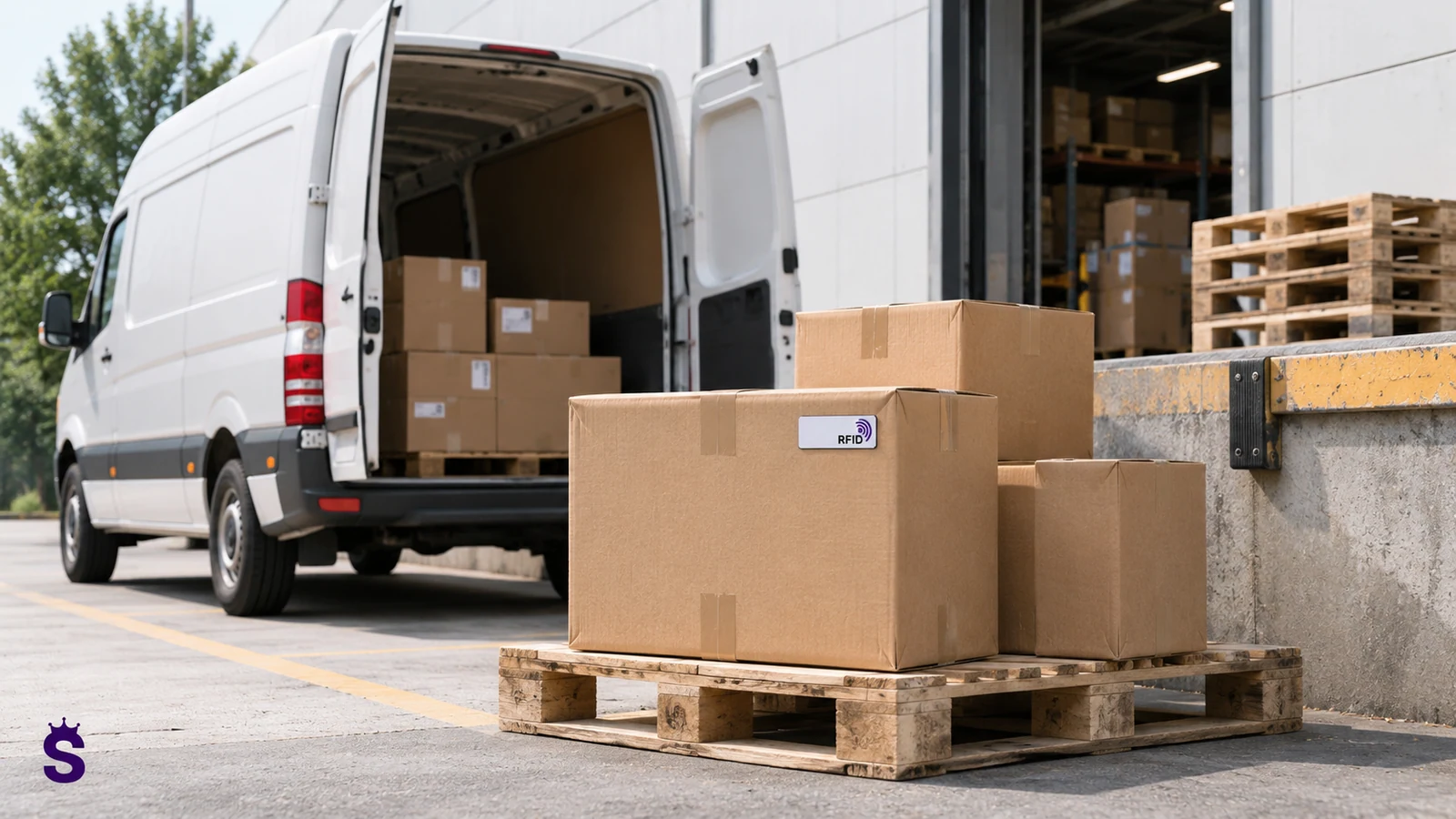
Logistics never forgives mistakes. One mistake in order picking, a lost container or inaccurate inventory – and the entire supply chain collapses. That's why more and more companies are turning to RFID technology, which allows you to track every product in real time, eliminate human errors and automate processes that until recently required hours of manual work.
What is RFID technology and how does it work?
RFID (Radio Frequency Identification) is an automatic identification technology based on radio waves. In short: each object - a pallet, container, package, and even a single product - receives a tag (RFID tag) that stores data. The RFID reader emits a radio signal, the tag responds, and the data is transferred to the system in a fraction of a second.
RFID does not require direct sight of each tag, but performance depends on materials and the installation. Metal can reflect or shield signals; water can absorb UHF energy and detune tags. Suitable on-metal tags, spacing and placement may help, but do not guarantee reading through metal or liquid. Passive UHF tags using the relevant EPCglobal® standard draw power from the reader’s field. Temperature limits, batch size and range need testing for the selected tag and process.
Radio frequency identification is today one of the pillars of automatic identification in logistics, and its RFID applications go far beyond simple code reading.
RFID applications in logistics
The use of RFID in logistics can be divided into several key areas. Each of them translates into real savings and higher quality of operations.
Warehouse and inventory management
A traditional warehouse is a maze of mistakes. Goods end up not where they should, inventory takes days, and inventory levels in the ERP system rarely match the actual situation. RFID in the warehouse changes this reality radically.
Thanks to RFID, each product has its own digital identity. The system knows exactly where a given product is, when it arrived and when it left the warehouse. Inventory management becomes an ongoing process rather than a one-time audit. RFID gates installed at the receipt and check-out areas automatically record every movement of goods - without the need for manual scanning, without downtime.
Importantly: RFID eliminates the need to remove products from collective packaging each time. RFID readers can read the contents of an entire carton or pallet in seconds. This changes the speed and accuracy of warehouse processes beyond recognition.
Order picking and handling
Order picking is one of the most error-prone processes in logistics. An employee under time pressure, hundreds of similar-looking products, no real-time confirmation - a recipe for disaster. RFID ensures immediate verification of each element of the completed order. The system compares what the employee took from the shelf with what he should have taken. If something is wrong, the alarm signals the error before the parcel reaches the courier.
This literally protects you against costly mistakes – both financial and image-related.
Shipment tracking and goods flow control
In an extensive supply chain, goods change hands many times. Every delivery, every reloading, every container is a potential point where the shipment can get lost or confused. RFID allows you to track products at every stage of production and transport - from the factory, through the distribution center, to the final recipient.
Data from tags is transferred to the ERP or WMS system in real time, thanks to which the dispatcher can see the current status of each shipment without having to call the warehouse or check paper documentation. RFID in logistics and supply chain is the de facto digital backbone of modern logistics operations.
Control of entry to the plant premises
RFID gates also work perfectly as an entry control system to the plant. Vehicles equipped with RFID tags are automatically identified upon entry - the system knows which driver, with which load and at what time, crossed the gate. This eliminates queues, speeds up check-in and provides a full entry/exit audit.
RFID and barcode – why is it worth going to the next level?
Barcode has been a standard in logistics for decades. But it has fundamental limitations: it requires a direct line of sight, reads are single-shot, and broken code becomes unusable. In a dynamic warehouse environment, this is a serious disadvantage.
RFID works without these restrictions. A few advantages that make the difference:
- Bulk read – the RFID reader scans dozens of tags simultaneously, the barcode always one by one.
- No eye contact – an RFID tag hidden safely in sealed packaging still works properly.
- Durability – tags withstand difficult conditions: moisture, dust, low and high temperatures.
- Automation – RFID works without human intervention, barcode requires an operator with a scanner.
- Accuracy – high reading efficiency is achieved even in a crowded warehouse.
RFID implementation is an investment, but it quickly pays off - especially where the volume of operations is high and mistakes are costly.
Service-King – RFID system for logistics and more
If you are looking for a ready-made, proven solution that combines RFID technology with a practical approach to asset management, it is worth checking out the offer Service-King.
Service-King is a Polish WMS and RFID system designed for enterprises that want to really improve their operations - without months of implementation and an army of consultants. WMS system integrates with RFID gateways and provides a full picture of what is happening with the goods in real time.
What exactly does Service-King offer in logistics?
- Asset inventory and tracking – each product, tool or container receives an RFID tag. The system knows where it is, who last used it and what its movement history is.
- Goods receipt and issue – RFID gateways automatically record every movement entering and leaving the warehouse area.
- Real-time inventory – instead of annual "counting", Service-King provides a continuous, up-to-date picture of inventory status.
- ERP integration – data from the RFID system is transferred automatically to the ERP system, eliminating double data entry.
- Flow control at every stage – from receipt of goods, through order picking, to loading.
Who is Service-King for?
The system works particularly well in:
- high-volume distribution centers and warehouses,
- companies managing a fleet of returnable containers or tools,
- manufacturing enterprises where the course and production time are important,
- industries requiring GS1 RFID logistics labels and compliance with the EPCglobal® standard.
Optimize your logistics
Find out how Service-King can improve your supply chain with RFID.
Get in touch
Tell us what you need so we can prepare an initial assessment.
Implementation of an RFID system – what does it look like in practice?
RFID implementation raises concerns: cost, time, integration with existing systems. In the case of Service-King, the process is structured and transparent.
First, an audit - analysis of current processes and identification of areas where RFID will bring the greatest benefits. Then the selection of equipment: RFID readers, RFID gates, appropriate tags adapted to the specific nature of the goods. Then, system configuration and integration with ERP or other management software. Finally, training and commissioning.
Summary – RFID in logistics and supply chain is not the future, it is today
RFID technology in logistics is no longer the domain of corporations. Today, it is available to every company that wants to operate more efficiently, eliminate errors and have real control over the flow of goods. RFID enables the automation of processes that previously consumed time and generated costs - from accepting delivery, through inventory management, to order picking.
FAQ. The most frequently asked questions about RFID in logistics
What is the difference between RFID and a barcode?
Barcode requires direct line of sight and scanning one at a time. RFID works on radio waves - the reader reads dozens of tags simultaneously, even through collective packaging, without operator intervention.
Do RFID tags require batteries?
No. The tags draw energy from the radio wave emitted by the reader, making them cheap to operate and resistant to low and high temperatures.
How long does it take to implement an RFID system in a warehouse?
With a well-planned project, implementation usually takes a few weeks. Service-King offers a structured process – from audit, through equipment selection, to integration with ERP and team training.
Is RFID suitable for small and medium-sized businesses?
Yes. RFID technology is scalable - it works both in a small warehouse and in an extensive logistics operation. The Service-King system is tailored to the needs of SMEs, not only large corporations.
In which industries does RFID work best?
RFID is used wherever speed and accuracy are important: distribution centers, warehouses, production, returnable container management, hotel and laundry industries.
Does the RFID system integrate with ERP?
Yes. Service-King transfers data to the ERP system automatically, eliminating manual data entry and the risk of errors when rewriting inventory levels.
Ready for digital logistics?
RFID in logistics is an investment that pays off faster than you think. Let us guide you through the process.