

RFID gates: what they are, how they work and why software matters
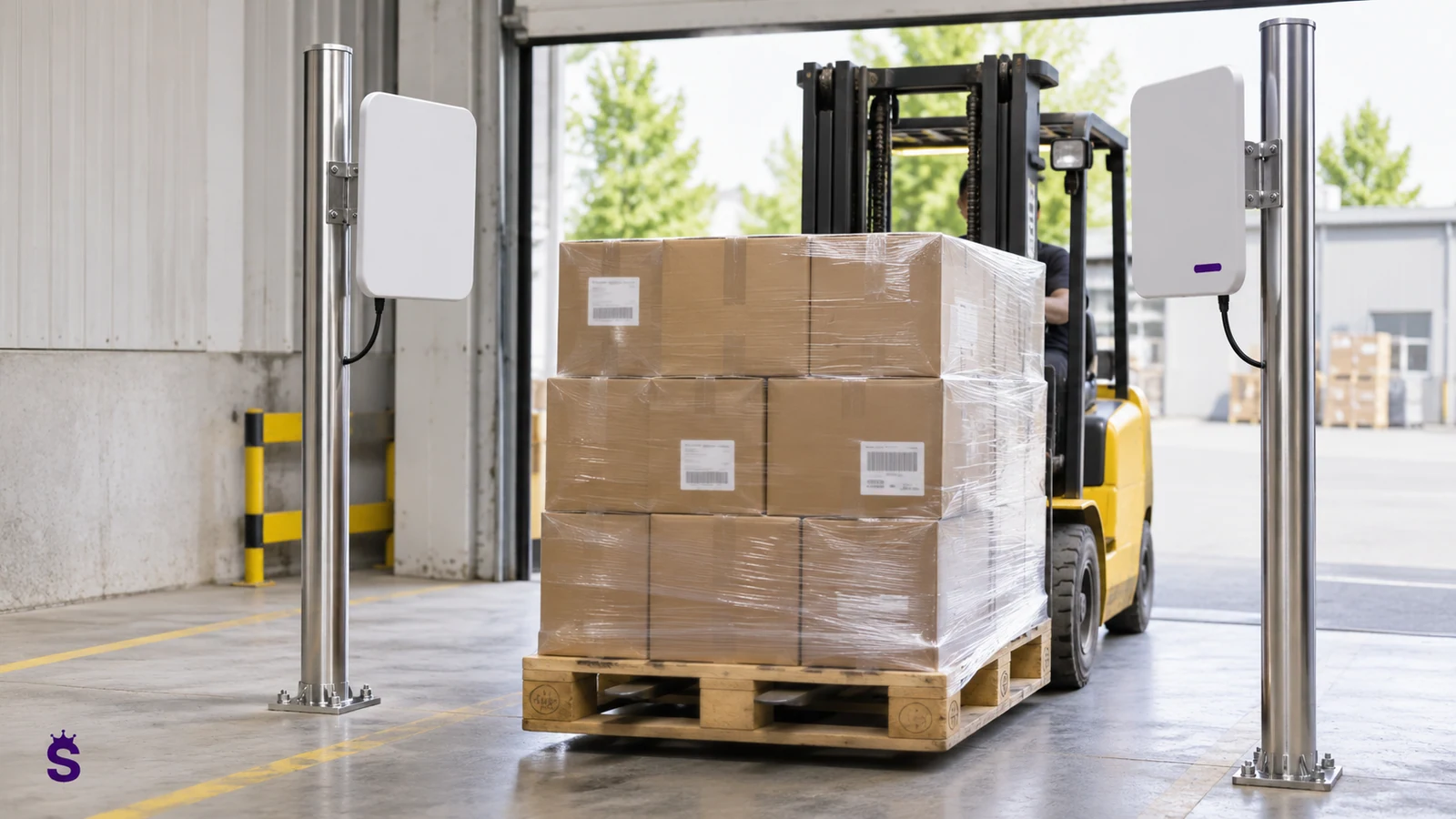
If you have already heard about RFID technology, but you are still wondering what exactly an RFID gateway is and what distinguishes it from a regular reader - you've come to the right place. In this article, I will explain it without technical jargon and show real applications in the warehouse.
What is an RFID gate, and how does it differ from a reader?
An RFID gate is a physical structure – most often a frame or portal – through which pallets, forklifts or employees pass. Inside this frame there is an antenna (or several antennas) hidden that emits radio waves and receives signals from RFID tags.
The key difference: automation
The difference between a gateway and a single reader is simple: an RFID reader is a point device - it scans everything that comes within its range. The RFID gateway is a control gateway, through which goods flow and are registered automatically, without human intervention. Radio labels are scanned in a fraction of a second, even if several dozen packages pass through the gate at the same time.
It is worth mentioning that RFID technology does not require direct visibility between the reader and the tag - the radio signal penetrates cardboard, foil and other materials. This is a huge advantage over traditional barcode scanning.
Antenna, reader and tag: the three essentials of RFID
The operation of the gate is based on three elements: an antenna, a reader and a tag.
RFID antenna
Generates an electromagnetic field and receives feedback signals from tags.
RFID reader
System brain – converts radio signals into digital data.
RFID tag
A unique tag attached to the product that "registers" in the system.
RFID gate applications in warehousing and logistics
Automatic recording of goods movements
The RFID gateway automates the process of registering each item entering or leaving the warehouse. When a forklift transports a pallet through the gate, the system immediately records: what product it is, when it was moved and in which direction. Such automatic registration eliminates human errors, which are inevitable in the traditional model.
Counting and controlling stock levels
RFID gates allow you to count goods in real time. Instead of conducting an inventory once a quarter and freezing the warehouse operation for several days, the system constantly tracks how many units entered and left. Storage becomes more predictable.
Asset management and access control
RFID gates are not only used for counting goods. They are increasingly used to manage moving assets - tools, trolleys, returnable packaging - and to control access to restricted areas. The system can detect when equipment leaves a designated zone and automatically generate an alert.
Deploy RFID gates in your company
Contact us to select the appropriate hardware configuration.
Get in touch
Tell us what you need so we can prepare an initial assessment.
The device itself is not enough… Why software makes a difference
An RFID gateway is a great device, but without the right software it is just an expensive RFID logger that collects data for no purpose. For RFID technology to really work for your business, you need a system that will process this data and allow you to make decisions.
Service-King System
Service-King is software designed for companies that want to implement RFID without headaches. It integrates with gateways and readers, and turns data from devices into a transparent image of your assets - in real time, from anywhere, via a browser.
How do you implement RFID in your organisation? Where should you start?
Tag assets
Assign RFID tags to the goods, packaging or tools you want to track.
Install components
Gateway or mobile reader at key points of goods flow.
Connect the software
Configure Service-King API integration.
Start registration
The system collects data itself and you analyze the results in real time.
FAQ – Frequently asked questions
What is the difference between an RFID gateway and a regular reader?
An RFID reader is a point device that scans everything in its immediate range. An RFID gateway is a complete structure (portal) that automatically registers the mass flow of goods (e.g. entire pallets) without human intervention.
Does the RFID gateway require tag visibility?
No, RFID technology uses radio waves that penetrate cardboard, foil and other materials. Thanks to this, the gate counts goods hidden inside collective packaging.
What are the installation requirements for the gateway?
Modern RFID gateways only require a stable power supply and a network connection (WiFi or LAN). They communicate with the parent system (e.g. Service-King) via the API interface.
An investment that pays off
RFID gates provide accuracy that no barcode-based system can provide.