

The finished goods warehouse: how RFID is changing modern logistics
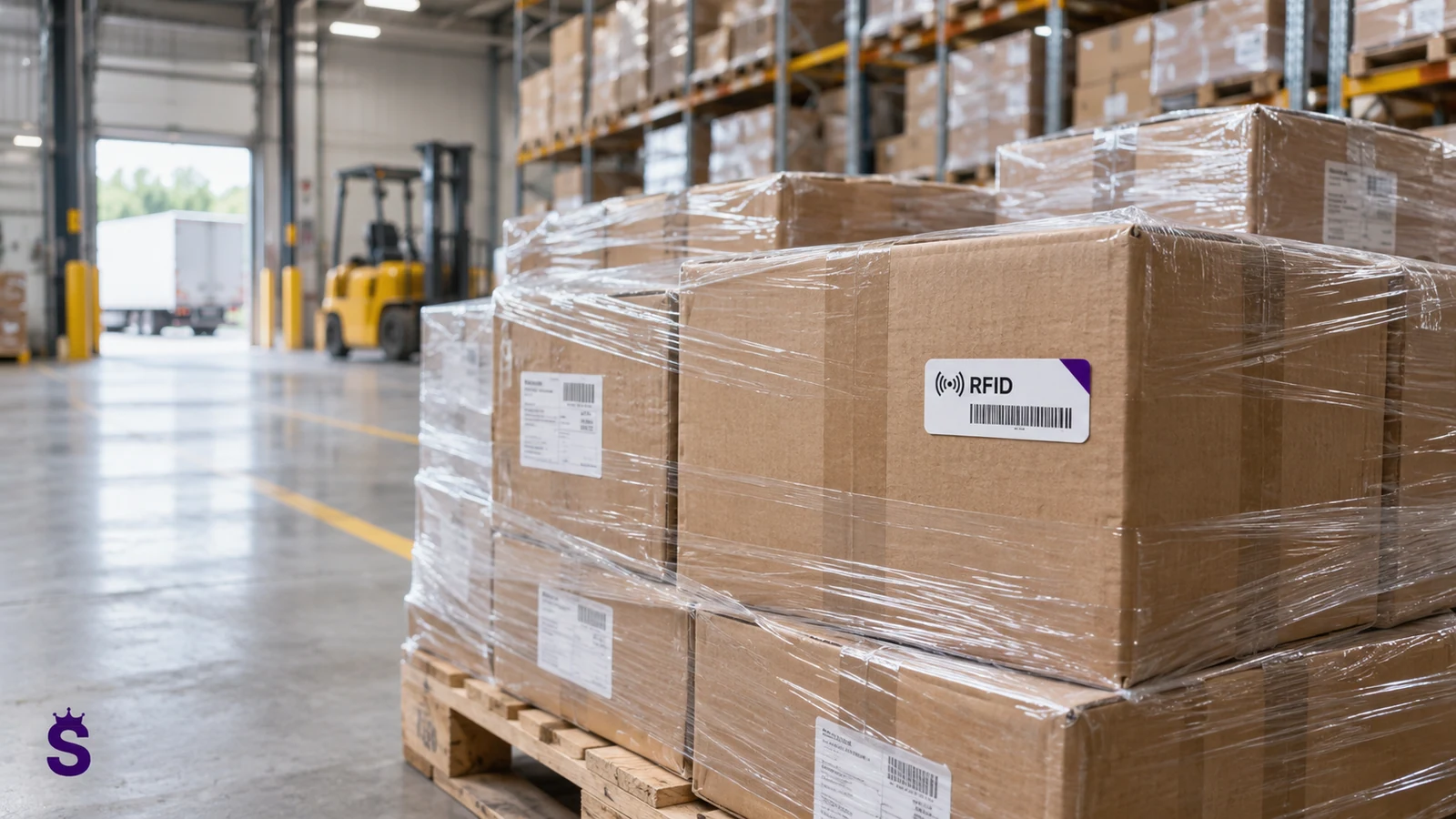
Every manufacturing company sooner or later faces the same challenge: how to efficiently manage the space where finished products are waiting for their customers? Finished goods warehouse is the last quality and logistics control point before the goods reach the recipient. This is where it is decided whether the supply chain runs like a Swiss watch or like a torn up construction site. In this article, we will look at the differences between different types of warehouses, what role they play in the entire production and distribution process - and why RFID technology is becoming the key to success in modern warehouse management.
What is a finished goods warehouse and why is it the heart of logistics?
In simple terms: finished products warehouse is a separate, controlled space where products completed in production are stored, with full quality control and ready for shipment to the customer. Sounds simple. In practice, it is one of the most complex nodes of the entire value chain.
A manufacturing company usually operates several types of warehouse space at the same time. At the beginning of the process we have raw material warehouses - every raw material ordered from suppliers goes there before it reaches the production line. They appear during production semi-finished products warehouses or buffer production zones. This is where he stands at the end of the whole cycle finished products warehouse - a place that connects the world of manufacturing with the world of distribution.
It is this last stage that generates the most operational problems. Incorrect picking, a lost pallet, the wrong batch number sent to the customer - each of these situations means real costs and loss of trust. Therefore, managing this place requires not only good space organization, but also precise technological tools.
Types of warehouses
Before we move on to technology, it is worth sorting out the terminology. Different types of warehouse facilities perform different functions in the logistics chain.
Production warehouse
Production warehouse directly serves the production hall. Its main task is to feed the line - the right raw material, at the right time, in the right quantity. Each space (shelf, buffer zone, freight elevator) is subordinated to the rhythm of production. Efficient management of this node determines the continuity of the process and eliminates downtime.
Finished goods warehouse
This is the central scene of this article. Finished goods warehouse receives products from the production line, verifies them, assigns them a location in the system, and then issues them according to orders. The key processes are:
- Goods receipt - Registration of each unit, assignment of rack location
- Storage - space organization, FIFO/FEFO rotation, temperature zone management (if required)
- Order picking - Collecting the right goods from the right places
- Unloading and loading - Dock support, transport sync
- Distribution - transfer of goods to a carrier or own fleet
Distribution warehouse
Distribution warehouse is a facility focused on the speed of goods flow, not on their long-term storage. Goods arrive here from many sources and are consolidated or sorted before being distributed to final recipients. Goods are transhipped here very quickly - cross-docking, sorting, labeling. Every minute of downtime generates costs.
What equipment does a finished goods warehouse need?
Effective finished products warehouse is not just four walls and a roof. This is precisely selected equipment that enables fast and error-free flow of goods.
Shelving and storage systems
The basis of every warehouse is an appropriate racking system. Depending on the characteristics of the stored goods, the following are used:
- Pallet racks - for large, homogeneous batches
- Shelf racks - for general cargo and manual picking
- Flow racks - ideal for FIFO rotation, popular in the food and pharmaceutical industries
- Automatic systems (AS/RS) - high-bay warehouses with full flow automation
The selection of shelves is a strategic decision. Poor configuration means inefficient use of space and extended picking times.
Goods unloading and receiving area
Everyone finished products warehouse needs a properly functioning unloading ramp. A well-designed goods receipt zone speeds up the inventory of revenues, minimizes the risk of errors and prevents logistics bottlenecks. This is where the history of every SKU begins - and this is where data errors most often occur if the right technology is lacking.
RFID in the finished goods warehouse. Technology that changes the rules of the game
Traditional warehouse management relies on barcodes, manual scanning and, unfortunately, human errors. Technology RFID (Radio Frequency Identification) takes control over the flow of goods to a completely new level.
How does RFID work in warehouse practice?
Each storage unit (pallet, carton, single product) receives an RFID tag - a small radio chip that stores a unique identifier. RFID readers placed at the gates, at the unloading docks, on the racks and in the check-out zone automatically record every movement of goods - without the need for manual scanning, without stopping the flow.
RFID and finished goods stock rotation
W finished goods warehouse it is particularly important to control production and batch dates. RFID combined with WMS system from Service King allows you to automatically enforce FIFO or FEFO rotation - the system itself indicates which goods are to be released first, without involving the operator's attention. For industries such as food, pharmaceutical or cosmetics, it is not a luxury, but a legal and quality requirement.
Picking optimization thanks to RFID
Order picking is one of the most time-consuming and error-prone processes in any finished goods warehouse. RFID technology combined with a pick-by-light or pick-by-voice system reduces picking time by up to 30-40% and virtually eliminates check-out errors. The employee does not have to scan each product - the system verifies the correctness of the set automatically when leaving the picking zone.
Cost optimization? With a suitable RFID system
Implementation of RFID technology and a modern management system warehouse of finished products is an investment. Like any investment, it requires business justification. Here's where the real savings come in:
Error reduction
Incorrect shipping costs more than just returning and reshipping. This is the cost of complaints, loss of trust and contractual penalties. RFID eliminates them at the source.
Save time
Manual inventory of the finished goods warehouse consumes dozens of working hours. With RFID technology it literally takes minutes, not days.
Inventory management
Current insight into inventory allows you to plan production and purchases more precisely. No more expired goods or sudden shortages.
The key to success? RFID integration with a comprehensive management system
However, RFID technology itself is only one layer of the solution. The full potential is only revealed when data from RFID tags flows into an integrated management system - one that connects finished products warehouse, raw material warehouses, production processes and distribution in one coherent ecosystem.
This is exactly what this approach offers Service-King - Polish solution for manufacturing and logistics companies that want to go beyond Excel sheets and manage their assets in real time. The system is available on service-king.pl combines the functions of managing equipment, technical processes and the flow of goods - with the possibility of integration with RFID technology and existing ERP systems.
For a manufacturing company that wants to have full control over every stage - from raw material through production to the distribution of finished products - this is a natural step towards digital operational maturity.
Industries that benefit most from RFID
Although RFID technology in finished goods warehouse works in almost every industry, some sectors benefit from it uniquely:
- Industrial production - Serial part number tracking, batch control, service returns handling
- Food industry - FEFO rotation, temperature monitoring, traceability to raw material
- Pharmaceutical and cosmetics - Legal regulations require full traceability of each entity
- E-commerce and omnichannel - high check-out frequency, SKU variety, time pressure
A modern warehouse of finished products is a competitive advantage
Finished goods warehouse is not a place where goods just wait. It is an active element of the value chain that, when properly managed, reduces costs, speeds up customer service and increases the accuracy of operations.
RFID technology, integrated with a modern management system, turns this logistics node into a source of real competitive advantage. Companies that invest in the digitalization of their warehouses today will serve customers faster, cheaper and error-free tomorrow - while the competition will still be looking for the lost pallet.
If you want to see what it looks like in practice for your company - contact us!
Optimize your warehouse with RFID
Contact us to analyze implementation options free of charge.
Get in touch
Tell us what you need so we can prepare an initial assessment.
Go beyond Excel
Automatic delivery logging, 100% picking accuracy and intelligent supply chain management with Service-King.